Waymo's Atlanta headache is not just about empty cars circling quiet streets. It is a reminder that robotaxi companies are now being judged on fleet behavior, not just driving skill.
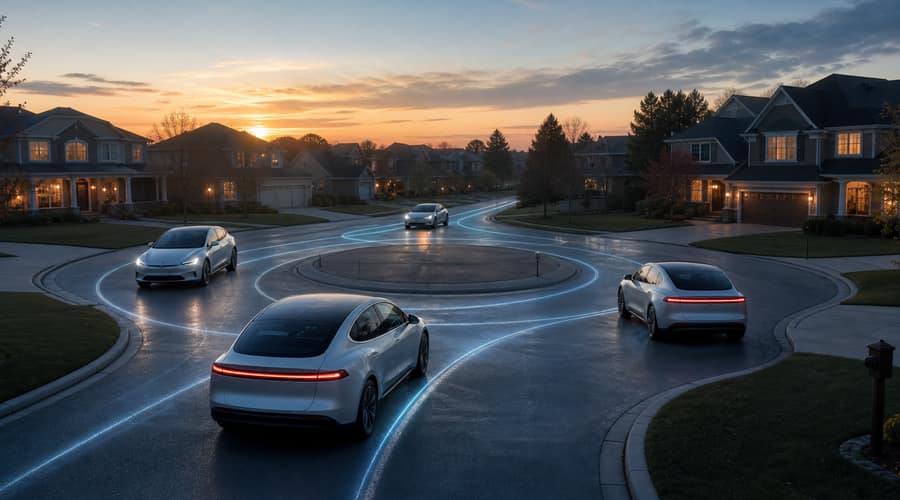
The uncomfortable part of robotaxi scale is beginning to show up in ordinary neighborhoods. In northwest Atlanta, residents say empty Waymo vehicles have been repeatedly routing through cul-de-sacs with no passengers, sometimes early in the morning, sometimes in clusters large enough to make the street feel like a test track instead of a residential road.
According to a May 15 report from WSB-TV, neighbors on Battleview Drive said the pattern began about two months ago and intensified in recent weeks. One resident said about 50 Waymos passed between 6 a.m. and 7 a.m. Another said eight vehicles became stuck trying to turn around after a child-safety sign blocked entry to the street. Waymo told the station it had already addressed the routing behavior and pointed to more than 500,000 weekly trips nationally.
That response may be accurate, but it does not make the issue small. For a human ride-hail driver, an odd detour is a one-off decision. For an autonomous fleet, a bad routing preference can repeat until the system is changed. That is the difference between a mistake and an operations problem.
Robotaxi economics depend on utilization. The car earns money when a passenger is inside it. It costs money when it is repositioning, charging, waiting, cleaning, or circling a cul-de-sac because the map or dispatch system decided that was the best route. Those empty miles are not just a nuisance to residents. They are a tax on the whole business model.
Every deadhead mile adds electricity cost, tire wear, cleaning cycles, remote support risk, insurance exposure, and local political friction. A robotaxi company can tolerate some of that because repositioning is part of the ride-hail business. Uber and Lyft drivers already move without passengers. The difference is that human drivers are distributed economic actors. Waymo is a centralized fleet operator, and when its cars behave oddly in one neighborhood, the company owns the pattern.
Atlanta makes that especially important because Waymo operates there through Uber. The service launched publicly in June 2025 across a 65-square-mile area from Downtown to Buckhead to Capitol View, giving riders a chance to be matched with an autonomous vehicle inside Uber's app. That partnership is useful because Uber brings demand density, payment, rider support, and routing experience. It also means Waymo's vehicle behavior is now part of a broader consumer product, not a standalone autonomy demo.
That is where entrepreneurs should pay attention. The hard part of scaling a technical product is often not the core technology once it starts working. It is everything around it. Dispatch logic, customer support, incident response, city relationships, blocked driveways, school zones, construction, and quiet streets at 6 a.m. become the product too.
Safety Recalls Are Part Of The Same Story
The Atlanta routing complaint landed the same week Waymo faced a separate software recall involving flooded roads. On May 12, NHTSA documents showed a recall covering 3,791 vehicles equipped with Waymo's fifth- and sixth-generation automated driving systems. TechCrunch reported that the problem involved vehicles slowing, but not stopping, when encountering flooded roads they could not safely traverse.
The recall followed an April 20 incident in San Antonio during extreme weather, when an unoccupied Waymo entered a flooded roadway and was swept into Salado Creek. No passengers were on board, and no injuries were reported. Waymo filed the recall as a software issue, used interim restrictions for higher-risk areas, and said it was working on additional safeguards while the final remedy was still being developed.
That matters because regulators and cities will not separate safety from operations for long. A flooded-road incident is more serious than a residential routing loop, but both point to the same basic question: how does a driverless fleet decide where it should not go? The answer cannot be limited to whether the vehicle can technically complete a turn or detect an obstacle. It must include whether the route makes sense for the people who live there.
Cities already regulate curb use, delivery zones, parking, bus lanes, and truck routes because private movement has public consequences. Empty autonomous vehicles may need their own version of those rules. A city could set limits on repeated empty AV routing through residential cul-de-sacs, require operators to share anonymized deadhead-mile data, or create complaint channels that trigger routing reviews within a defined time.
None of this means robotaxis are failing. Waymo's scale is real, and 500,000 weekly trips is no longer a laboratory number. But scale changes the burden. The company is no longer proving that a car can drive itself across town. It is proving that thousands of cars can behave like responsible participants in a city.
The next phase of autonomy will be judged less by smooth rides and more by boring competence. Residents will care whether the cars respect their streets. Regulators will care whether software fixes arrive before patterns become hazards. Investors will care whether empty miles can be cut without hurting wait times. That is where the robotaxi market is heading now, from technical wonder to fleet discipline.
Also read: Lake Tahoe's power crunch shows AI's hidden infrastructure bill • ByteDance Seed puts diffusion language models within startup reach • InternLM is making scientific AI smaller with Intern-S2-Preview