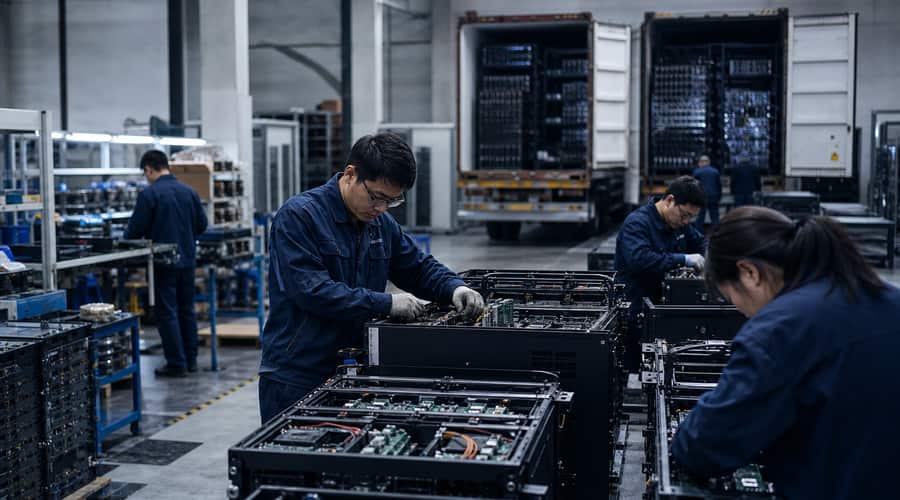
A Stable Diffusion community post demonstrating AI image outputs indistinguishable from photography has generated 201 points and 48 comments in five hours, with the dominant reaction not celebration but a quieter, more uncomfortable recognition: the gap between real and synthetic has closed faster than anyone built systems to handle it.
What makes the thread worth reading carefully is the composition of the comments. This is a community that has been enthusiastic about image AI since its earliest days, one that has cheerfully documented every incremental quality improvement and pushed models to their limits as a matter of habit. The anxiety visible in this particular thread is not performative concern from outsiders. It is the reaction of technically literate users who understand exactly what the output implies because they know what it took to produce it. When that community looks at a generated image and genuinely cannot distinguish it from a photograph taken with a camera, the signal is clean: a capability threshold has been crossed that most of the industries affected by it have not yet internalized.
The threshold that matters here is not peak quality in controlled conditions. It is casual undetectability in ordinary contexts. AI images have been impressive for years when viewed as demonstration pieces on a dedicated screen with time to evaluate. The shift happening now is that the same quality is achievable in outputs produced quickly, locally, at no marginal cost, and distributed into environments where images are consumed rapidly and without close scrutiny. A marketplace listing. A LinkedIn profile. A news aggregator. A brand's social feed. These are not contexts where users apply forensic attention to visual content. They are contexts where trust is extended reflexively, and where that reflexive trust is now being extended to synthetic images that nothing in the environment flags as requiring additional scrutiny.
Online marketplaces are among the most immediately vulnerable to commoditized image realism, because their transaction model depends on product photography accurately representing what a buyer will receive. Platforms like eBay, Etsy, Depop, and dozens of vertical commerce sites have always had to manage fraudulent listings, but the historical constraint was that producing convincing fraudulent product images required access to the actual product or significant creative effort. That constraint is gone. A seller can now generate photorealistic images of products they do not own, in conditions and configurations that flatter the listing, without a camera or a physical sample. Platforms whose fraud detection relies on image analysis face a moving target that will require fundamental rethinking of how visual evidence is weighted in trust and safety decisions.
Professional identity platforms face an adjacent but distinct version of the problem. LinkedIn, professional directories, and credentialing systems have long used profile photographs as a lightweight identity signal. That signal has never been rigorous, but it has carried some deterrent weight: a fake professional identity required at minimum the effort of sourcing a plausible photograph. Generating a photorealistic, demographically appropriate professional headshot now takes seconds and costs nothing. The identity verification burden that profile photographs carried implicitly is no longer being carried by them at all, and platforms that have not invested in alternative identity signals are more exposed to coordinated fake persona networks than their current trust and safety architecture accounts for.
Advertising is a third category where the realism threshold shift creates immediate operational questions. The regulatory and ethical frameworks around disclosed AI-generated advertising creative are still being written. In the meantime, the ability to produce photorealistic lifestyle imagery, product shots, and human models without photography budgets, talent releases, or location fees changes the economics of visual advertising production in ways that incumbents in the commercial photography and production industries are already feeling. The question of whether synthetically generated advertising imagery should carry mandatory disclosure is moving from a philosophical debate to a practical regulatory question in several jurisdictions simultaneously.
What Founders Should Actually Build Toward
The provenance infrastructure conversation is necessary but comes with a structural limitation that anyone building in the space should be clear-eyed about. Standards like C2PA, which embed verifiable origin metadata into images at creation, are technically sound and gaining adoption among hardware manufacturers including Leica and software providers including Adobe. The adoption gap is in the open-source ecosystem, where the models producing the most realistic outputs have no commercial incentive to implement provenance standards voluntarily and no regulatory requirement forcing them to do so yet. A provenance system that covers professionally produced imagery but not open-source generated imagery addresses the less acute part of the problem.
The more durable product investments are in trust systems that do not assume visual evidence is reliable in the first place. Behavioral verification, transaction history, cross-platform reputation signals, and human-in-the-loop review for high-stakes decisions all become more valuable as visual authenticity becomes less so. This is not a new design philosophy: it is the same approach that fraud-resilient systems have applied to text-based deception for years. The challenge is applying it to contexts, particularly visual ones, where the existing UX assumes that images carry inherent evidentiary weight that users now need to be educated out of expecting.
Consumer behavior under conditions of widespread synthetic realism tends to evolve in one of two directions: either toward generalized skepticism that increases friction across all visual interactions, or toward a kind of resigned acceptance that treats image authenticity as essentially unknowable and adjusts decision-making accordingly. Neither outcome is good for platforms whose business models depend on visual trust. The founders who engage with this now, before the normalization fully sets in, have the clearest window to build trust architectures that remain functional in the environment that is already arriving. Waiting for a visible crisis to make the case internally is a strategy that consistently loses the timing advantage.
Also read: The Qwen3 27B vs 35B Debate on Reddit Is Really a Story About What Local AI Actually Costs to Run • Tinygrad Is Testing Its Own Hardware Driver and That Is a More Important Story Than It Sounds • Anthropic's Revenue Growth Is Real Enough to Ask Whether This Is a Hype Cycle or a Durable Business