Europe isn't going to beat the US or China by pretending it can outspend them on foundation models. Its better shot is harder, less glamorous, and closer to the factory floor.
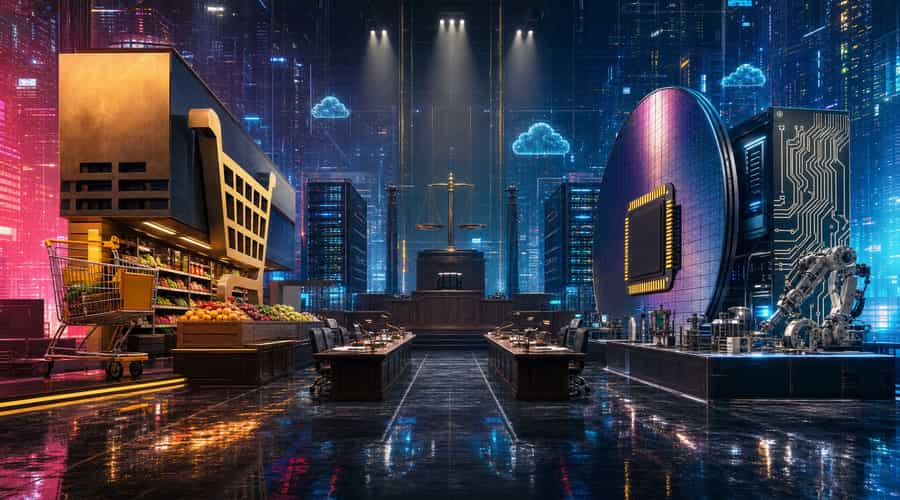
The useful news in this story didn't come from another chatbot launch. On February 4, 2026, Deutsche Telekom opened a Munich AI facility built with NVIDIA and SAP, funded with more than €1 billion and fitted with 10,000 NVIDIA GPUs. Welt reported that the site is meant for industrial AI workloads, sovereign cloud services and customers that don't want their most sensitive data sitting inside the usual American cloud stack.
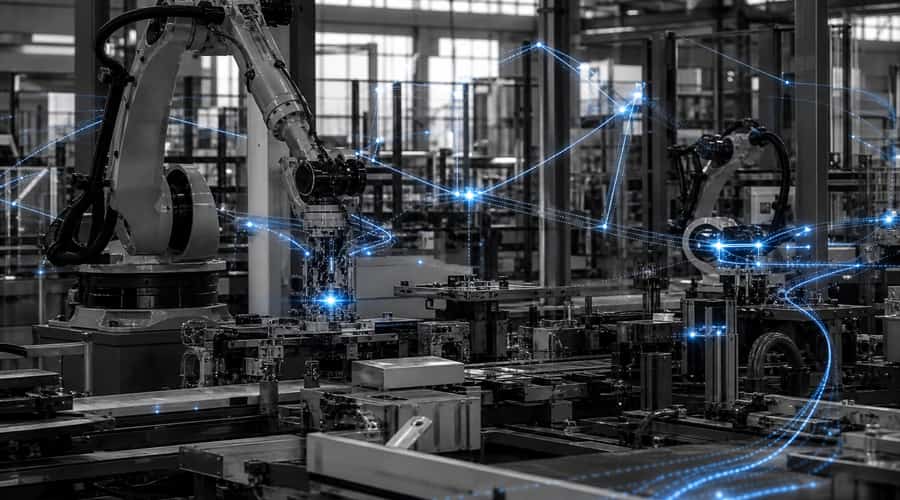
That is the right problem for Europe to attack. Not because sovereignty sounds good in a policy paper, but because BMW, Airbus, Siemens and thousands of smaller suppliers already sit close to the machines, robots and production lines where AI has to prove itself. If you're a European manufacturer, the question isn't whether a model can write cleaner emails. The question is whether it can cut downtime, simulate a line change, spot defects earlier, or make a robot useful outside one narrow task.
Europe has real assets here. Its manufacturing base still produces about €2.5 trillion in annual value added, and the International Federation of Robotics has put Europe's robot density at roughly 219 industrial robots per 10,000 manufacturing employees. That doesn't make Europe the winner. It gives it a starting position that Silicon Valley can't copy by renting more GPUs.
The compute layer is finally catching up. The EuroHPC Joint Undertaking has been building AI Factories across the bloc, giving startups, researchers and smaller companies access to supercomputing capacity that would otherwise be out of reach. For years, Europe talked about digital sovereignty as if the phrase itself could substitute for infrastructure. Now there is at least some hardware under the slogan.
Still, the weak point is obvious. Europe's factories have plenty of data, but much of it is trapped in old programmable logic controllers, manufacturing execution systems and supplier databases that were never designed to feed modern AI systems. You can have Blackwell GPUs in Munich and still spend months arguing over who owns a sensor feed from a production line in Bavaria or northern Italy. Frankly, that is where this story will be won or lost.
KUKA has already said the quiet part loudly. In April, Bloomberg reported that CEO Christoph Schell was frustrated by Europe's slow AI adoption and was pushing the German robotics company to focus more on the US and Asia, where customers move faster. That should sting. KUKA is not a San Francisco startup complaining that European procurement is slow. It is a German industrial name telling its home market that hesitation has a cost.
KUKA's answer is also worth watching. At NVIDIA's GTC conference in March, the company unveiled its Automation Management Platform, a software layer meant to connect older rule-based factory systems with AI-driven automation. That is a practical move, not a slogan. Factories won't rip out every old system just because Brussels wants interoperability. Someone has to build the bridge from the machines that exist today to the models people want to run tomorrow.
Investors have noticed the same opening. Data from Vestbee and Peony showed European robotics and physical AI startups raising a record €1.45 billion in 2025, more than double the previous year, with Germany, the UK and France taking roughly 80% of that capital. RobCo raised €100 million for modular manufacturing systems. Switzerland's Flexion raised €43 million for reinforcement learning work in humanoid robotics. Trener Robotics closed a €26 million round in February 2026.
Those rounds don't prove Europe has found its AI niche. Venture capital can chase a phrase as easily as it can back a company. But physical AI is a better fit for Europe than another attempt to copy the American foundation model race from behind. The continent has machine builders, automotive suppliers, energy networks, aerospace contractors and industrial customers that still know how things are made. You should build from that, not from envy.
There is a duller, less flattering version of the future too. Europe could become a regional installer of factory AI while American and Chinese companies own the models, developer platforms and customer relationships. The EU's Industrial Accelerator Act, introduced in March, is aimed at avoiding that outcome, but laws don't create adoption by themselves. Companies do, usually under pressure.
Deutsche Telekom's Munich site is scheduled to reach full capacity through 2026, with NVIDIA's Isaac and Omniverse tools forming part of the robotics and digital twin stack. The compute is there. The robots are there. The capital is beginning to show up. Now European manufacturers have to decide whether their factory data is an asset they can organize and use, or a private mess they'll defend until someone faster builds around them.
Also read: DayOne Data Centers is raising billions before an IPO that could redefine AI infrastructure investing in Asia • Midjourney is betting its next act on a full-body ultrasonic scanner and a spa chain • Noam Shazeer, the man who invented the transformer is now working for OpenAI