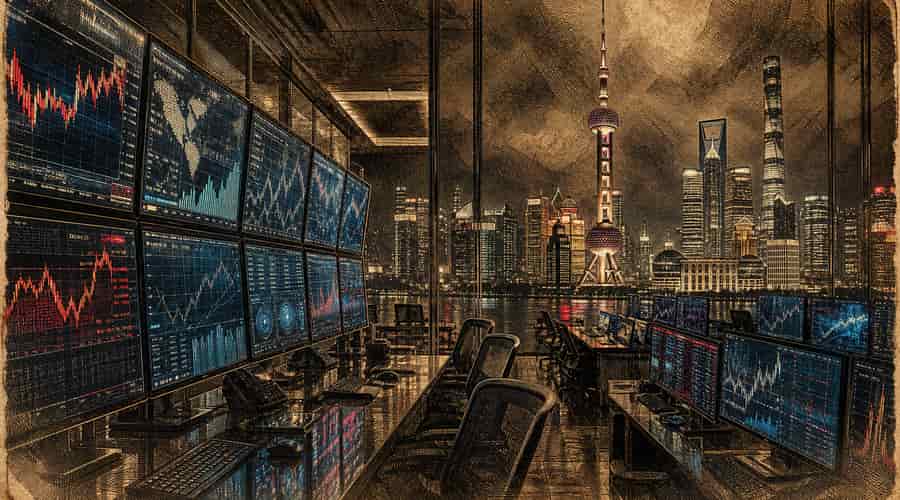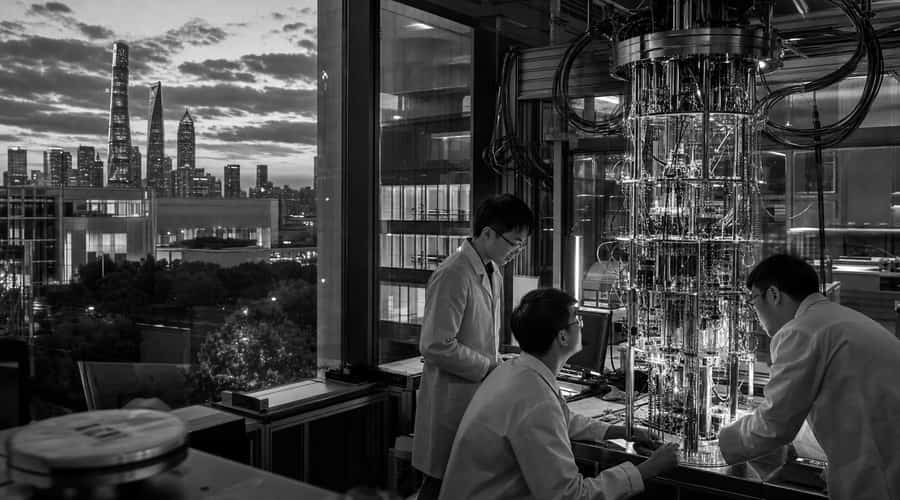
Shanghai just placed a quantum bet worth up to 100 million yuan, wagering that one district can turn lab experiments into an industry before Hefei, Beijing or Shenzhen get there first.
On Tuesday, the city's Xuhui district opened its new Shanghai Quantum Computing Future Industry Incubation Zone, and it didn't show up empty-handed. Twenty-six quantum firms signed on as the first cohort, according to a report from the state-backed Jiefang Daily.
The money is specific enough to matter. The zone will offer up to 100 million yuan, or roughly $14.73 million, to fund foundational research, technology innovation and shared platforms. Companies racing to get a first product out the door can tap up to 20 million yuan in additional support, and there are separate subsidies to cut the cost of the computing power and validation work that quantum research burns through fast.
You don't build an industry on cash alone, and Shanghai knows it. Xuhui already functions as one of the city's core artificial intelligence districts, and officials want quantum computing and AI development to feed each other rather than run on separate tracks. That pairing is the real bet here: not quantum for its own sake, but quantum as the next layer on top of an AI cluster that already exists.
Shanghai isn't first. Hefei has spent years building a quantum cluster around the University of Science and Technology of China. Beijing and Shenzhen already run their own state-backed quantum efforts. What Xuhui is trying to do differently is compress the distance between a university lab and a company with paying customers, and it's attached a deadline to that ambition. City officials want more than 100 quantum companies operating in the district within three years, with a combined valuation reaching into the hundreds of billions of yuan.
That's an aggressive target for a technology still mostly stuck in the demonstration phase. Quantum computers today can outperform classical machines on narrow, engineered problems, not on the kind of general workloads that would justify a hundred-billion-yuan valuation across a hundred companies. Shanghai is betting that subsidies and proximity can close that gap faster than it would close on its own.
The timing isn't an accident. Quantum technology is named explicitly in China's 15th Five-Year Plan, which runs from 2026 through 2030 and treats quantum computing as part of the same strategic push as advanced manufacturing and semiconductors. When a technology gets that kind of political backing, city governments compete to claim a piece of it, and Xuhui's incubation zone reads as a claim staked before Hefei's head start becomes insurmountable.
Frankly, the number worth watching isn't the 100 million yuan pool. It's the 26 companies that signed up on opening day. Funding announcements are easy to make. Getting two dozen firms to commit to a physical zone on day one is a signal that at least some of them believe the district can actually deliver customers, computing access and talent, not just a subsidy check.
None of this guarantees Shanghai wins the race. Beijing and Shenzhen have deep state backing and their own AI-adjacent industrial parks, and Hefei's head start in quantum research talent is real. But Xuhui has a clear thesis: put quantum companies inside an existing AI corridor, fund the gap between lab and product directly, and give it three years to prove out. If it works, other Chinese cities will copy the model fast. If it doesn't, the 100 million yuan will look like one more line in China's long list of subsidized industrial zones that never found their market.
Also read: Singapore Will Fine Cloud Giants a Million Dollars for Going Dark • Sakana AI's Ren Ito Joins the UN's New AI for Good Commission • TikTok confirms layoffs in Singapore and three other cities in one day