Singapore's passport is still one of the strongest in the world, but the Global Passport Index makes a blunter point: mobility doesn't pay your rent.
Singapore ranked 10th overall in the Global Passport Index 2026, which Global Citizen Solutions last updated on June 30. That's still an elite result. It also sits awkwardly beside Henley's separate passport ranking, where Singapore remains at the top for visa-free access. The difference between those two verdicts is the useful part of the story, because one index counts where you can go and the other asks what life costs when you stay.
According to Global Citizen Solutions, Singapore ranks first on its Enhanced Mobility Index and first on its Investment Index. Those are not small wins. The firm gives Singapore an enhanced mobility score of 114.2, with access to 184 destinations, and an investment score of 84.0, helped by very high innovation, a reported gross national income per capita of $75,000, and a top personal tax rate listed at 24%. If you're measuring a passport as a travel and capital tool, Singapore is hard to beat.
Then comes the quality of life score. Singapore sits 115th on that pillar.
That's the number residents will recognise first. Global Citizen Solutions says its quality of life pillar weighs sustainable development, cost of living, happiness, personal freedoms, environmental performance and migrants' acceptance. You don't need a ranking table to see why cost of living does damage here. In Singapore, the same state that has built one of the world's most functional public housing systems is now dealing with resale prices that have moved far beyond what many families once thought public housing could mean.
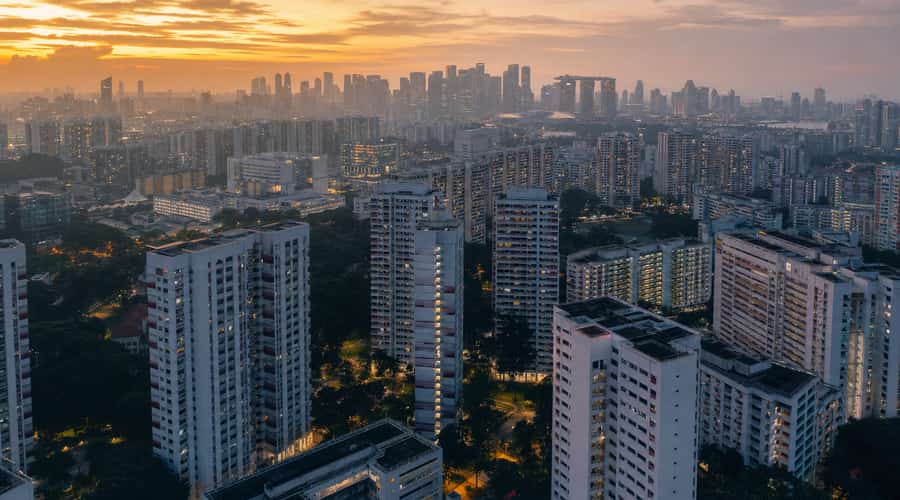
HDB flats shelter about 80% of Singapore's resident population, so this isn't a side market for speculators. It's the middle of daily life. When million dollar HDB resale transactions became a recurring local headline, the psychological line changed. These are still leasehold public flats, still governed by eligibility rules and resale restrictions, yet the price tags now compete for attention with private property chatter. Frankly, you can't call that just a property cycle and move on.
Food tells the same story at a smaller scale. Hawker centres are one of Singapore's great civic inventions: fast meals, shared tables, old recipes, low prices. But stallholders have been hit by higher ingredient costs, utilities, labour shortages and rents. When a plate of noodles creeps up by a dollar or two, a tourist barely notices. A resident who buys lunch outside five days a week notices immediately, because the increase repeats itself quietly until the monthly budget looks different.
Climate is the part Singapore can't negotiate with. The country sits about one degree north of the equator, with average highs near 31 degrees Celsius and humidity that often stays heavy even after rain. Air conditioning makes the office, the train and the mall bearable, but it doesn't create seasons, cheap land or a hinterland where families can move when the capital gets too expensive. Singapore is a city state. There is no cheaper province to retreat to while keeping the same passport and the same national system.
This is where the quality of life debate usually goes wrong. A visitor who spends $40 near Gardens by the Bay and calls Singapore expensive but excellent is describing one version of the country. A Singaporean comparing a resale flat, a childcare bill, a hawker meal and a parent’s medical appointment is describing another. Both can be true, but only one of them decides whether the country's headline prosperity feels livable at home.
The government isn't ignoring the pressure. Recent budgets have leaned on CDC vouchers, ComCare support and Workfare top-ups to soften household costs, while HDB has also accelerated flat launches and started some construction ahead of demand. Those measures matter. They put cash or housing supply into the system rather than pretending sentiment will fix prices. But transfers are not the same thing as cheap living, and new flats still take years to build.
Singapore will keep winning indices built around safety, tax efficiency, mobility and investor confidence, because those are real strengths and the numbers are not close. The sharper point in Global Citizen Solutions' 2026 ranking is that a passport can be world class while daily life still feels squeezed. Residents paying ever higher prices for public housing already knew that. The index just put the contradiction in a table.
Also read: Thailand's Zero Crypto Tax Break Is Entering Its Busiest Year Yet • Jersey Mike's Mentioned AI 22 Times In Its Billion Dollar IPO Filing • Crusoe is raising billions to prove investors still believe in AI's buildout