Singapore just cracked the world's most exclusive passport rankings, but the same report that put it there says its own residents are priced out of the quality of life that ranking celebrates.
Singapore's passport ranked 13th overall in the Global Passport Index 2026, published July 1 by the advisory firm Global Citizen Solutions. That's a strange number for a passport that Henley's separate index still calls the strongest on Earth. The gap between those two verdicts isn't a rounding error. It's the whole story.
Global Citizen Solutions scores passports on three pillars: mobility, investment potential, and quality of life, weighing tax environment, innovation, economic competitiveness, healthcare, safety, climate and social infrastructure. Singapore tops the mobility pillar outright and leads the investment index too. It's the quality of life score that drags the country down to 13th, and the firm points to two specific culprits: a high cost of living and low migrant acceptance.
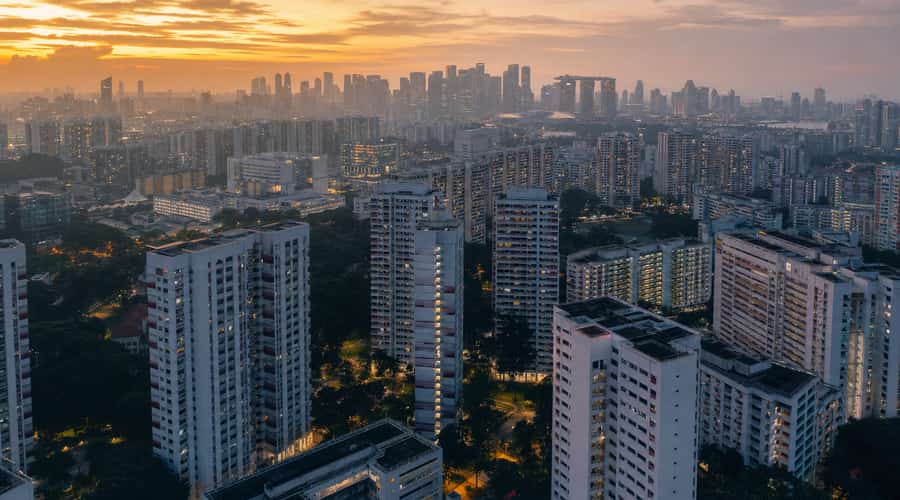
You don't need an index to feel that in Singapore. HDB resale flats, the public housing that shelters about 80% of citizens, had a median resale price of 628,000 Singapore dollars in the first quarter of 2026, according to HDB's own resale price data. Average resale prices in mature estates rose 7% to 9% over the past year. In 2025, 1,594 HDB flats sold above the million dollar mark, a figure that would have sounded absurd a decade ago for apartments the government built as affordable public housing.
Food tells the same story at a smaller scale. Hawker centres, the open air food courts Singapore promotes as its answer to affordable, communal eating, have seen prices climb 18% to 22% since 2021, driven by ingredient costs, cooking gas and the rent stallholders pay to operate. A local earning a median wage of roughly 4,800 Singapore dollars a month, renting a shared HDB flat for 2,600 dollars, is watching personal inflation run at 7% to 8% against salary growth closer to 4%. That isn't a comfortable margin. It's arithmetic that gets worse every year.
Climate is the one category Singapore can't fix with policy. It sits about one degree north of the equator, with average highs near 31 degrees Celsius and humidity that rarely drops below 70%, and every major quality of life framework, from Mercer's index to Global Citizen Solutions' own methodology, treats that as a structural drag rather than a lifestyle quirk. An expat on a two year posting can treat the heat as a novelty. A resident who has lived there for decades experiences it as the weather, full stop, with no cooler region to drive to on a weekend.
This is where the quality of life debate usually goes wrong. A visitor who drops 40 dollars on a meal near Gardens by the Bay and calls Singapore expensive but exceptional is describing a different country than the one a Singaporean commutes through every day. Tourist facing hospitality isn't a substitute for a national parks system, and a handful of manicured pocket parks aren't the same as the kind of open land that lets a Canadian or an American retire somewhere cheaper without leaving the country. Singapore is a city state. There's no countryside to retreat to when the capital gets too expensive, because the capital is the whole country.
The government isn't ignoring the pressure. Budget 2026 expanded CDC vouchers, added ComCare support for lower income households and topped up the Workfare Income Supplement. Those are real transfers that help households absorb near term costs. What they don't touch is the structural driver: a housing supply and demand imbalance that the government's own accelerated HDB launch programme won't meaningfully ease for another three to five years, based on current construction timelines.
Singapore will keep winning indices built around safety, tax efficiency and mobility, because those are genuinely where the country excels and where the numbers aren't close. But an index that scores climate, cost of living and social infrastructure honestly is going to keep landing Singapore outside the true top tier, and the residents paying seven figures for a public housing flat already know why.
Also read: Thailand's Zero Crypto Tax Break Is Entering Its Busiest Year Yet • Jersey Mike's Mentioned AI 22 Times In Its Billion Dollar IPO Filing • Crusoe is raising billions to prove investors still believe in AI's buildout