Gold is slipping even as the Strait of Hormuz stays dangerous, and that tells you the old safe-haven trade is being squeezed by oil, inflation and the dollar.
Gold near $4,100 an ounce should look strange with missiles and drones moving across the Gulf. It does. After renewed US-Iran fighting and attacks on commercial shipping around the Strait of Hormuz, front-month gold futures fell toward $4,000 before rebounding above $4,100, according to recent market updates from MarketWatch, Barron's and The Wall Street Journal. That is not how the textbook version of gold is supposed to behave. But markets don't trade textbooks.
Here's the mechanism, and it isn't complicated once you see it. A tanker scare in Hormuz doesn't just spook traders, it threatens the oil supply running through the world's most important crude chokepoint. Oil jumps. Inflation fears come back. The Federal Reserve gets less room to cut rates, or more pressure to hold them high. Gold pays no yield, so a stronger dollar and higher Treasury yields hurt. That is the trade right now.
Investors aren't ignoring the war. They're choosing a different shelter. MarketWatch reported gold sliding as the dollar rallied, while Barron's noted that a hawkish Fed outlook was still weighing on gold even after prices moved back above $4,100. The Wall Street Journal put front-month Comex gold at $4,145.30 on July 7, down 4.17% for the year and more than 22% below its January record. That's a hard number for anyone still pretending fear alone controls this market.
Goldman Sachs has cut its own forecast too. The bank pulled its year-end 2026 gold target down to $4,900 an ounce from $5,400, according to MarketWatch, after its economists removed 2026 rate cuts from the forecast and pushed the next easing into June and December 2027. Goldman still sees central banks buying roughly 51 tonnes a month, far above pre-2022 levels, and it still sees gold supported by fiscal worries and geopolitical tension. The target came down anyway. Frankly, that is the whole story in one move: the war premium is not enough when the rate trade is moving against you.
Silver Is Having A Different Year
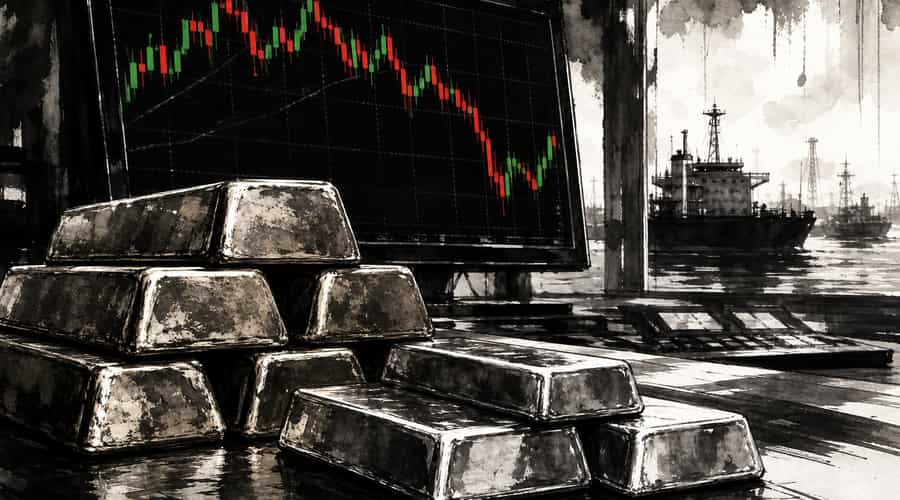
Silver is not following gold's script. It has traded around $60 an ounce this month, and even after a pullback The Wall Street Journal had front-month silver at $60.931 on July 7. That is still a wild level by the standards of the last decade, even if it sits far below January's spike. You don't need to love silver to see the difference. Gold is being judged mostly as a monetary asset. Silver has another engine running.
The industrial side matters here because it is specific. Solar panel makers, electronics manufacturers and investors all pull on the same metal, and reported exchange inventories have been tight against open positions. J.P. Morgan's Global Research team has expected silver to average around $81 an ounce in 2026, while Reuters and LBMA forecaster surveys have clustered near the high $70s. Those forecasts are not guarantees. They are a sign that the market sees a physical story underneath the price, not only a fear trade.
That is why the gold-silver ratio has become more than a chart for metals desks. When it compresses, silver is doing more of the work. Analysts have pointed to a 55-to-1 ratio as consistent with silver near $79 if gold holds near current levels. That math can break quickly, and silver has always been more violent than gold. But the direction is clear enough. This year, silver is where the stress in the metals market has shown up with more force.
Watch The Fed, Not Just Hormuz
None of this means gold is finished. A wider war, a weaker dollar or a surprise Fed cut could send it higher again, and UBS has argued that gold could recover toward $5,200 over the next year if the market is wrong about rates. That is a real counterargument. It rests on the same thing the bearish case rests on: the Fed.
Watch the next inflation print closely. If energy prices keep feeding into inflation expectations, the Fed-hold narrative gets stronger and gold stays under pressure even while the Strait of Hormuz remains dangerous. If inflation cools and the dollar weakens, gold gets room to breathe. For now, the market is telling you something plain. Missiles can move headlines, but rates are moving the metal.
Also read: Gold's worst quarter in thirteen years exposes a flaw in the safe-haven thesis, Indian households are selling gold as prices fall and the math could weigh on bullion through 2026 and Gold breaks below $4,000 for the first time since November as the Fed pivot trade unravels