
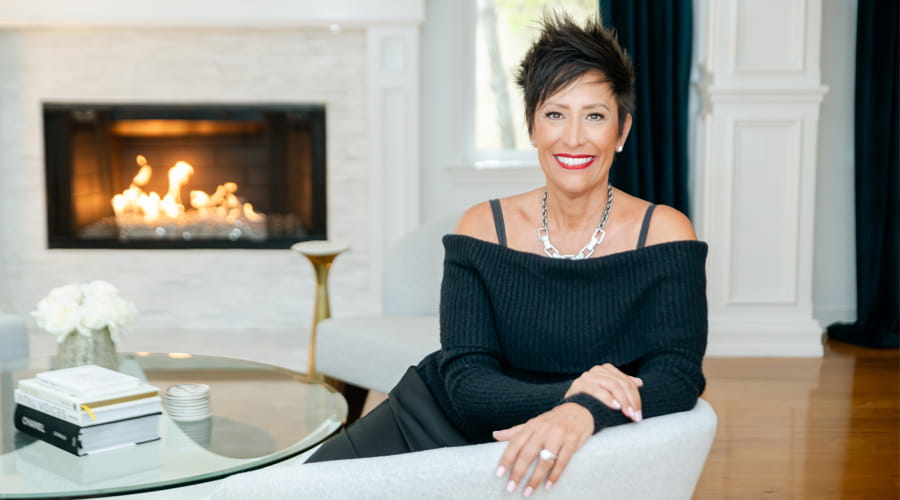
Gina Maier Vincent has spent her career naming the parts of modern life that rarely get named. Underliving™ is the latest, a term for the moment a life keeps working while quietly stopping to reach the person living it.
Vincent, Founder of Exquisitely Aligned® and Creator of Underliving™, spoke with us about why the idea feels especially urgent now, the personal experience that shaped it, and what she hopes people take from it before a crisis makes the decision for them.
What is Underliving™, and what made you decide to build a whole body of work around naming it?
We have more ways than ever to measure progress, display success, and perform a life publicly. What we have far less language for is the moment when a life continues to work but stops fully reaching the person living it.
That is Underliving™.
Underliving happens when someone remains productive, responsible, ambitious, and outwardly successful, yet feels increasingly untouched by the life they are building. Nothing appears dramatically wrong. The career may be advancing, the relationship may be stable, and the calendar may be full. From the outside, the life appears intact. Internally, something has gone quiet.
The distinction from burnout matters. Burnout says, “I cannot keep going.” Underliving says, “I can keep going... I just do not know why.”
I created Underliving to name the emotional cost of a life that continues to perform well after it has stopped feeling fully alive. We have language for crisis, anxiety, exhaustion, and failure, but much less language for a condition that hides inside capability.
“Burnout announces itself. Underliving often gets promoted.”
The idea feels especially urgent now because modern life makes performance highly visible while making inner experience easy to overlook. We can track productivity, compare progress, curate identity, and receive constant evidence of how life appears from the outside. At the same time, our attention is continually fragmented, making it harder to recognize what still fascinates us, what no longer fits, and what deserves another look.
A person may not be miserable. They may simply be living in a prolonged state of fine. We do not aspire to fine, but we can become remarkably skilled at adapting to it. Naming Underliving gives people a way to recognize that adaptation before a crisis makes the decision for them.
What moment or experience first showed you how much this idea resonates with people?
Long before I had the word Underliving, I had lived it. Early in my career, I left a loving relationship in New York and relocated to North Carolina for what appeared to be an extraordinary professional opportunity. I believed I was choosing ambition, possibility, and a larger future.
The work environment became toxic, and the disappointment changed more than my career. It affected my confidence, narrowed my expectations, and shaped the decisions I made afterward. What happened professionally followed me into my personal life, where I eventually settled into a relationship that looked safe and respectable but did not deeply move me.
One painful experience can quietly lower what we believe we are allowed to expect from the rest of our lives. Underliving is rarely one dramatic decision. More often, it develops through a series of reasonable adaptations that gradually move us farther away from ourselves.
“We do not always settle because we lack ambition. Sometimes, we settle because ambition disappointed us.”
Years later, when I began speaking about Underliving, people immediately recognized the pattern. They were still functioning, achieving, and meeting expectations, but privately, they knew something had become distant. Their lives had not collapsed. In many cases, they were being rewarded for how well they continued to carry them.
That was when I understood that Underliving was not simply my story. It was a wider cultural condition.
As the creator of Underliving™ and founder of Exquisitely Aligned®, what does your work look like across speaking, writing, your podcast, and private mentoring?
Everything I do is built around one question: Where has someone become so skilled at performing life that they have stopped noticing whether the life still moves them?
Through speaking, I examine the hidden cost of capability, the difference between fine and fascination, and why outward success does not always reveal someone’s internal experience. My goal is to give people language that changes what they are able to notice after they leave the room.
My book, Exquisitely Aligned: A Pocket Guide to Your Magnificent Future, helps readers examine how they are using their time, energy, attention, money, and voice. My podcast expands the conversation through artists, entrepreneurs, authors, and leaders who have reconsidered what success and aliveness mean in their own lives.
My one-on-one mentoring is the most private and tailored expression of the work. I help people identify what still belongs, what they may have outgrown, and what is asking for their attention next.
Underliving is not only a personal concern. It can affect discernment, creativity, decision-making, and what people believe they are allowed to expect from their lives.
The platforms are different, but the work is the same: helping people stop performing life and begin fully living it.
You mentioned having earned coverage before, including print magazine covers. What do you look for in coverage like that, and how does a platform like this fit alongside it?
I look for coverage that does more than celebrate a person. The most valuable coverage gives language to an idea, introduces it to the right audience, and helps readers recognize something true in their own lives.
Print creates credibility, visibility, and a tangible record of the work. A digital platform allows an idea to travel. It can be searched, shared, quoted, and discovered by someone who may never encounter me through a live event or regional publication.
Startup Fortune is especially relevant because many of its readers are in the early stages of building careers, businesses, relationships, identities, and definitions of success. That makes it a natural place to introduce Underliving as language they can use while the architecture of their lives is still taking shape.
What is the one shift you most want someone to make after hearing about Underliving?
I want someone to stop asking only “Am I building a successful life?” and begin asking “Am I building a life that feels like mine?”
In building a career, it is easy to make choices around what looks impressive, responsible, secure, or expected. We choose the opportunity, title, city, relationship, or next milestone without always noticing whether those decisions are bringing us closer to ourselves. Something can look like progress and still move us in the wrong direction.
The shift is not to immediately quit, leave, or dismantle anything. It is to notice the fine line, the space between what still looks right and what still feels alive, and to look again while the life is still being built.
That recognition creates discernment. It helps someone notice where fascination is disappearing, where performing is replacing living, and where they may be organizing their future around other people’s definitions of success.
The possibility on the other side is what I call Exquisitely Aligned, when what fascinates you and how you live are no longer at odds.
The goal is not merely to identify what is wrong. It is to recognize that it is still possible to build differently.
What is next for you and for Underliving™?
One of my next ambitions is to bring Underliving to the TEDx stage within the next nine months, not simply as a personal story, but as a cultural idea that gives people language for a life that still works but no longer fully reaches them.
I want Underliving to become language people use earlier, before disappointment becomes identity, performing is mistaken for living, or an entire life is built around what merely appeared fine.
A life does not have to be falling apart to deserve another look. That is the idea I hope to bring to the TEDx stage.
Underliving™ is a trademark of Gina Maier Vincent. Exquisitely Aligned® is a registered trademark.
Readers who want to explore what it means to build a life that feels as alive as it looks can begin with Exquisitely Aligned® at exquisitelyaligned.com.
About Gina Maier Vincent
Gina Maier Vincent, Founder of Exquisitely Aligned® and Creator of Underliving™, a term she developed to name the emotional cost of a life that continues to perform well after it has stopped feeling fully alive. A modern culture observer, author, speaker, podcast host, and private mentor, she explores the relationship between ambition, attention, fascination, and the lives people build. Her book is Exquisitely Aligned: A Pocket Guide to Your Magnificent Future, and The Exquisitely Aligned Podcast ranks among the top 3% of podcasts globally.
Website: exquisitelyaligned.com
Instagram: @exquisitelyaligned
LinkedIn: Gina Maier Vincent
Facebook: Gina Maier Vincent