
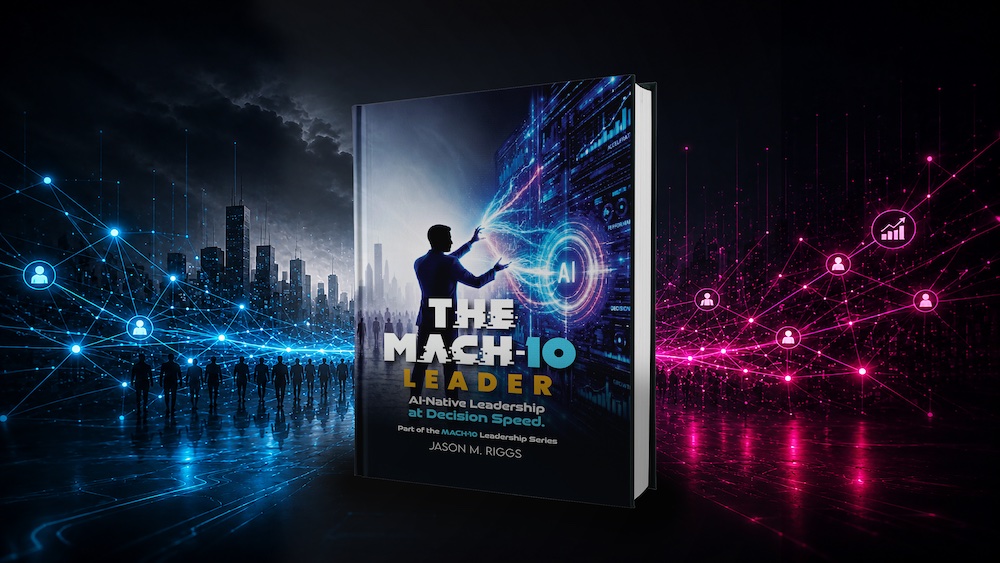
The gap is not in the technology, it is in the leadership models trying to keep pace with it.
Jason M. Riggs is the author of The MACH-10 Leader, a book that argues organizations are pouring money into AI faster than they are updating how they lead through it. In an interview with StartupFortune, Riggs laid out the thinking behind the book, what a MACH-10 leadership model actually looks like day to day, and who he wrote the book for.
What sparked the MACH-10 framework
Riggs said the idea did not start as an abstract theory but as a response to a pattern he kept seeing repeat itself. Companies were treating the AI leadership gap as a side effect of AI investment, something that would sort itself out once the technology matured, rather than as a problem that needed its own framework and its own attention.
That distinction matters because it changes where the fix has to happen. If the gap is just a byproduct, the assumption is that better tools eventually close it. If it is its own problem, as Riggs argues, then leadership itself has to change shape, not just the software stack underneath it.
Defining the MACH-10 Leader
Asked to define the term in a sentence, Riggs described it as leadership operating at the speed AI now demands, rather than the speed organizational habits were built around. That speed shows up in how decisions get made day to day, how fast a leadership team can absorb new information, and how quickly it can act on it without waiting for the slower approval chains many companies still run on.
The disconnect Riggs points to most is between how fast companies are willing to spend on AI and how slowly their leadership structures adapt to using it well. Budgets move in weeks. Leadership models, in his experience, often take years to catch up, if they catch up at all.
What the transition actually looks like
Riggs walked through what it takes for a leadership team to move from the old pace to a MACH-10 pace. It is not a single decision or a rebrand, it is a sustained shift in how a team processes information and commits to action once it has it. The hardest part, he said, is one that most executives underestimate: adopting an AI-native mindset is less about learning new tools and more about unlearning slower habits of decision making that used to be safe defaults.
That framing runs through the book. The MACH-10 Leader is not written as a technology guide. It is written as a leadership guide for people whose organizations have already committed serious money to AI and now need a way to lead that keeps up with it.
Who the book is for
Riggs said he wrote the book for executives who are already living the gap, the ones who have approved the AI budget and are now realizing their own leadership habits were not built for what comes next. If there is one shift he wants a reader to make after finishing it, it is to stop treating AI-native leadership as optional or as something to figure out later, and start treating it as the actual work.
Looking ahead, Riggs said what comes next includes speaking and consulting built around the MACH-10 framework, extending the book's argument into direct work with the organizations facing this gap firsthand. Readers can find The MACH-10 Leader and more about the framework at The MACH-10 Leader, where Riggs continues to build on the ideas the book lays out. More on his work is also available at mach10pm.com.
The core argument Riggs keeps returning to is simple even if the fix is not: AI spending will keep accelerating, and the organizations that benefit most will be the ones whose leadership learns to move at the same speed.