SK Hynix raised $26.5 billion in the biggest U.S. share sale ever completed by a foreign company. The harder part came after the bell, when investors started treating the AI memory leader like a momentum trade they no longer trusted.
SK Hynix did not have a quiet Wall Street debut. On July 10, the South Korean memory chipmaker listed American depositary receipts on Nasdaq, sold 177.9 million ADRs at $149 each and raised $26.5 billion. Associated Press called it the largest U.S. IPO by a foreign firm, ahead of Alibaba's $25 billion offering in 2014. That is not a small footnote. It tells you exactly how much money investors were willing to throw at the AI chip chain.
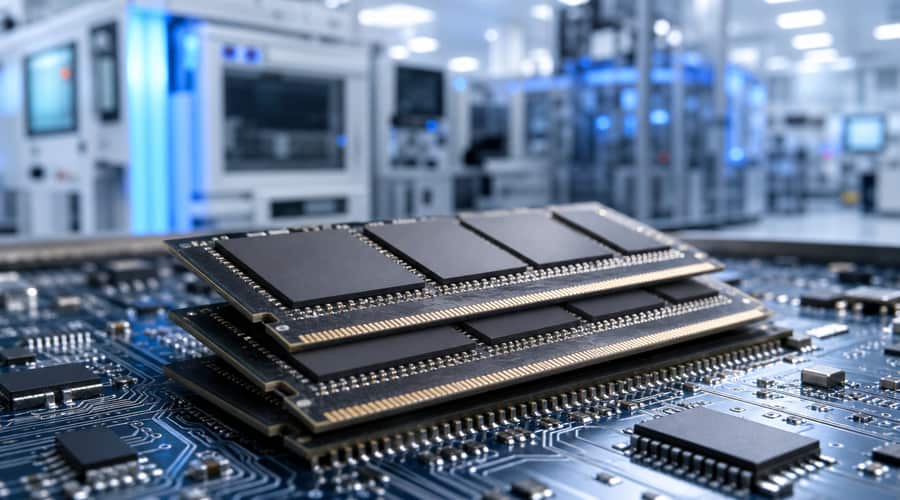
The company had the story Wall Street wanted. SK Hynix makes high-bandwidth memory, the stacked memory used in Nvidia's AI accelerators, and demand has been running ahead of supply. Business Insider reported that the deal was seven times oversubscribed. Tom's Hardware said more than 500 investment firms came in, while Baillie Gifford and Coatue Management had indicated interest in as much as $7 billion of stock. The stock opened at $170 and closed its first day at $168.01, up nearly 13% from the offer price.
Then the easy story broke.
The rally was real, but so was the air pocket
CNBC reported that SK Hynix chairman Chey Tae-won described AI chip demand as enormous and exponential, and said customers kept asking for more capacity even after the company pledged to double it. That is the kind of line investors buy first and question later. For one session, they bought it hard.
Three days later, back in Seoul, SK Hynix's locally listed shares fell 15.4% on July 13, their worst single-day drop on record, and trading was halted. Bloomberg linked the fall to a Korean brokerage note from KIS that cut its second-quarter profit forecast to about 8% below consensus, citing slower shipments of HBM4, the next generation of high-bandwidth memory chips.
One note did not erase the AI memory cycle. It did expose how little tolerance investors now have for anything that sounds like a delay. If you own these stocks, you saw the point in real time. Great demand is not enough when the valuation already assumes perfect execution.
The next day, the ADRs swung back. They rose 27.29% on July 14 to close at $193.92. Bloomberg reported that Goldman Sachs blamed much of the earlier selloff on concentrated ETF products amplifying the move in Seoul, not on a sudden collapse in chip demand. Seoul shares then climbed another 8% on July 15 as Asian technology stocks rallied.
Two days after that, they cracked again.
On July 16, SK Hynix shares in Seoul fell 11.5%, while Barron's reported that the U.S.-traded ADRs dropped 13.7% to $152.31. The selling was not isolated. CNBC linked the move to a broader chip rout spilling over from Wall Street. Samsung Electronics slid more than 8%, Micron Technology fell 8% in the United States, and Tokyo names including Advantest, SoftBank Group and Tokyo Electron were hit too.
Korea is now trying to cool the trade
The strangest part is that the demand backdrop did not fall apart. TSMC had just reported strong results. ASML had given investors another reason to believe advanced chip spending was still alive. Yet SK Hynix kept swinging because the stock had become more than a chipmaker. It had become a leveraged bet on the AI trade itself.
By the time the ADRs peaked, Bloomberg said their premium over SK Hynix's Seoul-listed shares had climbed past 50%, compared with about 3% when the offering priced. That gap is the cleanest warning in the whole story. Two claims on the same company should not trade a world apart for long. When they do, someone is paying for excitement rather than ownership.
Korean regulators have now stepped in. Barron's reported that South Korea's Financial Services Commission will suspend new listings of single-stock leveraged ETFs and raise the minimum deposit required for some ETF investors to 30 million won, about $20,285, from August 5. Frankly, that tells you what officials think the problem is. They are not treating this as ordinary price discovery. They are trying to stop leveraged products from turning a large stock into a daily casino.
The competitive picture is not frozen either. 24/7 Wall St. reported that China's CXMT is preparing an $8.6 billion memory IPO, while Samsung is reportedly looking at whether a U.S. share listing of its own would make sense after watching its rival raise so much capital. SK Hynix still has the lead in high-bandwidth memory, but the market is already pricing the company as if that lead is both durable and clean. Competition rarely stays that polite.
SK Hynix did not fail on Nasdaq. It raised more money from American investors than any foreign company before it, and its core product is still sitting at the center of the AI buildout. The problem is simpler: investors paid for certainty in a business that still has shipment timing, valuation gaps, ETF distortions and rivals chasing the same profit pool. The next hard date is July 29, when SK Hynix is expected to report second-quarter results. That number will matter more than another one-day swing.
Also read: Kimi K3 tops Claude Opus 4.8 on a major coding benchmark and rattles AI valuations • Buffett Says He Personally Built Berkshire's $31 Billion Bet on Alphabet • TSMC Pledges Another $100 Billion for US Chip Plants After Record Quarter