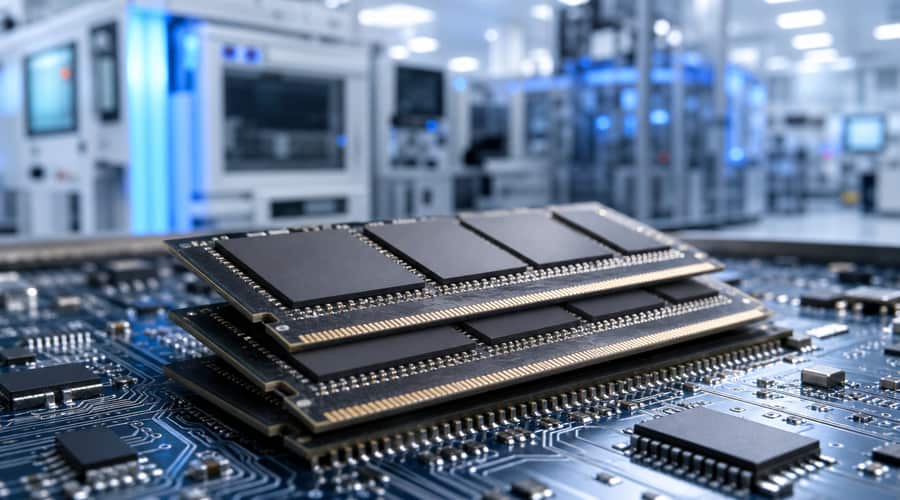
Ingenic Semiconductor just told investors its first-half profit could rise more than fivefold. It doesn't make the memory chips Wall Street obsesses over, and that's why the number is useful.
On July 13, Beijing-based Ingenic Semiconductor filed a preliminary earnings notice for the six months ended June 30, and the number was hard to miss. The company expects net profit attributable to shareholders of 1.079 billion to 1.282 billion yuan, about $159 million to $189 million, up 431.03% to 531.34% from a year earlier, according to the company notice carried by Sina Finance. Revenue is expected to reach about 3.989 billion yuan, up roughly 77%.
That's not a rounding error. It's the memory cycle showing up far away from the companies you usually hear about.
Ingenic isn't SK Hynix or Micron. Founded in 2005, the fabless chip designer sells SRAM, DRAM, NOR flash, 2D NAND flash and eMMC into automotive electronics, industrial and medical equipment, communications gear and consumer devices. It doesn't build the high-bandwidth memory that sits beside Nvidia accelerators. It sells the chips that end up in dash cameras, routers, factory sensors and other devices that don't get a keynote slide. Yet its profit growth now looks like something from the hottest corner of the sector.
That is the point. If you only watch the giant memory stocks, you miss how wide this price cycle has become. Ingenic's own filing said DRAM products benefited from tight supply and sharp price increases, while Flash products gained from demand tied to AI servers and optical modules. It also said shortages and higher prices for KGD raw materials pushed the company to raise prices for computing chip products. Costs went up. So did prices.
The Boom Is Wider Than HBM
The same force lifting Ingenic is also lifting Samsung, SK Hynix, Micron and Kioxia: memory supply is not keeping up with AI and data center demand. TrendForce said in February that first-quarter 2026 conventional DRAM contract prices would rise 90% to 95% quarter over quarter. That's well above its earlier estimate of 55% to 60%. The firm also said PC DRAM prices would at least double. Enterprise SSD prices were expected to climb 53% to 58%.
Those figures explain why a smaller Chinese supplier can produce such an abrupt change in earnings. You don't need to own the most advanced HBM product to benefit when ordinary DRAM and Flash prices move like this. Price is price. Memory is a brutal business when prices fall. It is also brutally profitable when shortages arrive.
The public market has already been treating the biggest memory makers that way. SK Hynix began trading on Nasdaq on July 10 under the ticker SKHY, with Nasdaq saying the ADR opened at $170 after pricing at $149. The Associated Press reported the offering raised $26.5 billion, making it the largest-ever U.S. IPO by a foreign firm. Micron and SanDisk had also posted huge year-to-date gains before the latest pullback.
Then the trade started to shake. According to 24/7 Wall St., SK Hynix fell 5% on July 15, SanDisk slid 6%, Western Digital slipped 4% and the Roundhill Memory ETF fell 3% as traders took profits. The same report said Micron was still up 244% for the year at that point. A hot cycle doesn't mean a calm stock chart. You know that if you've watched semiconductors for more than five minutes.
Ingenic Gives You The Cleaner Read
That is what makes Ingenic's filing more useful than another argument over SK Hynix's daily move. The giants are being priced around HBM4 shipment timing, ETF flows, ADR premiums and investor nerves after a fast run. Ingenic is showing something plainer: prices have already moved enough for a mid-sized supplier of legacy memory to turn 203 million yuan of first-half profit last year into more than 1 billion yuan this year.
Frankly, that's the cleaner signal. Traders can argue about whether the AI memory trade has run too far. They can't argue with a regulatory filing that says revenue jumped 77% and profit may rise more than fivefold.
Ingenic's 2025 numbers make the turn look even sharper. Full-year revenue was 4.74 billion yuan, up 12.5% from 2024, while earnings growth was only 2.7%. One half of 2026 is now expected to produce almost the same revenue as the whole prior year. That's not normal growth. That is a pricing cycle doing the heavy lifting.
There is still a China-specific caution here. Export controls limit how much advanced chipmaking equipment can reach Chinese firms, and Ingenic is not suddenly competing with Samsung or SK Hynix at the leading edge. But the memory it does sell, everyday DRAM and Flash for cars, routers, industrial gear and appliances, trades on the same global shortage dynamic. When that curve rises, it lifts companies Wall Street barely tracks along with the ones it watches every hour.
The practical read is simple. The memory boom is no longer just an HBM story attached to Nvidia. It has moved into the ordinary chips sitting inside ordinary devices, and Ingenic's filing puts a hard number on that shift.
Also read: SK Hynix's Record Nasdaq Debut Is Already Testing Investor Nerves • Buffett Says He Personally Built Berkshire's $31 Billion Bet on Alphabet • TSMC Pledges Another $100 Billion for US Chip Plants After Record Quarter