
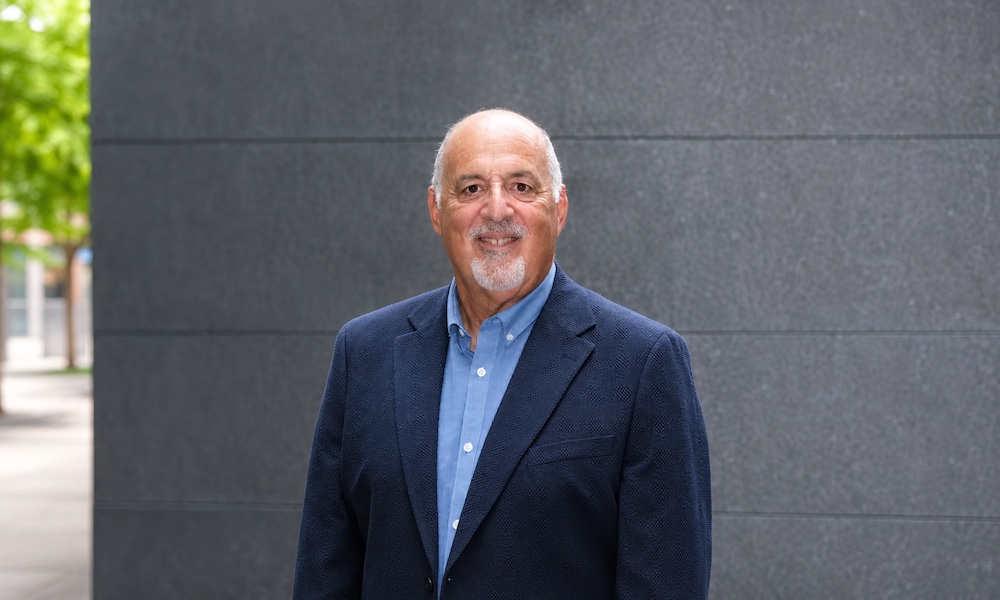
Rho-calculus was invented by Dr Greg Meredith, a mathematician; F1R3FLY is the enterprise platform built on top of it.
F1R3FLY Industries recently joined the TCS Alliance Ecosystem, putting a concurrent-computing platform built on formal mathematics in front of one of the world's largest enterprise IT services networks. We spoke with Stephen Alexander, President and CEO of F1R3FLY, about where the platform came from, what makes it different, and what the TCS relationship means for the company's next few years. One clarification Stephen was keen to make first: rho-calculus itself was invented by his colleague Dr Greg Meredith, and his answers below reflect that distinction between the underlying mathematics and the company built on it.
What first drew you to rho-calculus as the foundation for F1R3FLY, and what problem were you trying to solve that existing concurrent-computing platforms couldn't handle?
I met Dr Greg Meredith, who developed rho-calculus and is the basis of F1R3FLY, about 18 months ago. Greg had started deploying F1R3FLY in the AI and Super AI world, and his largest client was SingularityNET, who are developing products using F1R3FLY.
F1R3FLY provides the strongest form of security, similar to blockchain, but unlike blockchain it runs at enterprise-grade speed, and you are able to store, view and amend data on chain. This has never been done before.
How would you explain, in plain terms, what makes a rho-calculus based platform mathematically secure compared to conventional approaches?
Large organisations face two pressures at once. First, speed: most transaction platforms still process work one item at a time in a single queue, which cannot keep pace with institutional volumes or AI-era workloads. Second, security: in a conventional system, data sits together in large databases, so once an attacker is inside, through one stolen password or one software flaw, they can frequently reach everything. And because conventional software is only ever tested, not proven, no one can say with certainty that the flaws are not there. F1R3FLY was designed to remove all three weaknesses at once, in the same architecture.
The platform is proven, not tested. F1R3FLY is built on a formal mathematical foundation, the rho-calculus and its programming language, Rholang. Software written on the platform can be checked with mathematical rigour before it runs, the way an engineer proves a bridge design rather than simply driving trucks over it. Whole categories of software flaw that attackers routinely exploit are eliminated by construction rather than patched afterwards.
It is also parallel by design. Instead of one queue in front of one till, the platform behaves like a hall of tellers all serving customers at once, so independent transactions run simultaneously and throughput grows with the hardware available rather than hitting a ceiling. Every record sits in its own vault rather than behind one lock on the whole database: each individual record is separately encrypted and controlled by its own digital key, which can be set to require multiple sign-offs before it opens, so if a key is ever compromised, the exposure is one record, not millions. The platform also supports quantum-safe encryption, protecting data against the next generation of computing threats.
Every action is written to a permanent, tamper-evident ledger as a by-product of how the platform computes, so an organisation can show a regulator exactly what happened, in what order, with nothing edited after the fact. F1R3FLY is also platform-independent, sitting beneath existing enterprise software rather than replacing it.
Joining the TCS Alliance Ecosystem is a major milestone. What does that partnership open up for F1R3FLY, and how did it come about?
We were introduced to TCS by our Head of Sales, who had worked with them for many years. It enabled us to offer the TCS global customer base solutions to many situations, particularly cyber security.
What kind of enterprise clients or use cases are you most focused on reaching through the TCS relationship?
We are currently working in the financial sector, tokenisation and healthcare.
What's been the hardest part of building F1R3FLY, whether technical, commercial, or organizational?
The hardest part was to make people understand the scope of F1R3FLY, and also that smaller companies are able to develop things as important as large ones.
Looking back on the journey so far, what would you tell yourself at the very beginning?
It will take twice as long as you think, and you must persevere.
Where do you see F1R3FLY heading over the next few years, especially with TCS as a distribution channel?
It will be rolled out to governments, institutions and the public. It will also enable data centres to run more efficiently, requiring much less size than anticipated, thus reducing environmental impact.
What advice would you give to other founders building on unconventional or highly technical foundations like yours?
Deliver your message in plain English and try to keep away from jargon.
From a mathematician's proof to a platform running inside one of the world's largest IT services alliances, F1R3FLY's path has been unusually direct about where its foundations come from. Stephen Alexander is candid that the mathematics is Greg Meredith's; his own job has been building the company, the client relationships and now the TCS distribution around it. With the alliance now in place and early work underway across finance, tokenisation and healthcare, the next test is whether that formal rigour translates into the kind of enterprise-scale rollout Alexander describes, one where speed and provable security are no longer a trade-off.