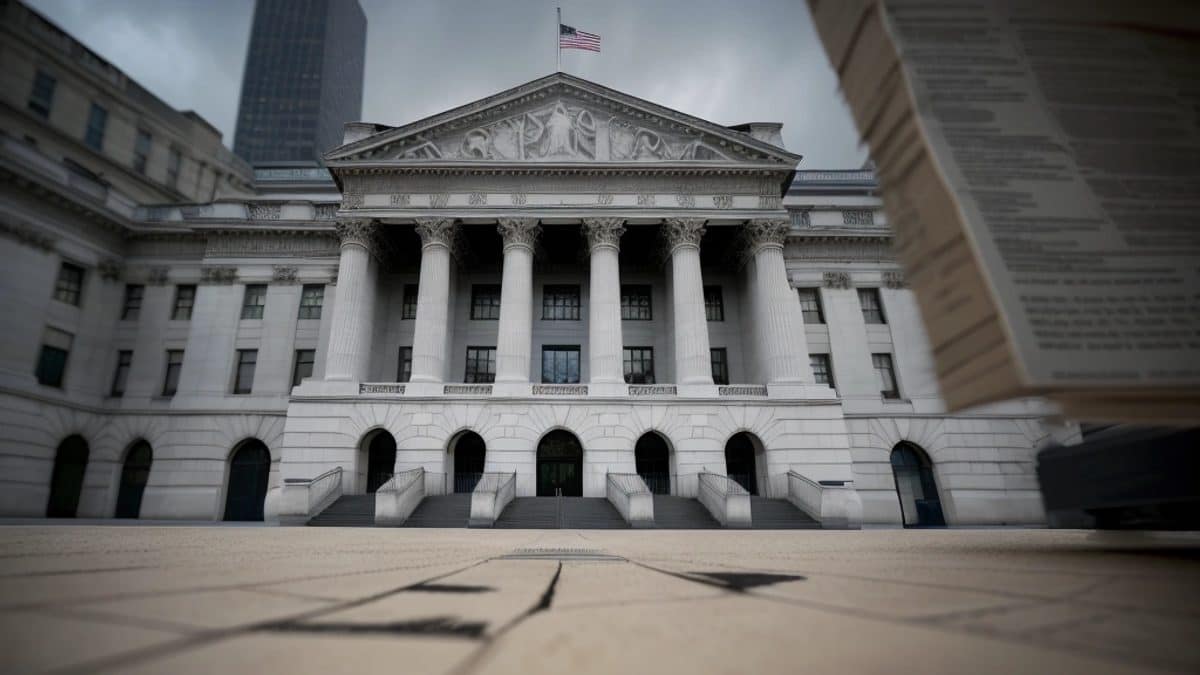
Scott Bessent confirmed on Wednesday that the Trump administration is targeting July 1 to reinstate sweeping tariff structures on Chinese goods, steel, and aluminum, sending fresh shockwaves through currency and equity markets.
The trade detente is officially over. US Treasury Secretary Scott Bessent announced this morning that the Trump administration's tariff framework could be fully operational again by July 1, 2026, marking the most concrete timeline yet for a return to aggressive protectionist trade policy. Speaking at a press conference and following up on X, Bessent framed the restoration as a priority for addressing the trade deficit and defending domestic manufacturing, language that leaves little room for ambiguity about the administration's direction heading into the second half of the year.
The technical groundwork is already in place. The Office of the US Trade Representative has finalized updates to the relevant trade lists, and Bessent confirmed that his Treasury team is coordinating closely with the Commerce Department to ensure the July date holds. That level of inter-agency alignment suggests this is not a trial balloon. The administration appears to have done the procedural homework required to move quickly.
What exactly is being restored matters enormously for businesses trying to plan around input costs. The central target is the Section 301 tariff exclusions that had softened the blow for importers of certain Chinese industrial goods and consumer electronics. Those exclusions are set to go. Baseline steel and aluminum tariffs on global trading partners are also back in scope, meaning this is not a China-only story. Allies and competitors alike are looking at potential cost increases, which broadens the geopolitical surface area considerably.
Currency markets did not wait for the fine print. The US Dollar Index strengthened against both the Euro and the Yuan this morning as traders began pricing in the trade friction that higher tariffs reliably generate. A stronger dollar can cut both ways: it gives US consumers some buffer against import price increases, but it also squeezes American exporters competing for contracts priced in foreign currencies. That tension will likely define a significant portion of the macro conversation through Q3.
For the automotive and technology sectors, the concern is more immediate and operational. Both industries run deeply integrated global supply chains that were structured, in many cases, around the assumption that tariff exclusions would remain stable. Re-imposing 25% baseline rates on roughly $370 billion worth of Chinese goods would force procurement teams back to the spreadsheets, and not every alternative supplier has the capacity to absorb that volume on short notice. Some cost pass-through to consumers and business customers appears increasingly likely.
Bessent's announcement also carries a broader signal for trading partners who had read the past few years of relative calm as a structural shift in US trade posture. It was not. The July timeline tells governments in Brussels, Beijing, Seoul, and Ottawa that they have roughly two and a half months to decide how to respond before the rates snap back into place. That is a short window for the kind of negotiation that typically moves slowly, and it raises the real possibility of retaliatory measures being put back on the table by midsummer.
What to Watch Between Now and July
The critical variable over the coming weeks is whether any trading partners secure carve-outs before the July 1 deadline. The USTR's finalized trade lists are a strong indicator of intent, but the administration has shown willingness in the past to use tariff timelines as negotiating leverage. Companies and investors should watch closely for any bilateral talks that gain traction, particularly with the European Union and with Southeast Asian manufacturing hubs that have become alternative sourcing destinations for goods previously sourced from China.
For equity markets, the sectors most exposed in the near term are industrials, semiconductors, and consumer electronics. Any company that has not already stress-tested its cost structure against a full tariff restoration is now running behind. Investors should expect guidance revisions and cautious language on margin outlook when earnings calls resume next month. The macro calm that characterized early 2026 looks significantly harder to sustain from here.
Also read: Trump is heading for a historic confrontation with the Federal Reserve that could reshape American economic policy for a generation • Trump is heading for a historic confrontation with the Federal Reserve that could reshape American economic policy for a generation • A damning CBO report is turning Trump's trade gamble into Wall Street's worst nightmare