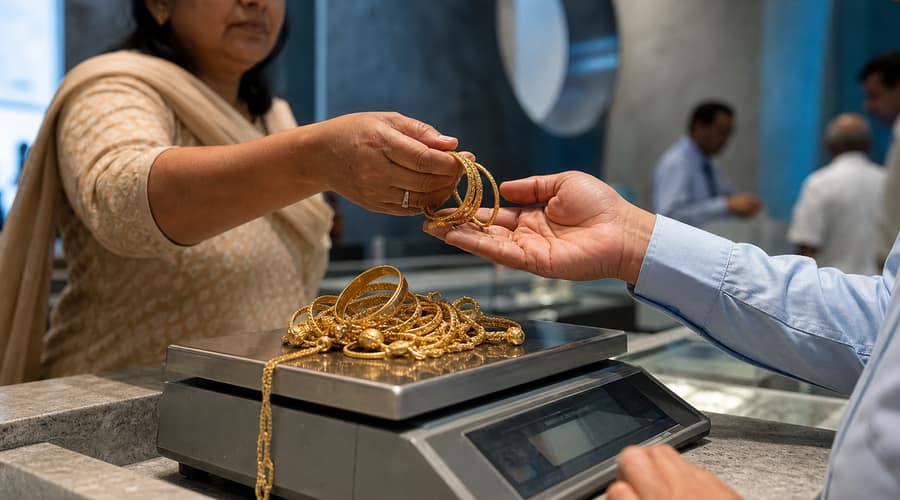
A viral post about a 320-gram, 21-karat gold belt purchased a few years ago for $21,500 has become an unlikely illustration of gold's extraordinary bull run, with the belt's melt value now exceeding $30,000.
It started with a social media post, not a Bloomberg terminal. Somewhere between Reddit threads and X timelines, a user shared images of a 21-karat gold belt, 320 grams of it, bought for $21,500 roughly two to three years ago. The post wasn't pitched as investment advice. It didn't need to be. The numbers spoke clearly enough, and by April 18, 2026, the conversation had gone wide.
The math is straightforward but striking. A 320-gram piece of 21-karat gold contains approximately 10.3 troy ounces of pure gold once you adjust for purity (21 divided by 24, applied to the total weight). With gold trading consistently above $2,800 per troy ounce through much of Q1 and into Q2 2026, the raw commodity value of that belt sits somewhere between $29,000 and $30,000. That's a gain of roughly 40% on the original purchase price, and that figure doesn't account for any artisan premium the piece might carry on the resale market.
What makes this particularly instructive is the timing of the original purchase. If the belt was bought in 2022 or 2023, gold was trading in the $1,800 to $2,000 range per troy ounce. The buyer likely paid close to spot price with a modest premium, which is typical for 21-karat gold in markets across the Middle East and parts of Asia where this purity grade is commonly traded. Unlike the 24-karat bullion favored in Western financial markets, 21k jewelry moves with tighter premiums, meaning the buyer got meaningful gold exposure without a significant markup above melt value.
The viral appeal of the post taps into something real. Physical gold has always carried cultural weight in certain parts of the world, functioning simultaneously as adornment and savings vehicle. What's shifted in the current macroeconomic environment is how broadly that logic is resonating. As digital asset markets continue to cycle through volatility and equity indices face headwinds from persistent geopolitical uncertainty, the straightforward proposition of owning something tangible and universally valued has found a wider audience.
Gold broke through the $2,800 per ounce threshold in 2026 on the back of sustained inflationary pressure and central bank buying that has shown no sign of slowing. Retail interest in physical gold, whether in bar form or as jewelry purchased close to melt value, has followed that institutional momentum. The belt story resonates precisely because it's not abstract. It's a wearable object that has outperformed many traditional equity indices over the same holding period, and that's a comparison people can actually visualize.
What the belt story doesn't tell you
Context matters here. Converting that gain into cash isn't as frictionless as selling a stock position. Jewelry resale involves finding a buyer willing to pay melt value or above, and most retail gold buyers or pawn channels will offer below spot. The 40% appreciation is real on paper, but realizing it depends heavily on the exit. A gold dealer or refiner will discount for processing; a private buyer who values the piece aesthetically might pay more. The actual return depends on where and how it's sold.
That caveat aside, the broader signal is legitimate. Gold purchased near spot price, even in jewelry form, has functioned as an effective store of value through one of the more turbulent stretches in recent financial memory. For investors monitoring the commodity space, the retail visibility of posts like this one serves as a useful sentiment indicator. When a gold belt becomes a trending financial conversation, it reflects the same underlying demand that's been pushing institutional allocations higher all year. Watch whether that retail enthusiasm translates into broader physical gold demand figures when the World Gold Council publishes its next quarterly report.
Also read: HSBC report arguing Bitcoin meets the same value logic as gold and the dollar sends crypto markets surging • Costco has quietly become one of America's most formidable precious metals retailers and Wall Street is paying attention • Wells Fargo sees gold hitting $8,000 by 2027 as the metal shifts from hedge to portfolio anchor