A LocalLLaMA post showing Qwen-3.6-27B running as a daily driver coding setup on a single RTX Pro 6000 Blackwell with 96GB VRAM has struck a chord with 159 upvotes and 123 comments in its first ten hours, pointing to a shift that is bigger than any individual benchmark: open-weight models are quietly becoming viable for serious production development work.
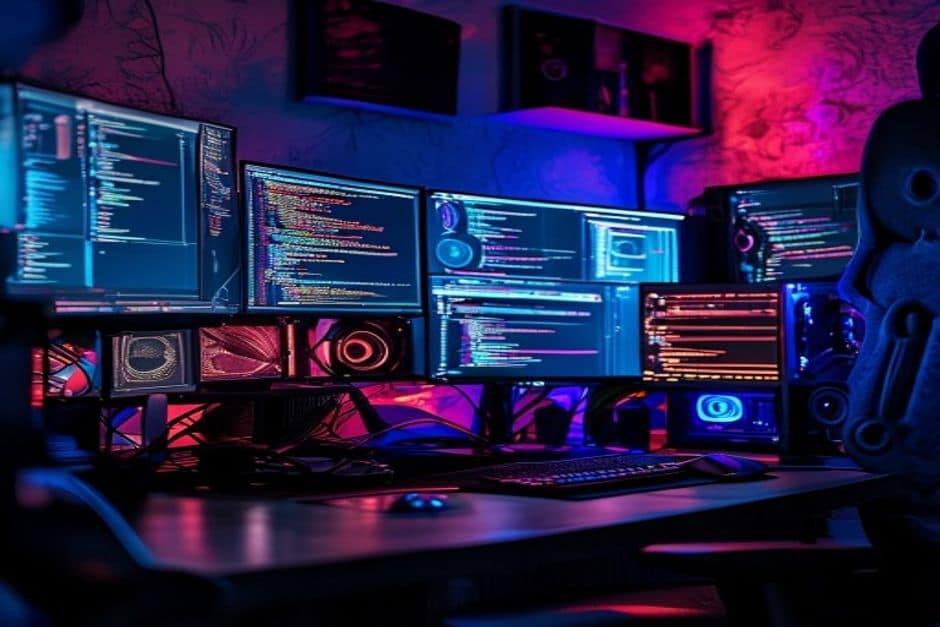
The post appeared on May 1 and the author framed it simply. In response to what the community is calling the Great Token Reckoning of 2026, a reference to the wave of API pricing increases and token limit tightening that hit cloud AI services in the first quarter, they switched their primary coding workflow to a local setup and have not looked back. The model is Qwen-3.6-27B running at q8_k_xl quantization, which preserves nearly full model precision at the cost of approximately 29GB of VRAM. The GPU is the NVIDIA RTX Pro 6000 Blackwell, a workstation card with 96GB of GDDR7 memory. The tooling layer is VSCode Insiders with LM Studio handling inference. The application under development was a data mining and web scraping system, the kind of multi-component project that requires a model to reason across architecture decisions, write and debug code in parallel threads, and maintain coherent context across a long working session.
The performance figures the author shared are the part that got the thread's attention. By the following morning, the setup had processed 2 million input tokens and generated nearly 700,000 tokens of output. It autonomously created over 40 subtasks, one per original data source with the freedom to map dependencies, and produced a matching set of documentation files. The author spot-checked the generated documentation against actual code and described the results as flawless. The inference settings that produced this output were conservative: temperature at 0.1 for deterministic code generation, repeat penalty at 1.1, standard top-k and top-p sampling. For a 27-billion-parameter model running entirely on local hardware, that level of sustained performance on a real agentic task is not what most people would have predicted possible a year ago.
The comment thread is where the broader argument develops. Several engineers with comparable GPU setups confirmed similar experiences, noting that the q8 quantization on the RTX 6000 Pro hits a sweet spot between model quality and throughput. Others compared the setup directly to cloud coding agents. The consensus that emerged, not unanimous but repeated enough to be significant, is that Qwen-3.6-27B running locally handles routine coding tasks, documentation generation, refactoring, and unit test writing at a quality level that matches or exceeds what they get from GitHub Copilot or base Claude Sonnet via API, with zero latency spikes, no rate limits, and complete data privacy. The comparisons to GPT-5 and Claude 4.5 are more nuanced: commenters broadly agree that those frontier models still have an edge on complex multi-step reasoning and novel architectural problems. But for the daily grind of writing, editing, and explaining code, the local setup competes.
The economics are worth working through directly. The RTX Pro 6000 Blackwell carries a street price north of $6,000. An active GitHub Copilot Business subscription costs $19 per user per month, and heavier users of Claude's API at sonnet-tier pricing can easily spend $100 to $200 per month depending on context window usage. A developer who processes the kind of token volumes described in the LocalLLaMA post would exhaust generous API budgets in days, not months. The hardware investment breaks even somewhere between 18 and 36 months of equivalent API spend, depending on usage intensity, and after that the model runs for free indefinitely. For studios, agencies, or engineering teams running multiple seats, the maths accelerates considerably. One workstation-class GPU serving several engineers over a local network changes the calculation entirely.
Qwen's cadence of open-weight releases is part of what makes this moment feel different from previous cycles of local LLM enthusiasm. Alibaba's Qwen team has released multiple coding-focused models in 2026 alone, each improving on the last. Qwen3-Coder-Next, released in February, uses a Mixture-of-Experts architecture with 80 billion total parameters but only 3 billion active per forward pass, making it runnable on a single RTX 4090 at Q4 quantization. Qwen3.6-27B is a dense model that trades broader accessibility for precision at higher quantization levels on workstation hardware. The Qwen3.6-35B-A3B variant, announced in April, brings agentic coding capabilities to an even broader hardware base. The release frequency, combined with the genuine quality of the models, is applying pressure to Western AI labs that release frontier models behind API paywalls on slower timelines. Developers are voting with their workflows, and a thread with 159 points and 123 comments in ten hours on a niche technical forum is a reasonable signal of which direction they are moving.
For startups thinking about infrastructure, the implications are direct. The assumption that AI capabilities require cloud API relationships is eroding. Companies handling sensitive data, those in regulated industries like legal, healthcare, or finance, or those simply unwilling to pay escalating API costs as their usage scales have a credible local alternative that did not exist at this quality level 12 months ago. The gap between what a well-configured local stack can do and what a cloud API provides is still measurable but no longer disqualifying for a large class of professional use cases. The developer who posted to LocalLLaMA is not a hobbyist with a gaming GPU. They are a professional who ran a production workload through a local model for a day and found it good enough to keep. That is the threshold that matters.
Also read: Unsloth found and fixed a bug in Mistral Medium 3.5 and the story reveals how much of the open-weight model race is actually a tooling race • Viral prompts for fake old photos reveal how synthetic nostalgia is becoming one of AI image generation's most persuasive and least discussed capabilities • GPT-5.4 Pro's approach to an Erdős conjecture has been extended to additional problems and the math community is watching carefully