An amateur prospector turned accumulated gold dust into a 9.236-gram button that passed a 22-karat acid test, touching a nerve in the broader conversation about physical wealth in an uncertain economy.
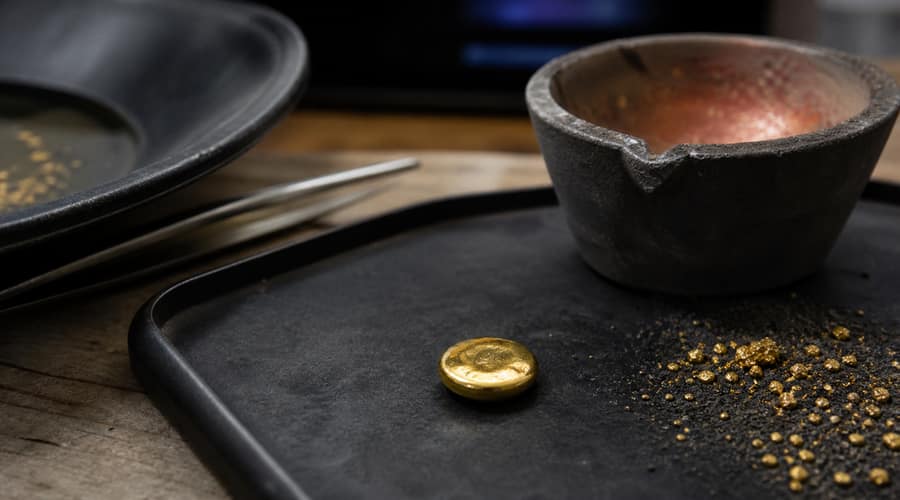
The setup is deceptively simple: years of recreational panning, a collection of fine gold dust, a crucible, and enough patience to see it through. Over the weekend of April 18, the result was a small, solid gold button weighing 9.236 grams that tested at 22 karats , 91.7% pure , confirming not just a successful melt but a meaningful separation of base metals along the way. The post documenting the process spread quickly across Reddit and X, drawing engagement well beyond the prospecting community.
What makes the 22-karat result notable is what it implies about either the source material or the refiner's technique. Gold recovered from alluvial panning typically arrives mixed with fine silica, iron oxides, and other minerals. Achieving 91.7% purity from raw dust suggests the material came from a high-grade deposit, or that the individual applied meaningful skill during the melt , likely using borax flux to draw out impurities. Neither outcome is accidental, which is part of why the post landed with credibility rather than skepticism.
At spot prices hovering around $3,320 per troy ounce as of mid-April 2026, 9.236 grams converts to roughly $986 in melt value. That figure won't retire anyone, but it reframes how the hobby gets discussed. Recreational panning is usually framed as a leisure activity, the returns too modest to treat seriously. A documented, acid-tested button changes the register slightly , this is recoverable, refinable, sellable wealth accumulated incrementally over years of work outdoors.
The social traction here connects to something bigger than one person's weekend project. The "stacking" community , individuals who accumulate physical gold and silver as a hedge against currency debasement and institutional risk , has grown steadily more visible through 2025 and into 2026, driven in part by sustained inflation concerns and skepticism toward paper assets. Self-refined gold fits neatly into that worldview: it bypasses the premium markups of coin dealers, it is tangible in a way an ETF share is not, and the act of producing it carries a kind of legitimacy that purchasing it does not.
Refining equipment accessible to hobbyists has also improved considerably. Induction melters designed for small batches, quality acid test kits, and flux compounds are all commercially available at price points that make a first melt approachable for anyone who has spent time accumulating material. The barrier is lower than most people assume, and posts like this one serve as proof of concept for prospectors sitting on jars of accumulated dust who have never taken the next step.
The timing matters too. Gold crossed $3,000 per troy ounce for the first time in early 2025 and has continued to climb through the first quarter of 2026, supported by central bank buying, geopolitical uncertainty, and persistent real-rate ambiguity. Against that backdrop, a hobbyist refining his own material and documenting the result reads less like a novelty and more like a natural extension of a market-wide reappraisal of the metal's role in a personal portfolio.
What to watch is whether episodes like this push more prospectors to treat accumulated dust as a serious asset rather than a curiosity. If spot prices hold above $3,000 and refining literacy continues to spread through online communities, the volume of small-scale, self-refined gold entering informal and formal secondary markets could become a more visible footnote in retail demand data. For now, one button, one acid test, and 9.236 grams of validated work have made the case more clearly than most market reports.
Also read: Red spots appearing on 2026 American Gold Eagles have rattled investor confidence and tightened an already strained physical market • Red spots appearing on 2026 American Gold Eagles have rattled investor confidence and tightened an already strained physical market • Gold fever is running hot again as prices and discovery headlines pull investors back to the oldest safe haven