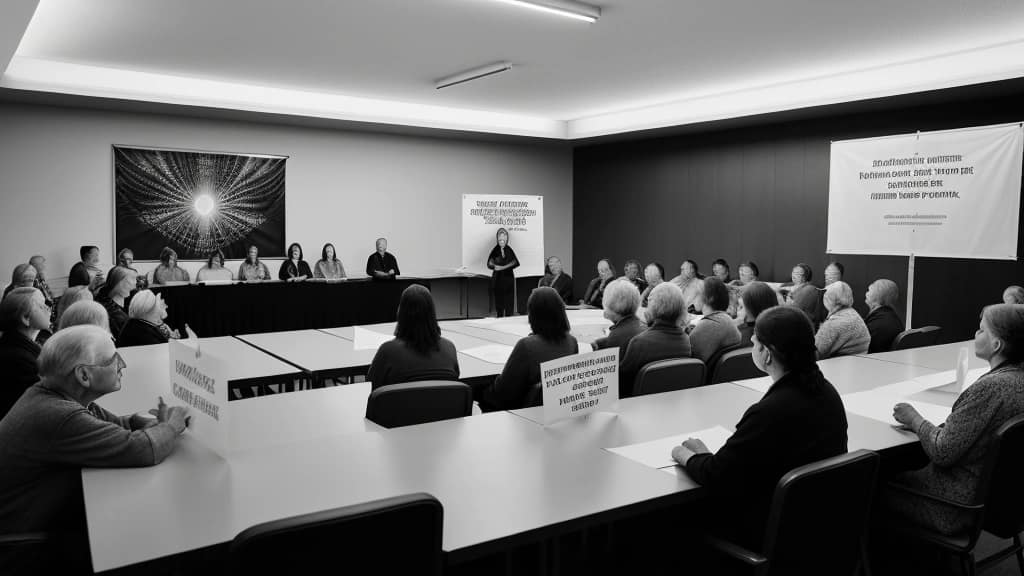
Public support for AI infrastructure has fallen sharply across party lines, with a POLITICO poll showing 46 percent of respondents opposing data centers in their communities compared to 35 percent in support, as local opposition to power, water, land, and tax-break demands coalesces into legislative barriers and election issues from Virginia to Texas.
The opposition is not hypothetical. Virginia, home to more data centers than any state, faces a budget impasse over whether to end a tax incentive valued at $1.6 billion for fiscal 2025. Residents argue that the state should not subsidise an industry that consumes power equivalent to small cities and requires new transmission infrastructure. Texas Republican Party passed a resolution calling for a halt to new construction until water and power safeguards are implemented. Wisconsin voters are trying to recall their mayor over data center approval. Independence, Missouri approved $6.26 billion in tax breaks for a 400-acre Nebius campus near schools and a river, sparking a Facebook group called Stop the AI Data Center. The pattern is consistent across red and blue states.
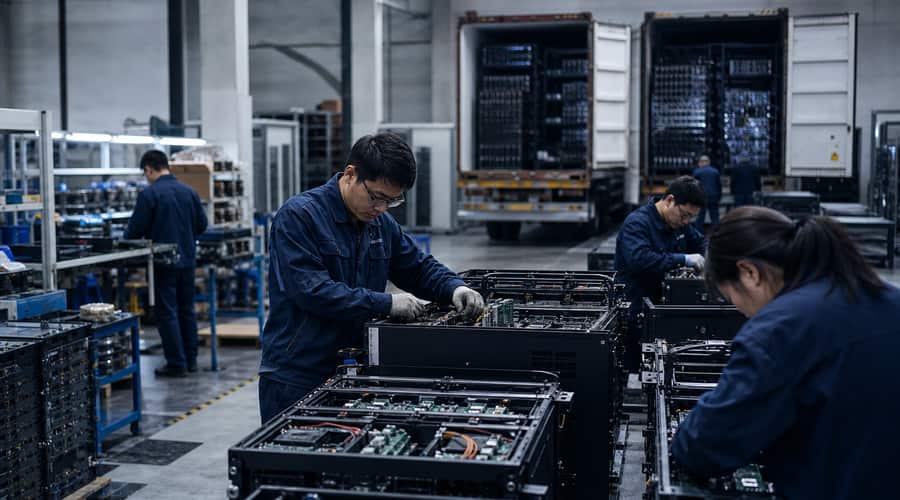
The resource demands are the unifying grievance. A single large AI data center consumes 100 to 500 megawatts, equivalent to 75,000 to 375,000 households. Microsoft and Google data centers in Virginia alone used more electricity than the state capital of Richmond. Water consumption for cooling runs 300,000 to 1 million gallons daily per facility. Tax breaks total billions: Virginia's incentive alone exceeds $1.6 billion annually. Local governments grant abatements expecting jobs and economic growth. Communities experience higher utility bills, grid strain, and environmental impact without proportional benefits. Gallup shows six in 10 Americans distrust AI, with bipartisan agreement that safety regulations are essential.
Politicians are responding. Democratic governors like Virginia's Abigail Spanberger and New Jersey's Mikie Sherrill campaigned on forcing data centers to pay full power costs and upgrade grids. Republican senators Josh Hawley, Katie Britt, and Marsha Blackburn demand tougher AI regulation. Florida Governor Ron DeSantis opposes data centers despite his pro-tech stance. Bernie Sanders proposed a Vermont moratorium. The bipartisan split is geographic: politicians in data center-heavy districts face organised opposition. The POLITICO poll shows the issue scrambles traditional left-right lines, creating unexpected coalitions.
For SF readers, the backlash constrains AI growth beyond Nvidia supply or model quality. Hyperscalers forecast $710 billion in North American data center spending for 2026. At least $156 billion across 48 projects faced blocks or delays in 2025 due to local opposition. Permitting timelines extend from 12 to 36 months. Utility capacity limits force relocation to rural areas with transmission constraints. Tax break rollbacks increase project costs by 10 to 20 percent. Startup and cloud AI economics change because infrastructure approvals slow. Compute capacity growth rates that hit 10x annually now face physical limits.
The opposition creates openings for distributed, energy-efficient compute models. Edge inference on mobile devices and laptops reduces centralised demand. Modular data centers with smaller footprints face less community resistance. Renewable-powered microgrids in remote areas bypass urban grid constraints. Startups building inference appliances, federated learning platforms, or on-device model compression gain relative advantage. New financing strategies emerge: community benefit agreements that share power savings, co-located solar-plus-storage facilities, and equity stakes for local stakeholders. Microsoft announced a "community first" initiative promising full power cost coverage, no tax breaks, water replenishment, and local training.
The political shift reflects broader AI scepticism. Pew Research shows Americans hold more negative views of AI than other countries. The populist backlash targets big tech subsidies while promising jobs and innovation. Data centers deliver neither at the scale promised. The $710 billion hyperscaler forecast assumes continued permitting and tax incentives. Local opposition forces recalibration. SF founders who treat infrastructure as infinite capacity will find reality more constrained. Those who build for distributed, efficient, and community-aligned compute will navigate the new landscape better.
Also read: Apple's camera AirPods are the ambient AI hardware layer that startups cannot build alone • OpenAI's new audio models unlock voice-native agents with realtime reasoning and translation • ChatGPT's Trusted Contact feature turns AI assistants into safety infrastructure for the first time