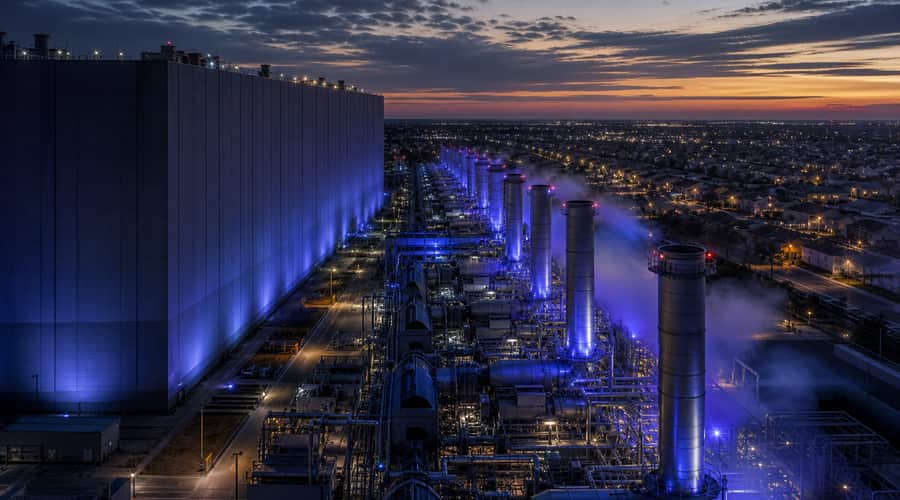
Gas turbines built to keep AI data centers running are dumping pollution into communities with almost no public review, and lawsuits, mayors and regulators are only now scrambling to catch up.
In Southaven, Mississippi, xAI has installed 33 natural gas turbines beside its Colossus 2 data center, and it did so without the permits the Clean Air Act requires. The plant has the potential to emit more than 1,700 tons of nitrogen oxides a year, along with up to 180 tons of fine particulate matter, 500 tons of carbon monoxide and 19 tons of formaldehyde, according to Earthjustice, which is representing the NAACP in a federal lawsuit filed April 14. Xai added six more turbines after the NAACP's initial notice in February, bringing the total to 33 before the suit even reached a courtroom.
Then the Department of Justice stepped in. On June 16, it filed a motion to intervene on xAI's side, arguing the lawsuit threatens national security because Colossus supports Department of War operations. Frankly, that argument tells you where the political winds are blowing: a civil rights group suing over illegal air pollution now has to fight the federal government too.
Mississippi is not an outlier. It is the template.
Texas already hosts roughly 300 operational data centers with another 200 in development, and the Texas Tribune reports the state is on pace to overtake Virginia as the country's largest data center market by 2030. Cornell researchers estimate the industry's buildout could add 24 to 44 million metric tons of carbon dioxide by then, the rough equivalent of putting five to ten million more cars on the road. Meta is planning a 366 megawatt gas plant to power its El Paso data center. In Pecos County, developer Pacifico was granted the largest air pollution permit in the country for its GW Ranch project, allowing up to 33 million tons of greenhouse gas emissions annually. Texas regulators have let companies start up thousands of new pollution sources with no public notice and no environmental review.
You don't need a chemistry degree to know what particulate matter and nitrogen oxides do to a respiratory system. Harvard's T.H. Chan School of Public Health put a dollar figure on it: between $53 million and $99 million in annual health damages tied to air pollution from AI data centers, among the largest health-cost estimates ever attached to a single facility. Harvard's researchers found something else worth sitting with. The proposed AI energy projects with the worst pollution impacts tend to land in communities that already carry higher social vulnerability, lower incomes and higher rates of respiratory illness. That's not a coincidence of geography. It's where the land and the political resistance are cheapest. Nationally, a National Bureau of Economic Research study puts the hidden health and environmental cost of data centers at $25 billion a year.
Mayors Are Moving Faster Than Washington
Forty mayors from cities including Chicago, Seattle, Phoenix, Miami and Montreal signed a pact at London Climate Action Week on June 23, organized through C40 Cities, laying out shared principles for siting, powering and regulating urban data centers. Melbourne offered the starkest number behind the pact: its planned data centers could consume 20 billion liters of water a year, about 4 percent of the city's entire drinking supply. Data Center Watch counted at least 75 projects facing organized community resistance in just the first quarter of 2026.
Washington, meanwhile, is stepping back. EPA Administrator Lee Zeldin said at the Politico Energy Summit on June 10 that the agency will not pursue nationwide environmental standards for the AI industry, leaving those decisions to states and localities. Twenty seven states are now advancing their own data center legislation. Maine looks likely to become the first to act, with a construction pause that would run until November 2027 while lawmakers study the impact.
So the fight over what AI's power infrastructure is allowed to burn, and who has to breathe it, is being settled turbine by turbine, city council by city council, with no referee above the state line. That's not a regulatory gap. It's the current policy.
Also read: Cloudflare Starts Charging AI Companies for the Web Data They Once Took Free • Kevin Warsh Just Put Marc Andreessen In The Room Where Fed Policy Gets Made • Nandan Nilekani Steps Back From Fundamentum to Bet Bigger on Fund III