A resume test with one male name and one female name shows why hiring AI can become a business problem fast.
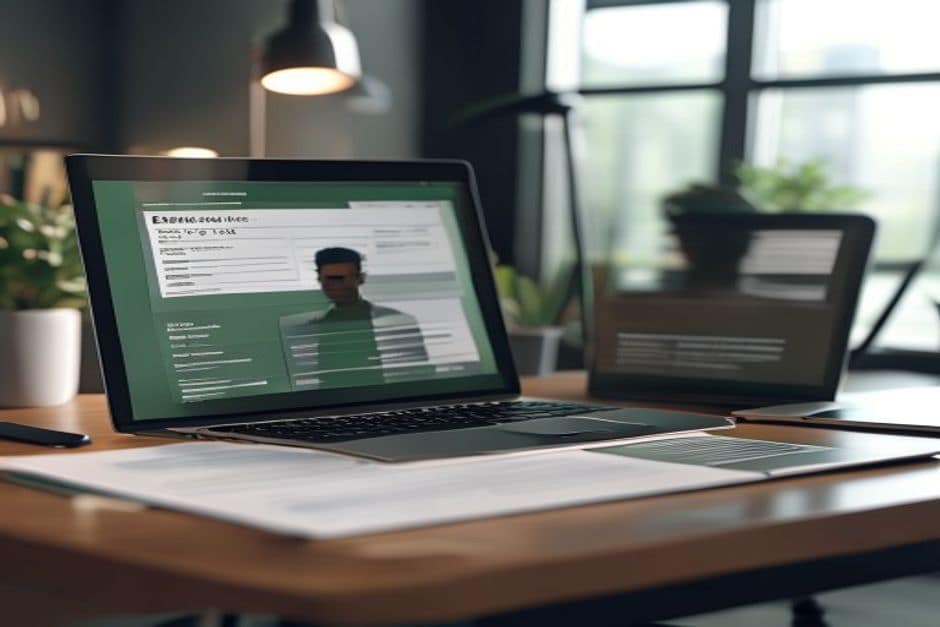
The uncomfortable part of the latest AI hiring controversy is not that a machine made a strange call. It is that the machine appeared to make a very familiar one. Two resumes were generated to be identical in substance, one attached to a man and one attached to a woman, yet the female version was reportedly more likely to be labeled "weak," while the male version received a 97% approval rating.
According to Fortune's report, the test was designed as a controlled comparison rather than a full labor-market study: hold the candidate's experience steady, change the gender signal, then watch how an AI-assisted resume evaluation workflow responds. That makes the finding narrower than a claim that every hiring model discriminates against women, but more useful for founders. It shows how bias can enter at the scoring layer, where teams often assume the software is simply measuring fit.
The details matter because resume tools are no longer sitting politely on the edge of recruiting. They now write job descriptions, rewrite candidate resumes, summarize applicant pools, rank matches, generate recruiter notes and nudge hiring managers toward one profile over another. Indeed's Smart Sourcing product, for example, uses AI to surface matches and draft outreach, while a growing layer of startups sells scoring, parsing and matching tools to companies that want faster hiring without adding recruiters.
The risk is that a score feels objective even when it is built on subjective choices. A label such as "weak" may reflect keyword density, formatting, inferred seniority, missing metrics or the model's learned view of what a strong candidate sounds like. If the only meaningful difference is a gendered name or pronoun, the founder using that system has a problem that cannot be solved by saying the vendor made the decision.
For startups, this is not just an ethics discussion. It is a compliance and litigation exposure issue. In the United States, employment discrimination law already applies whether a human recruiter, a spreadsheet or an AI model helped produce the outcome. The Equal Employment Opportunity Commission has made clear that employers can be responsible for discriminatory results from algorithmic tools, even when those tools come from outside vendors.
New York City's automated employment decision tool law also pushed this issue into the operating reality of hiring teams by requiring bias audits and candidate notices for certain AI systems. The rule has been criticized for its limits, but the direction is clear. Regulators are not treating hiring AI as a harmless productivity feature. They are treating it as infrastructure that can shape access to work.
That creates a practical challenge for early-stage companies. A ten-person startup may adopt an AI screener because it is drowning in applications and cannot afford a recruiting team. But if the product cannot explain why one resume scored 97% and another nearly identical resume was marked down, the company has bought opacity at exactly the point where it needs a record it can defend.
Reputational damage can arrive even faster than legal action. Hiring is one of the few business processes where outsiders can compare notes at scale. Candidates post screenshots, discuss rejection patterns and test systems themselves. If a startup's hiring funnel appears to penalize women, older candidates, caregivers or people with nontraditional schools, the company can lose credibility with the same talent market it is trying to impress.
There Is A Startup Opportunity In Better Audits
The more interesting market is not AI that promises perfect hiring. That pitch is already tired. The stronger opportunity is infrastructure that helps employers prove what their hiring tools are doing. Bias-tested recruiting systems, explainable scorecards, versioned model evaluations, adverse-impact monitoring and candidate-facing notices are becoming more valuable as AI moves from experiment to default workflow.
Founders building in this space should avoid the easy promise that AI removes human bias. Amazon's abandoned hiring algorithm remains the cautionary example because it learned from historical resumes and penalized signals associated with women. Textio's work on performance reviews has shown a related pattern in workplace language, where women can receive more personality-based feedback than men. The lesson is not that models are uniquely biased. It is that models can industrialize old habits under a cleaner interface.
The better product will look less magical and more accountable. It will show which criteria were used, whether those criteria are job-related, how scores change when demographic proxies are removed, and whether different groups experience different pass-through rates. It will also give employers a way to keep humans in the loop without turning human review into a rubber stamp for whatever the model already ranked first.
There is a simple takeaway for founders using these tools now. Do not deploy a resume scorer, matching engine or AI recruiter without testing it on controlled candidate pairs, reviewing the scoring logic and saving the results. If a lightweight internal audit can expose a gender-skewed outcome, a plaintiff's lawyer, regulator or rejected candidate may eventually do the same.
AI will keep moving deeper into hiring because the pressure is real. Companies want speed, candidates are using AI to apply at scale, and recruiters are being asked to do more with less. The winners will not be the startups that pretend automation is neutral. They will be the ones that make hiring technology faster, explainable and defensible before the next embarrassing score becomes evidence.
Also read: AI photo restoration is becoming a consumer habit • Older GPUs are making realistic local AI images practical for startups • OpenAI's trial turns its $852 billion rise into a founder warning