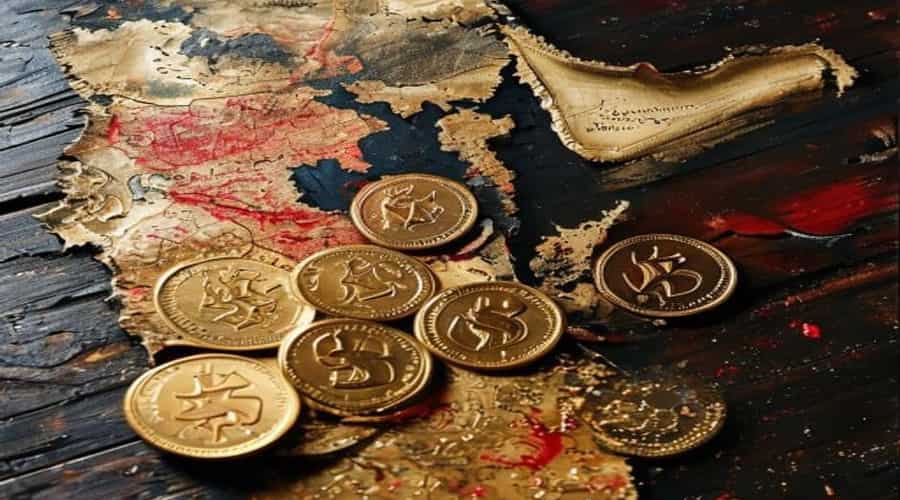
Alaska enacted HB 1 on May 29, 2026, recognizing gold and silver specie as legal tender and removing local sales taxes from qualifying precious metals transactions, the latest sign that state lawmakers are treating physical money as a policy issue again.
Alaska has joined the sound money push with a law that is modest in fiscal terms but unusually clear in its message. HB 1 declares certain gold and silver coins and stamped bullion to be legal tender to the fullest extent allowed under federal law, and it prevents boroughs and cities from taxing the value of the metal when that specie is sold or exchanged. In a state with no statewide sales tax, the practical target is local taxation. The symbolic target is much larger.
The bill cleared Alaska's House unanimously, 40 to zero, then passed the Senate 19 to 1 before Governor Mike Dunleavy signed it at the end of May. According to the Alaska Senate Republican caucus, the measure recognizes gold and silver coins or stamped bullion as legal tender while clarifying that local governments cannot apply sales or use taxes to specie transactions. For legislation touching monetary policy, that kind of bipartisan support is striking. The fiscal hit is also limited. Legislative estimates put the local revenue effect at roughly $80,000 to $95,000 a year across Alaska's sales tax jurisdictions, which is not the kind of number that changes a state budget. The political signal matters more than the lost revenue.
The legislation is deliberately narrow. It applies to specie, meaning coins and refined bullion stamped or imprinted with weight and purity, not raw nuggets or ordinary commodity gold. Nobody is forced to accept a gold coin for groceries in Anchorage. HB 1 is voluntary, preserving choice for buyers, sellers, individuals, and businesses. What it does is codify a legal framework: under Alaska law, qualifying gold and silver are treated as money rather than ordinary taxable property.
That framing explains why precious metals advocates are paying attention. Alaska is not trying to build a parallel payments system overnight. It is removing a tax friction and making a legal statement at the same time. The law also directs the Legislative Budget and Audit Committee to study whether the state should accept specie for debts, public charges, taxes, and other money owed to Alaska. That study may or may not lead to another bill, but it keeps the issue alive after the signing ceremony fades.
Alaska did not arrive here alone. The state-level monetary metals movement has been building for years, led in part by groups such as the Sound Money Defense League and Money Metals Exchange. Utah was one of the early movers, passing its Legal Tender Act in 2011. Wyoming has long been favorable to precious metals holders, helped by the absence of a state income tax and broad exemptions on bullion. More recently, the argument has moved from niche policy circles into regular statehouse debates.
That does not mean every proposal is passing cleanly. Kansas lawmakers sent HB 2515 to Governor Laura Kelly in April 2026, a measure that would have created the Kansas Legal Tender Act and removed state tax liability from certain gold and silver transactions. Kelly vetoed it on April 10, and the veto was sustained. Iowa has also seen proposals tied to bullion, coins, and capital gains move through the Legislature in recent years without becoming the kind of active statewide change Alaska just enacted. The momentum is real, but it is not uniform.
The contrast with Washington State is more direct. While Alaska was removing local tax barriers, Washington went the other way. Starting January 1, 2026, the state began treating sales of precious metal bullion and monetized bullion as taxable sales of tangible personal property, bringing retail sales tax and business and occupation tax into the picture. Maryland also narrowed its exemption in 2025, leaving many precious metals purchases subject to the state's 6% sales tax unless they fit a limited convention center exemption. For investors who buy physical metal regularly, geography now has a clear cost attached to it.
The federal pressure question
The bigger question is whether state action eventually changes the federal conversation. Under current IRS rules, precious metals are generally treated as collectibles, with long-term gains subject to a maximum 28% rate. That is higher than the standard long-term capital gains rate many investors associate with stocks, and it has long frustrated gold and silver advocates who argue that physical metals should be treated as monetary assets rather than collectibles.
There has been federal legislation aimed at changing that treatment, but it has not broken through. Former Representative Alex Mooney introduced the Monetary Metals Tax Neutrality Act in the 118th Congress, seeking to remove certain gold and silver transactions from federal income calculations. That bill did not become law, and Mooney is no longer in Congress. For now, the real action is still in the states, where tax exemptions and legal tender language can pass with far less national attention.
For investors tracking this space, Alaska's HB 1 is less about immediate savings and more about direction. The law treats qualifying gold and silver as money. That matters because legal categories shape how agencies, courts, and lawmakers think about assets over time. If more states follow Alaska, the federal government may eventually face a harder question: why should Washington tax as collectibles what a growing number of states increasingly recognize as money?
Also read: A Costco gold scare shows why bullion testing needs a second check • A former CIA official faces a $40 million gold theft case • Billionaire Eric Sprott doubles down on Americas Gold and Silver USAS by converting his guaranteed silver payout into pu