
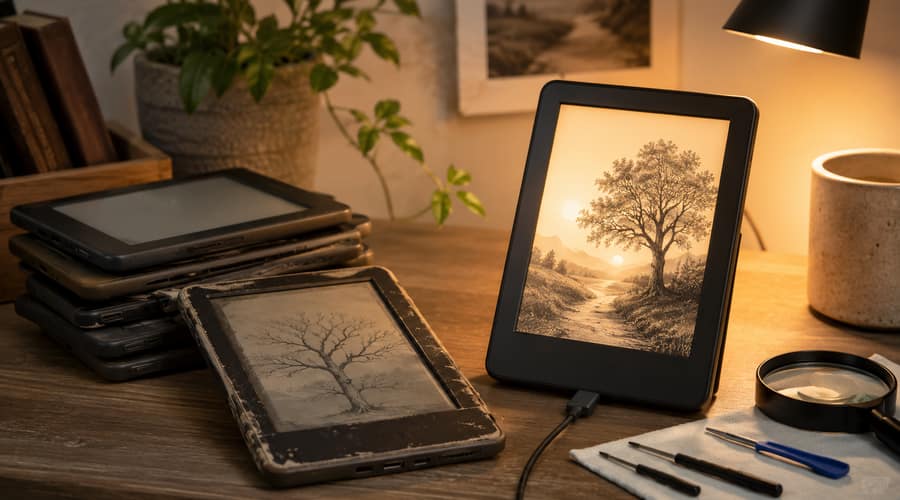
Amazon's support cutoff for older Kindles is pushing owners toward jailbreaks, custom firmware and repair-minded workarounds. The reaction is a clear reminder that people do not want hardware that dies on a company's schedule.
Amazon has set May 20, 2026 as the date when Kindle e-readers and Kindle Fire tablets released in 2012 or earlier lose access to the Kindle Store. Owners of affected models, including the original Kindle, Kindle Keyboard, Kindle Touch, Kindle 5 and the first Paperwhite, will still be able to read what is already on the device, but they will not be able to buy, borrow or download new books. If a device is deregistered or factory reset after the cutoff, it cannot be re-registered. Amazon has framed the change as part of moving on from very old technology, but the backlash has been immediate because these are still perfectly usable readers in the eyes of many owners, just not in the eyes of the platform that controls them, as TechCrunch reported in April.
That is why the story has quickly moved beyond e-readers and into a broader argument about control. On Reddit and in dedicated modding communities, users are sharing jailbreak guides, custom firmware paths and software like KOReader to keep older devices useful after Amazon support ends, while KindleModding says jailbreaks can unlock custom screensavers, fonts, homebrew apps and firmware downgrades. The appeal is not complicated. People want to keep using the hardware they already paid for, and they want to do it without waiting for a company's product cycle to decide when their device should stop mattering.
This is not just nostalgia for old gadgets. It is a practical response to a system that has trained consumers to expect software locks, remote rules and shrinking support windows, then left them looking for another path when the official one narrows. The older Kindle owners making backups, downgrading firmware and installing third-party tools are acting like repair customers, not just tinkerers. They are signaling demand for devices that are open enough to survive beyond a manufacturer's support policy.
That matters because consumer frustration is turning into a market signal. Right-to-repair groups in Europe and the US are pushing for longer software support, spare parts access and limits on software barriers that make repair harder, and 2026 has become an especially active year for those efforts. Repair Europe says the EU's Right to Repair Directive requires member states to transpose the rules by July 31, 2026, while Waste Dive reported that more than 33 right-to-repair bills were introduced in 13 US states in the first weeks of January. Kindle owners may be the audience, but the real lesson is for hardware companies and the startups building around them.
The startup opening
There is a commercial opportunity here for founders who understand that hardware does not have to end when the manufacturer says it does. A startup could build the software layer that keeps older devices alive, the marketplace that matches owners with compatible parts and repair services, or the tools that make unofficial maintenance simpler and safer. The demand exists because the pain is real: once a device is locked out of updates, users do not suddenly stop valuing it, they just start looking for alternatives that respect their ownership.
That creates room for a different kind of hardware business, one built around longevity rather than replacement. A secondary market for refurbished readers, battery swaps, screen replacements and firmware support can turn abandoned devices into recurring revenue. So can a subscription model for open-source software maintenance, a diagnostics layer for repair shops, or a marketplace that certifies third-party parts and compatible accessories. The circular economy is not an abstract climate story anymore. It is a consumer business story, because people are already showing they will do the work themselves when the official route stops serving them.
There is also a bigger strategic point for startups watching from the sidelines. Platforms that control everything from downloads to device registration create convenience, but they also create resentment when they shut down access too early or too abruptly. By contrast, products that are designed to be user-controlled, moddable and repairable tend to generate a different kind of loyalty, the kind that survives beyond the original launch window and often turns into community-driven support. That is a powerful moat if a founder can build it without making the experience feel like a hobby project.
Amazon's move will probably be remembered as a routine lifecycle decision inside the company. For everyone else, it is a live case study in why planned obsolescence now carries reputational and commercial risk. The owners jailbreaking their Kindles are not just hacking around a missing feature. They are showing what the next generation of sustainable hardware businesses will have to earn: trust, openness and a longer useful life than the platform vendor was willing to provide.
Also read: Researchers say a NAND-DRAM hybrid could ease AI memory bottlenecks • arXiv's AI slop ban is exposing a bigger rift in research culture • The UK just showed startups how to beat Palantir in government deals