Ardian's data center bet is real, but the cleanest verified story is narrower than the draft suggested: Verne gives it a foothold in Iceland and Finland while Europe races to find enough power for AI.
AI has made electricity the boring thing you can no longer ignore. Ardian knows it. The Paris-based investment firm bought Verne from Digital 9 Infrastructure in 2024, and that deal gave it a data center platform with operating sites tied to the part of Europe that has what AI infrastructure now wants most: cool air, renewable power and fewer excuses from the grid.
The original version of this story reached further than the public record I could verify. I could confirm Ardian's Verne acquisition, Verne's operations in Iceland and Finland, and the firm's new French data center push. I could not verify the claimed $1.2 billion Nordic deployment, the Nscale GPU installation in Keflavik, the 70MW Mäntsälä campus, or the Bloomberg figure about more than €3 billion going into Nordic digital infrastructure. Those may exist behind paywalled or private material, but you don't build a published article on facts you can't stand behind.
So the real story is simpler, and frankly stronger. Ardian is trying to own the infrastructure layer under AI without having to pick the model winner. That is the right place for a private equity firm to play. It doesn't need to know whether OpenAI, Anthropic, Mistral or another lab captures the next wave of demand. It needs long leases, reliable tenants and power contracts that don't turn every megawatt into a political fight.
Verne is useful because it already sits in that world. The Sunday Times reported in January that Verne, led by chief executive Dominic Ward, generated £134.1 million in 2025 sales from data centers in London, Iceland and Finland. The same report said Ardian bought the company from Digital 9 Infrastructure for $575 million in 2024. Digital 9's own transaction history puts the sale at up to £450 million. Either way, this wasn't a small toe in the water.
It was a platform purchase.
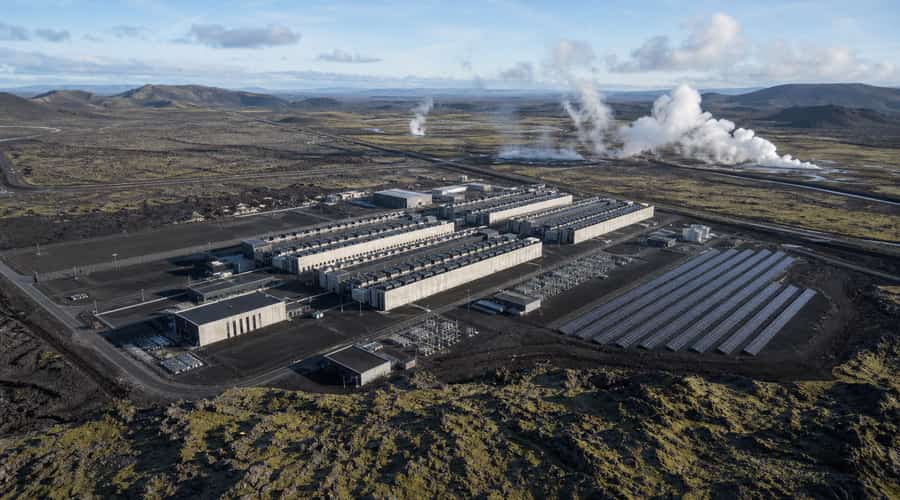
Iceland is the obvious anchor in that platform. Verne's Keflavik campus has long marketed itself around renewable energy and high-performance computing, the kind of workload that now gets called AI infrastructure because the chips changed and the checks got bigger. Finland gives Ardian another northern market with a cooler climate and a power system that looks more attractive when compared with congested hubs in western Europe.
You don't need a grand theory to see the appeal. A data center running dense AI workloads has two large headaches before you even get to the customer contract: electricity and heat. Put the same facility in a strained, expensive power market and the economics get ugly fast. Put it somewhere with steadier renewable supply and cooler ambient temperatures, and the operating case starts to look less fragile.
That doesn't mean the Nordics are magic. Permits still take time. Grid connections are not automatic. Local communities still ask what they get in return when a data center consumes a huge block of power. The Guardian reported this month that climate risk firm First Street found nearly 80% of global data centers face acute hazards such as flooding, wildfire or severe wind. Northern Europe avoids some pressures, but no site gets a free pass.
Ardian is also not only looking north. The Financial Times reported in early June that Ardian and Verne plan to invest up to €5 billion in an AI data center and research campus outside Paris, with a target capacity of 500MW and an initial 200MW planned by 2030. France brings a different advantage: nuclear baseload, proximity to large enterprise customers and a government that wants AI investment onshore.
That French project matters because it shows Ardian's actual strategy. The firm is not making a romantic bet on cold weather. It is assembling power-backed digital infrastructure in places where Europe can plausibly support large AI workloads. Sometimes that means Icelandic renewables. Sometimes it means French nuclear power. The common thread is not geography for its own sake. It is controlled energy supply.
For founders and investors, this is where the AI story starts to touch your bill. The price you pay for training and inference is not only a software margin question. It is shaped by where the servers sit, what the power costs, how quickly the site was permitted and whether the operator can cool the racks without wasting money. The model may feel weightless when you use it. The infrastructure is not.
Ardian's bet is worth watching because it strips the AI boom down to its least glamorous requirement. Before there is a product demo, a funding round or a benchmark chart, there has to be a place to plug the machines in. Verne gives Ardian one verified route into that market. The Paris campus gives it another. The rest of the claimed Nordic buildout needs harder public evidence before it belongs in print.
Also read: Proception settles Tesla's trade secret lawsuit and closes an $11 million seed round on the same day • OpenAI scrambles to fix Codex as coding agent usage blows past its own capacity models • Asian AI rivals fill the gap left by Anthropic's export ban and match frontier performance for a fraction of the cost