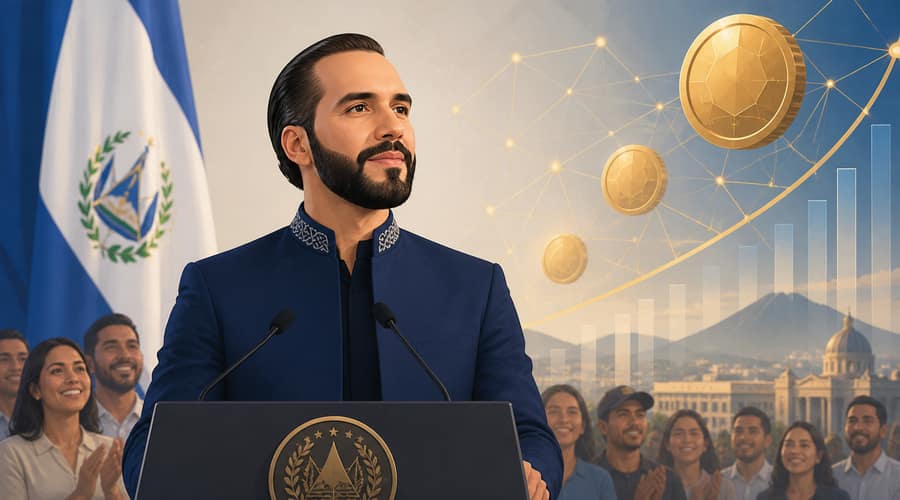
Nayib Bukele's record approval rating shows voters reward safety and economic results, not crypto policy, giving politicians cover to embrace digital assets without electoral risk.
Nayib Bukele just hit 94% approval, topping every world leader on the planet, and the crypto industry is scrambling to figure out what that means for its own political ambitions. The short answer: less than enthusiasts might hope, but more than skeptics fear.
El Salvador's president has stacked his national treasury past 7,600 BTC through a disciplined dollar-cost averaging strategy, buying roughly one bitcoin per day regardless of market conditions. That commitment alone makes him the most aggressive sovereign adopter in history. Yet the real lesson from San Salvador has almost nothing to do with blockchain.
Bukele's popularity is anchored in a dramatic collapse of gang violence that transformed daily life for millions of Salvadorans. As BeInCrypto's analysis of the data makes clear, only 2.2% of citizens in a recent CID Gallup survey cited bitcoin as his biggest failure. The overwhelming majority credit him with making the country's streets safe again. That matters because it decouples the political viability of pro-crypto policymaking from the actual adoption rates of cryptocurrency itself.
Domestic bitcoin usage tells a sobering story. The state-sponsored Chivo wallet saw a sharp drop-off after initial signup bonuses expired, with roughly four in ten citizens continuing to use it. The International Monetary Fund repeatedly pressured El Salvador to strip bitcoin of its legal tender status, though that tension eased somewhat when the country posted 4% GDP growth in late 2025. Everyday Salvadorans are not rushing to spend sats at local markets. The grand experiment in decentralized finance remains, for most residents, more theoretical than transformative.
The global leaderboard carries a blunt message for politicians weighing crypto positions. South Korea's Lee Jae-myung sits at 63% approval while campaigning on spot bitcoin ETFs and a won-pegged stablecoin. Donald Trump signed an executive order for a Strategic Bitcoin Reserve funded with seized coins and registers 38%. Javier Milei of Argentina, who championed deregulation before the LIBRA meme coin collapse burned investors for hundreds of millions, holds steady at 48%.
None of these leaders appear to be suffering at the ballot box for their crypto postures. Equally, none can credit digital assets alone for their standing. The data suggests a healthy equilibrium: embracing bitcoin carries minimal political downside, while the upside depends entirely on whether broader governance delivers tangible improvements voters can feel.
For crypto entrepreneurs and investors tracking regulatory risk, the Bukele presidency offers a useful calibration. The US Treasury's March 2026 meeting between Secretary Scott Bessent and Bukele signaled a notable shift in Washington's posture, moving from skepticism toward reluctant engagement. When the most popular leader on earth is also the most visible bitcoin advocate, dismissing the asset class entirely becomes diplomatically awkward.
The Limits of the Blueprint
Replicating El Salvador's model elsewhere faces hard constraints. The country's success hinges on a unique convergence: a small population, a dollarized economy that removed currency sovereignty concerns, and a security crackdown so aggressive it has drawn serious human rights criticism, with reports of over 500 prisoner deaths in custody. The new law allowing life sentences for minors as young as 12 underscores the authoritarian edge that made the gang crackdown possible. Bitcoin adoption is the glittering surface on a much darker and more complicated political foundation.
Still, the investment thesis continues to attract attention. El Salvador's accumulation strategy during market downturns, including a $100 million buying spree in late 2025, has produced a national reserve worth hundreds of millions of dollars in unrealized gains. The launch of Bitcoin Diploma 2.0 in schools and ongoing plans for Bitcoin City, despite delays and displacement concerns, show an administration treating crypto as long-term infrastructure rather than a quick trade.
The takeaway for anyone building in this space is straightforward. Politicians can safely support crypto without tanking their careers, but they should not expect it to build them a mandate. Voters care about safety, jobs, and prices first. Bitcoin policy is a tool in the kit, not the foundation of the house. Watch whether Bukele's resilience holds through the next major crypto drawdown, because that stress test will reveal whether political cover for digital asset adoption has real limits or truly is unconditional.