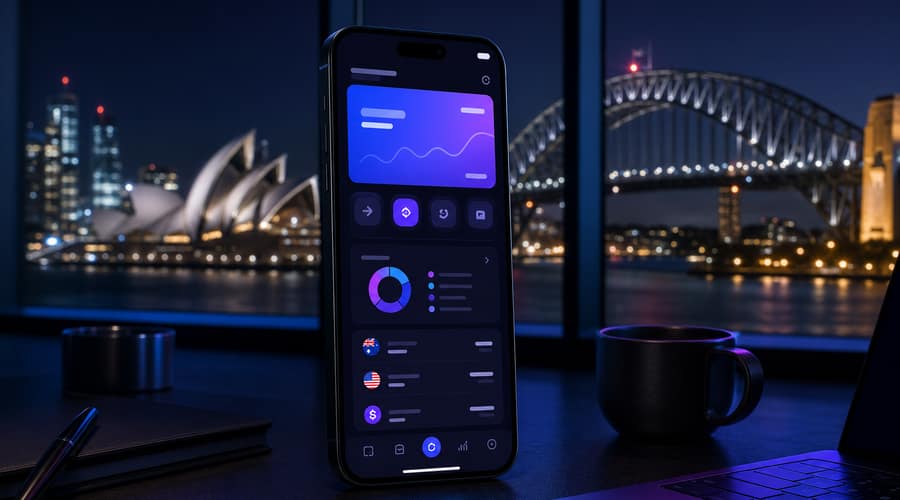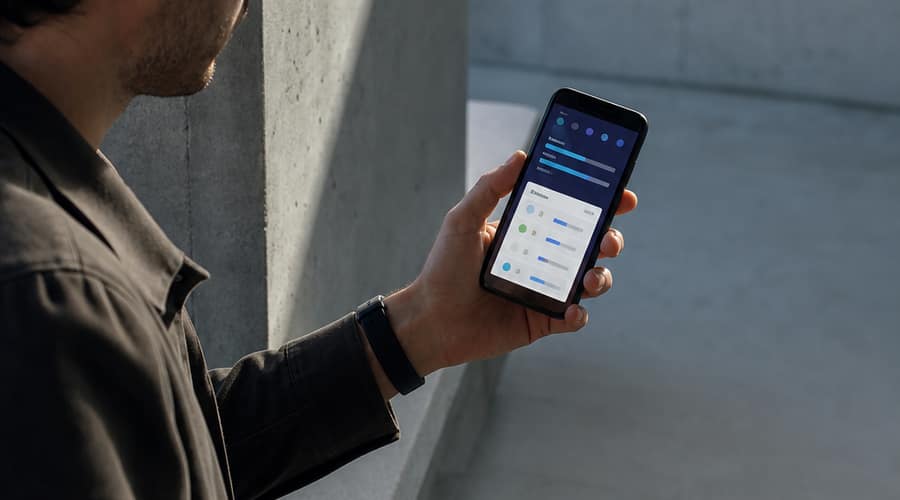
Cursor's mobile app is not really a phone version of a code editor. It's a sign that AI coding is becoming something you direct, inspect, and interrupt, not something you only do while sitting at a desk.
The interesting part of Cursor's mobile launch is not the screen size. It's the job description hiding underneath it. Cursor now lets developers start and monitor AI coding agents from a phone, review diffs, merge pull requests, annotate screenshots, and pick up work that began on desktop. iPhone users get a native TestFlight beta, while Android users get a Progressive Web App they can install through Chrome. That is not how a traditional coding tool behaves. Frankly, it shouldn't try to be one.
If you're building software, you already know the phone is a bad place to edit a complicated function. The keyboard is wrong. The context is too small. The cost of missing one line is too high. Cursor seems to understand that, which is why the mobile product is framed less as an editor and more as a control panel for agents. You don't sit there writing every line. You tell the agent what needs to change, check whether it understood the job, approve what is ready, and move on.
That shift matters because Cursor is not a small side project anymore. Business Insider reported last week that SpaceX is buying the AI coding startup for $60 billion, after Cursor's parent company Anysphere grew past $1 billion in annualized revenue in under a year. Axios also reported the deal as a $60 billion all-stock acquisition, one of the largest purchases of a venture-backed startup. The mobile app now lands against that backdrop: a fast-growing coding company being pulled into a much larger race for AI infrastructure.
Cursor's own product language makes the direction plain. The background agents surfaced by the app, now described in Cursor's documentation as cloud agents, keep running when you're away from your machine. You can check in, redirect them, and approve work without reopening the full desktop environment. Voice dictation makes the posture even clearer. You can describe a bug or feature request while doing something else entirely, then let the agent start working before you return to the codebase.
That is a real change in the working day.
The phone is becoming the agent console
Cursor's mobile release arrived alongside a broader set of agent-focused announcements at Compile, its developer conference at Fort Mason in San Francisco on June 16. The company also unveiled Origin, a Git platform built for repositories where multiple AI agents may be committing work at the same time. Origin is expected to become generally available in fall 2026, according to Cursor's announcement. If it works, it will test a habit that has been hard to move: developers trust GitHub because their teams, reviews, automations, and muscle memory already live there.
Cursor also said it is training a 1.5-trillion-parameter frontier model from scratch on xAI's Colossus supercomputer in Memphis, using far more compute than its earlier models. MarketWatch described the SpaceX deal as a way for Cursor to get access to the kind of infrastructure it needs for that work. That detail is more important than the big model number. AI coding tools are becoming expensive to train, expensive to run, and dependent on compute supply that most startups can't secure on their own.
For founders and solo builders, the practical question is simple: can this let you move a product while you're not at your desk? Cursor's multitask feature already lets users run several agents at once on isolated branches. Add mobile check-ins and Slack-triggered work, and the product starts to look less like autocomplete and more like a small engineering bench that needs supervision. You still need judgment. You still need to review the output. But you don't have to wait until you're back in front of a monitor to start the loop.
Don't oversell it. A phone will not replace deep work, and anyone who has tried to resolve a messy merge conflict on a small screen knows the limit very quickly. The useful part is the handoff. You describe the task, let the agent run, and inspect the result later. The work becomes more asynchronous, which is exactly where a lot of founder work already lives: between investor calls, customer messages, travel, hiring, and the dozen other jobs that don't fit neatly into a coding block.
OpenAI and Anthropic are also pushing AI coding tools into more contexts, but Cursor's move is sharper because mobile oversight only makes sense when the agents persist in the cloud. Without that, a mobile coding app is just a worse desktop app. With it, the phone becomes a place to keep momentum alive while the serious review still happens elsewhere.
The harder test comes next. Origin has to prove that agent-native version control is more than a conference demo, and Cursor has to show that cloud agents can produce work developers trust enough to merge. For now, the mobile app gives you the clearest signal of where this market is heading. The developer is becoming less of a typist and more of an editor, dispatcher, and reviewer. The desk still matters. It just no longer owns the whole job.
Also read: Copper has broken records this year and AI data centers are the reason the rally isn't done • The semiconductor layer is where the real AI money is being made in 2026 • Ardian is betting over a billion dollars that the Nordics will power Europe's AI infrastructure buildout