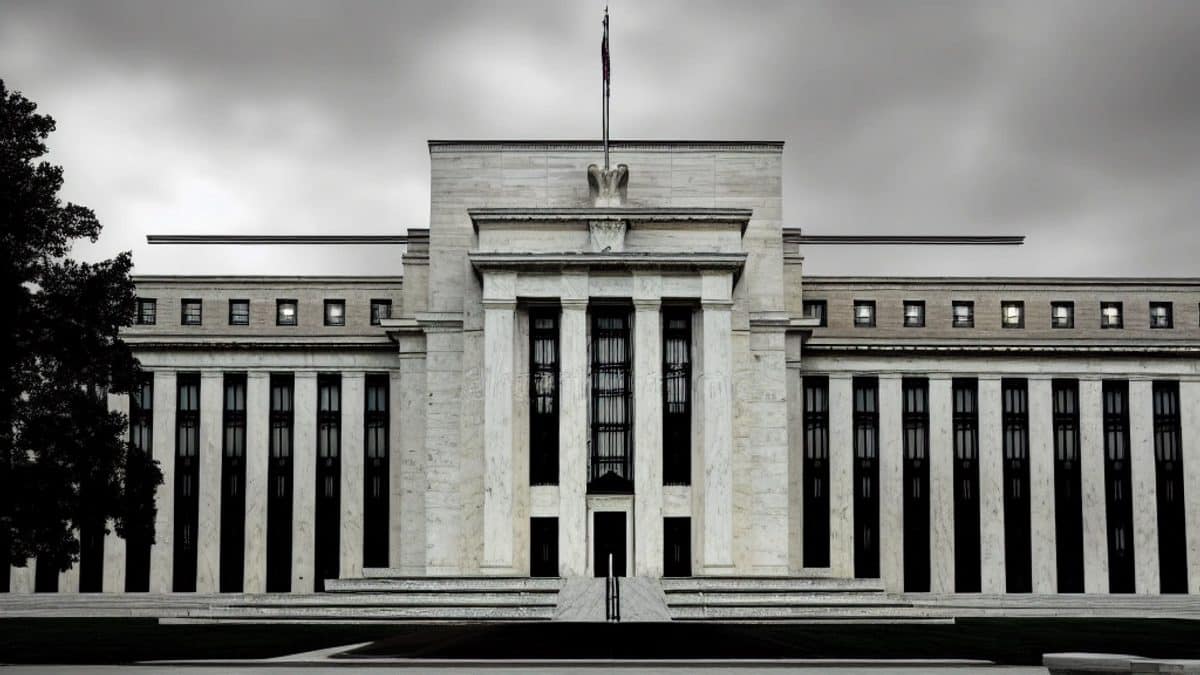
US federal prosecutors descended on Federal Reserve offices on April 15, 2026, in an unannounced visit that has rattled financial markets and put the central bank's internal operations under an uncomfortable spotlight.
The move landed like a thunderclap on what was already a tense day for financial markets. When federal prosecutors show up unannounced at the offices of the most powerful central bank in the world, it means they believe waiting is not an option. Investigators typically execute surprise visits when they suspect evidence could be altered, removed, or otherwise compromised before a scheduled inquiry. The fact that this happened at the Fed, rather than at a commercial bank or a hedge fund, makes it extraordinary.
Details remain scarce, as the underlying affidavits are sealed. But the institutional fingerprints point toward either the DOJ's Fraud Section or the U.S. Attorney's office for the Southern District of New York, both of which have historically handled cases involving financial regulatory misconduct and securities fraud at the highest levels. The Fed has not issued a substantive public statement, which is itself notable for an institution that prides itself on managed communication.
Three scenarios are circulating among legal and financial analysts. The first involves the potential leak of FOMC deliberations before official announcements, which would constitute a serious federal crime and hand certain traders an enormous information advantage. The second concerns insider trading facilitated by non-public economic data, a vulnerability that critics have flagged for years given how many people cycle through the Fed's research and policy apparatus. The third, and perhaps most structurally damaging, relates to oversight failures involving one or more of the commercial banks the Fed supervises, where regulators may have known about problems and chose not to act.
Any of those threads, if confirmed, would be damaging. But the FOMC leak scenario carries the most systemic risk. The Federal Open Market Committee controls the benchmark interest rate that prices everything from mortgages to corporate debt. If that process was compromised, the integrity of every rate decision made during the affected period comes into question retroactively. Traders and institutions that made decisions in good faith based on public disclosures may have been operating on a fundamentally uneven playing field.
Markets Are Watching Carefully
Bond yields moved with visible nervousness following the news, reflecting the market's attempt to price in reputational and operational uncertainty around the Fed at a moment when monetary policy clarity is already stretched thin. Rate expectations have been unusually volatile in recent months, and a political or legal scandal enveloping the central bank now would complicate an already difficult communications environment for Chair Jerome Powell and the FOMC.
Equity markets absorbed the news with more restraint, partly because institutional investors have learned not to overreact to investigations that may take months or years to resolve. But the financial sector specifically, particularly regional banks that fall under the Fed's supervisory umbrella, will be watching for any signals that this probe extends into the bank examination process itself.
There is also a geopolitical dimension worth noting. The US is already navigating a fraught period of trade policy uncertainty, with tariff negotiations affecting capital flows and corporate investment decisions globally. An investigation into the Fed layered on top of that adds another variable that foreign central banks and sovereign wealth funds will factor into their exposure to dollar-denominated assets. Confidence in American institutional integrity is a real economic input, not just an abstraction.
What comes next depends significantly on how quickly prosecutors move from evidence gathering to public filings, and whether the Fed cooperates voluntarily or contests any subpoenas in court. Either path will generate headlines. Watch for any unsealing of affidavits, for statements from sitting or former Fed officials, and for whether Congress decides to use this as an opening for broader scrutiny of the Fed's governance structure. The institution's independence is formally protected, but it has never been entirely immune to political weather, and this investigation just changed the forecast.
Also read: The IMF trimmed its global growth forecast but says the real danger is what happens next in the Middle East • The IMF trimmed its global growth forecast but says the real danger is what happens next in the Middle East • The US Treasury says the economy will grow above 3% this year even as the Iran war roils global markets