A Reddit launch for a free LTX 2.3 video site shows how quickly open AI video models are changing the economics for small builders. The harder question is whether direct control over compute creates a real advantage, or just a short window before everyone catches up.
A builder posting in r/StableDiffusion says they built a free AI video-generation site using LTX 2.3, and the response was immediate enough to matter. The post had reached 141 votes by May 11, with users testing the site, asking about the hardware, warning about costs, and pointing out problems with the mobile experience. That is not proof of a company, but it is a useful signal from exactly the kind of users who test these tools early, push them hard, and complain when the workflow breaks.
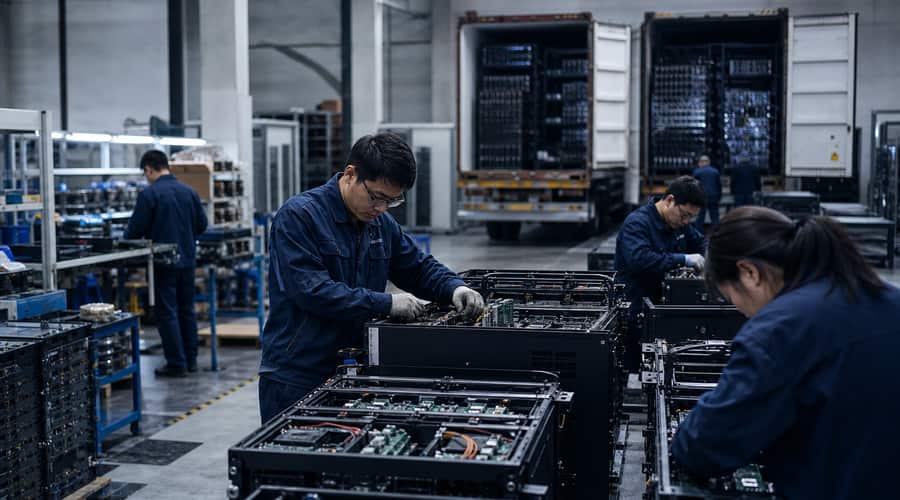
The interesting part is not simply that another AI video site exists. There are plenty of those now. The startup angle is that this one appears to be built around direct infrastructure control rather than a thin wrapper over someone else's paid API. The founder said the setup includes four owned 30 and 40 series GPUs, with additional spot-rented A100 and RTX Pro capacity when demand rises. That changes the math, but it does not remove the pressure. It shifts the risk from per-generation API costs to hardware, utilization, queue management, and keeping rented capacity under control.
LTX 2.3 is a useful model for this experiment because it sits in the open-video category where builders can actually deploy and tinker. According to LTX's own documentation, the model supports text-to-video, image-to-video, audio-to-video, native portrait output, and clips up to 20 seconds in supported configurations, with open weights available for local or on-premise deployment. That matters because solo founders are not only building interfaces anymore. They can own more of the stack.
For AI media products, infrastructure is not a back-office concern. It is the business. A paid API can help a founder launch quickly, but it also fixes the floor under pricing. If every user action costs the company money immediately, the free tier becomes a marketing expense that has to be controlled. A GPU cluster creates a different pressure. The capital cost comes first, then the challenge is keeping utilization high enough that the hardware earns its keep.
That is why a free site can be smarter than it looks. A founder with idle GPUs can use free access to attract prompt testers, collect workflow feedback, and learn what creators actually want before adding paid capacity or premium features. The Reddit post said the site is capped at 720p, 10-second clips for text-to-video and image-to-video, with typical renders taking 50 to 110 seconds depending on the GPU handling the job. Those limits are not small details. They show where the business model meets the hardware.
Demand can look encouraging right until the queue becomes the product's biggest problem. Free users are not gentle. They retry failed generations, run strange prompts, share the site once it works, and leave the moment another tool feels faster. If the founder can keep costs near the claimed level while maintaining acceptable speed, the site has room to learn. If not, the launch becomes a reminder that free AI video is easy to promise and hard to operate.
This is where trust becomes part of the product. Creators have been trained to expect credits, watermarks, waitlists, surprise limits, and vague claims about quality. A small builder who explains the hardware and limits can create a more direct relationship with users, especially if the queue is transparent and the constraints are honest. But that same transparency cuts both ways. If generations take too long or the site falls over, users will not care that the infrastructure story is elegant.
Creators want less workflow, not more novelty
The comments around launches like this usually reveal the same tension. AI video creators are curious, but they are tired of fragile workflows. ComfyUI pipelines, model checkpoints, LoRAs, frame interpolation, upscaling, seeds, and post-production steps can produce impressive results, but they also turn a short clip into a technical project. A free browser tool has a real opening if it removes enough of that complexity without flattening the creative control that power users expect.
LTX 2.3 is also arriving at a moment when quality expectations are rising fast. It is no longer enough for a clip to move. Creators want usable motion, coherent subjects, vertical formats for short-form platforms, and audio that does not feel bolted on afterward. The model's native portrait support is especially relevant because much of the practical demand for low-cost AI video is not feature filmmaking. It is social ads, music snippets, product shots, thumbnails that move, and quick concept tests.
The hard ceiling is consistency. Open models are improving, but practical short-form production still depends on predictable outputs. A creator making one surreal clip can tolerate randomness. A small business trying to produce a product ad cannot spend all day chasing a clean hand, stable logo, or usable camera move. That is where the site will be judged: not by the best demo, but by the average result after five attempts.
Free-tier abuse is another early test. Any free generation product attracts users who will push limits, automate requests, or treat the service as disposable compute. The founder has to decide whether the site is a community experiment, a lead funnel, or the first version of a commercial tool. Each path requires different constraints. Rate limits, accounts, watermarks, paid priority queues, ad load, and moderation may feel boring, but they are often what separates a neat launch from a service that survives its first month.
The broader lesson is that open models are giving indie founders a credible path into categories that once looked too infrastructure-heavy. They still need capital, but not always venture capital. A few owned GPUs, selective rented capacity, a focused interface, and a user community willing to test rough edges can now produce something that competes for attention against better funded AI media platforms.
That window may not stay open forever. API prices will fall, bigger platforms will bundle video into existing creative suites, and open models will keep compressing the advantage of any one implementation. For now, though, the builder running LTX 2.3 with a mixed GPU setup is a useful case study in where AI startups are heading: smaller teams, more control over compute, and products that win by making powerful models feel simple enough to use every day.
Also read: OpenAI staff cashed out as AI equity became real money • AI agents need spending controls before they get company cards • South Korea is testing whether Hyundai robots can fill its army gap