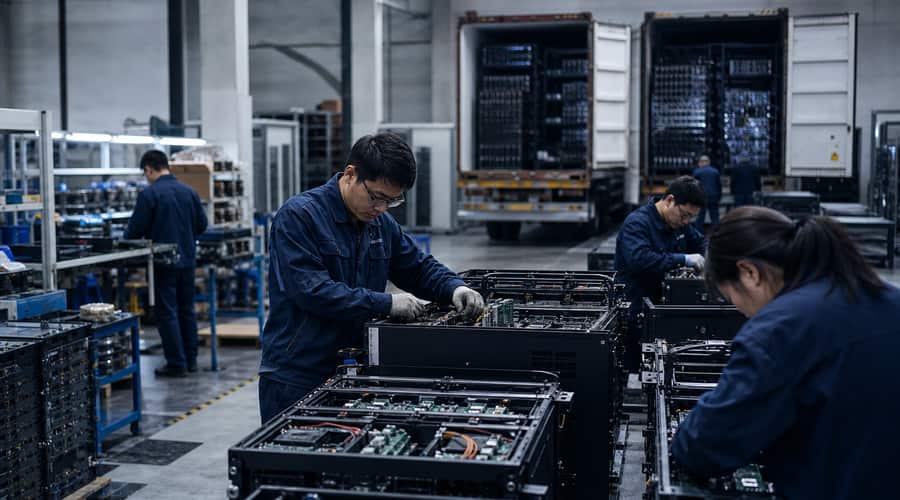
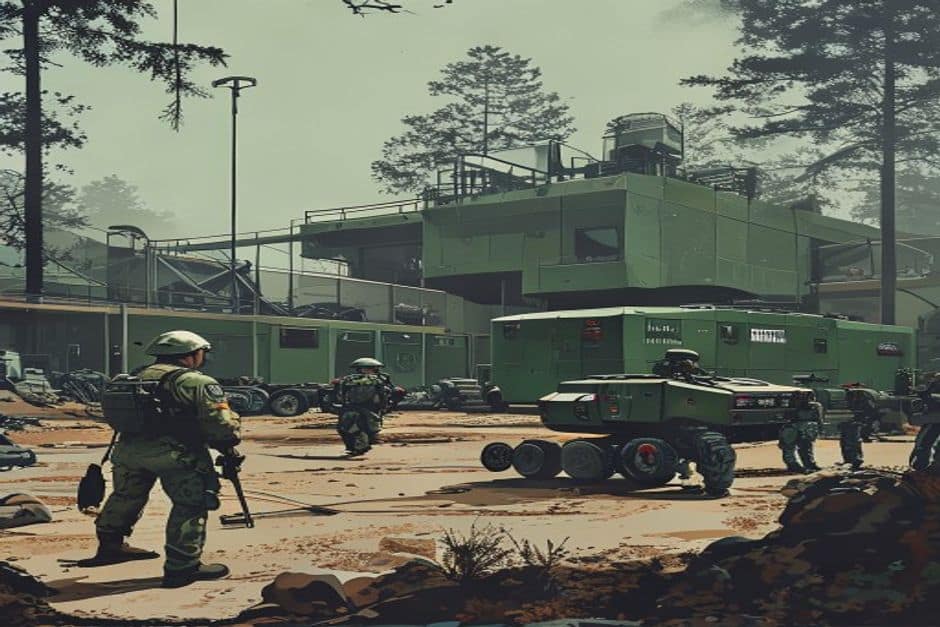
South Korea is looking at Hyundai robots because its military problem is becoming a labor problem. The first opportunity is likely to be support work, not science-fiction combat.
South Korea is beginning to treat robots as part of military readiness, and that should get the attention of anyone watching physical AI move from trade-show floors into government budgets. The country is exploring whether Hyundai-linked robots can help fill gaps created by a shrinking pool of soldiers, with early use cases centered on work that is repetitive, dangerous or manpower-heavy.
According to Bloomberg, South Korea's Defense Ministry is discussing cooperation with Hyundai Motor as it tries to build a more technology-driven force, although specific details have not been finalized. The Korea Economic Daily first reported the talks, with possible noncombat roles including surveillance, reconnaissance and logistics. That matters because defense procurement tends to change the scale of a market. A factory pilot can prove capability. A military program can create a supply chain.
The Hyundai name needs some unpacking here. Hyundai Motor Group controls Boston Dynamics through an 80% stake, while SoftBank retains the remaining 20%. HD Hyundai Robotics is a separate industrial robotics company majority-owned by HD Hyundai and not related to Boston Dynamics. Both sit inside the broader Korean industrial ecosystem investors now associate with robots, AI infrastructure and automated manufacturing, but their roles are not interchangeable.
The most realistic military applications are not humanoid soldiers charging across the demilitarized zone. They are logistics, surveillance, inspection, training support, maintenance and limited combat support. A quadruped robot can patrol a perimeter, inspect a tunnel, carry sensors or go into a hazardous area before a human team. Industrial robots can help with repair depots, munitions handling and base operations. Humanoids may eventually become useful where facilities were designed around human movement, but that is a harder technical and regulatory problem than moving boxes or monitoring fences.
South Korea's demographic squeeze gives this story its urgency. The Defense Ministry has said military personnel fell from about 560,000 in 2019 to 450,000 in 2025, and Bloomberg reported that standing forces could fall further to 350,000 by 2040. Korea JoongAng Daily recently reported that Seoul plans to reduce troops stationed at general outposts near the DMZ from around 22,000 today to 6,000 by 2040, replacing part of that presence with AI-equipped surveillance systems. A 2021 audit report cited by the outlet projected that men subject to active duty service could fall to about 151,000 in 2039.
Those numbers change how procurement officers think. If a military cannot assume that every base, depot and observation post will have the same number of available people, it has to redesign the work. Robots become less about novelty and more about force structure. The question is not whether machines can replace trained soldiers across the board. They cannot. The question is whether they can absorb enough routine work to keep scarce personnel focused on judgment, command and readiness.
Hyundai's timing is convenient. Boston Dynamics has been pushing Atlas toward factory work, with Hyundai saying the humanoid is expected to begin handling repetitive tasks in automotive plants from 2028 before moving into more complex assembly work by 2030. Hyundai Motor has also outlined a large robotics and AI investment plan in South Korea, including an AI data center and robot factory. That industrial base could become strategically useful if Seoul wants domestic suppliers rather than imported systems for sensitive defense environments.
There are constraints. Military robots need communications security, predictable behavior, rugged hardware, audit trails and clear accountability when something goes wrong. A robot that works inside a car plant is not automatically ready for a frozen mountain post or a live-fire training range. Frontline deployment also raises political questions, especially near North Korea, where false alarms and machine-driven escalation would be unacceptable. That is why the first contracts are likely to stay close to logistics, surveillance and maintenance.
A wider defense AI market is forming
South Korea is not moving in isolation. Europe's defense AI market has accelerated since Russia's invasion of Ukraine, with startups and established contractors working on drones, battlefield software, autonomy and sensor fusion. In the United States, the Department of Defense has spent years trying to automate logistics, base operations and maintenance because those areas consume money and personnel without always getting attention from the public.
For Korean startups and suppliers, the opportunity is not limited to building full robots. Sensors, batteries, edge chips, mapping software, fleet management tools, secure communications and maintenance platforms may become just as important. Defense markets often reward companies that can survive testing, certification and long sales cycles. That favors industrial depth, but it does not exclude startups if they can plug into a larger prime contractor.
The bigger takeaway is that physical AI is entering a more serious phase. Investors have been willing to price robotics companies on future labor substitution in factories and warehouses. South Korea's military shortage adds another market: governments trying to maintain capability as working-age populations shrink. If Seoul turns exploration into contracts, Hyundai and its suppliers could become a useful test case for how automation becomes strategic infrastructure.
What to watch next is not a flashy robot demonstration. It is the procurement language. If South Korea starts specifying funded programs for patrol support, depot automation or autonomous logistics, the robotics market will have a clearer signal that defense demand is moving beyond experiments. That would make the manpower crisis less of a narrow military story and more of a preview of where industrial AI is headed.
Also read: SoftBank wants batteries inside its AI infrastructure stack • ChatGPT is becoming the life advisor young users already expect • Alphabet turns to yen bonds as AI becomes a balance sheet race