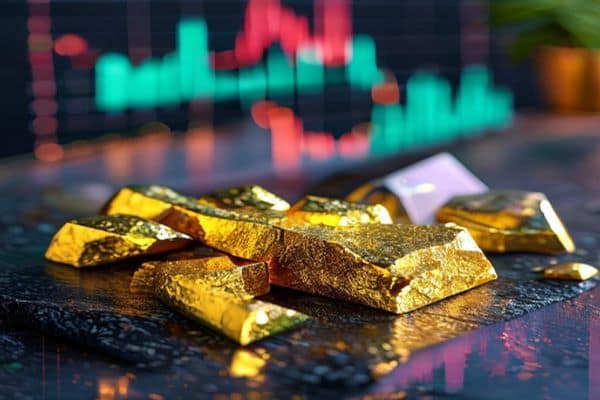
Gold and silver are flashing bullish signals in the Indian market, with analysts forecasting steady climbs that could push gold toward Rs 1.65 lakh per 10 grams and silver toward Rs 2.70 lakh per kilogram in the near term.
Abhilash Koikkara, who heads forex and commodities research at Nuvama Professional Clients Group, sees a clear upward bias building across both precious metals. His read on the market is straightforward: the fundamentals driving gold higher are also pulling silver along, and neither metal shows signs of losing momentum soon.
For Indian investors watching these numbers closely, the projections represent more than just headline milestones. Gold touching Rs 1.65 lakh per 10 grams would mark a significant psychological barrier, one that could trigger fresh retail buying even at elevated levels. Silver at Rs 2.70 lakh per kilogram would reflect not just safe-haven demand but also the industrial recovery story that continues to support the white metal's dual-market appeal.
As the Times of India recently reported, Koikkara's analysis points to a steady rise rather than a sharp spike, which matters for how investors should position themselves. Steady climbs tend to attract sustained institutional interest, while sudden surges often invite profit-taking and volatility.
Several overlapping forces are working in precious metals' favor right now. Global central banks, particularly in emerging markets, have been accumulating gold at a pace not seen in decades. China's People's Bank added gold to its reserves for eighteen consecutive months before briefly pausing, and the Reserve Bank of India has been similarly consistent. That sovereign demand creates a floor under prices that is difficult for market bears to break through.
Geopolitical uncertainty continues to provide tailwinds. The conflicts in the Middle East, the protracted war in Ukraine, and shifting trade alliances have made governments and private investors alike wary of over-relying on any single currency or asset class. Gold benefits directly from that wariness.
Then there is the interest rate picture. The US Federal Reserve has signaled a cautious approach to further rate cuts, but the broader direction remains downward from the peaks of 2023. Lower real interest rates reduce the opportunity cost of holding non-yielding assets like gold and silver, making them comparatively more attractive against bonds and savings deposits.
Silver has its own additional catalyst. Industrial demand for silver in solar panel manufacturing, electronics, and electric vehicle production has been climbing steadily. The Silver Institute's recent data shows global industrial demand exceeded 600 million ounces last year, and projections suggest that figure will keep rising as the energy transition accelerates. That gives silver a fundamental support layer that gold lacks, even if gold dominates the safe-haven conversation.
What Indian Investors Should Consider
The Indian market adds its own dimension to this story. Gold demand in India is culturally embedded, driven by weddings, festivals, and generational wealth preservation. When prices rise steadily rather than explosively, Indian consumers tend to adjust rather than retreat. The notion of buying on dips becomes deeply ingrained market behavior.
Silver, however, presents a different risk-reward profile. Its price movements are typically more volatile than gold's, both on the upside and the downside. Investors considering silver exposure at these projected levels need to be comfortable with wider price swings and potentially longer holding periods during corrections.
Exchange-traded funds and sovereign gold bonds offer alternatives to physical purchase, and both have seen increased participation in recent quarters. For investors who want exposure without the storage and security costs of holding physical metal, these instruments provide practical entry points.
The rupee's trajectory against the dollar also matters significantly for domestic precious metals pricing. A weakening rupee amplifies gold and silver price increases in local terms, even if international spot prices remain flat. Conversely, a strengthening rupee can dampen returns despite favorable global trends.
Looking ahead, the path to Rs 1.65 lakh for gold and Rs 2.70 lakh for silver depends heavily on whether global rate cut expectations materialize on schedule and whether geopolitical tensions persist or ease. Koikkara's forecast assumes the current macro backdrop remains broadly intact. If the Federal Reserve pivots more aggressively toward easing, these targets could arrive sooner. If inflation proves stickier than expected, the timeline extends. Either way, the structural demand story for both metals remains firmly in place, and investors building positions incrementally rather than chasing sharp rallies are likely to fare better across most scenarios.