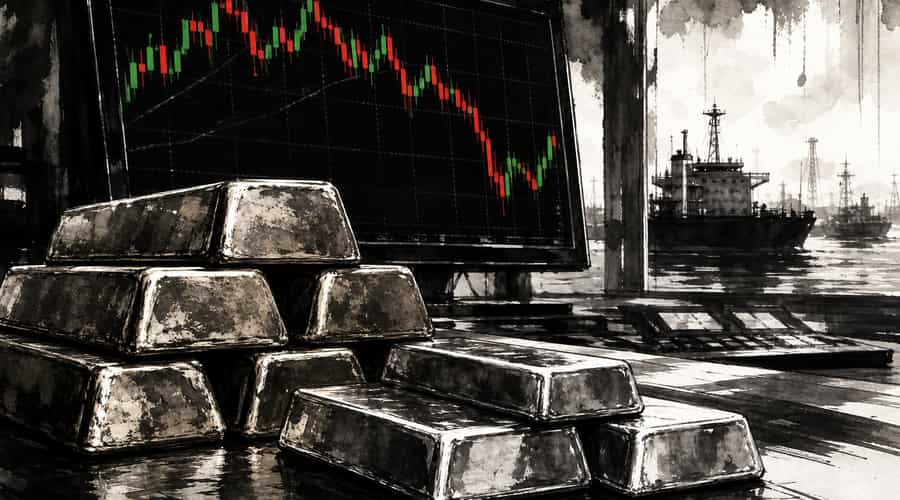
Gold crossed $3,200 per ounce in April 2026, marking a historic milestone as investors rattled by trade tensions, dollar weakness, and recession fears scramble for cover.
The gold rush of 2026 isn't driven by sentiment alone. It's a confluence of pressures that have been building for months, finally breaking through a ceiling that analysts had quietly debated for years. Spot gold surged past $3,200 an ounce in early April, its highest level in history, as a volatile cocktail of geopolitical friction, renewed tariff salvos between Washington and Beijing, and a softening U.S. dollar sent institutional and retail investors alike toward the oldest store of value on the planet.
The immediate catalyst was a fresh escalation in U.S.-China trade tensions following the Trump administration's announcement of sweeping new tariffs on Chinese imports, which triggered retaliatory measures from Beijing and sent shockwaves through equity markets. The S&P 500 shed significant ground over a matter of days, and when stocks wobble that hard, gold tends to catch the money flowing out. That dynamic played out in real time this month.
Central bank demand is adding structural fuel to what might otherwise look like a short-term fear trade. Institutions in emerging markets, particularly in Asia and the Middle East, have been accumulating gold reserves at a pace not seen since the post-2008 era. This isn't panic buying , it's deliberate portfolio repositioning away from U.S. dollar-denominated assets at a moment when confidence in the dollar's reserve currency stability is genuinely being questioned in some corners of the financial world.
The dollar's weakness matters here more than people are giving it credit for. Gold and the dollar typically move in opposite directions, and the greenback has been under pressure as markets price in the possibility that the Federal Reserve may be forced to cut rates sooner than expected if tariff-driven inflation collides with a slowing economy. That stagflationary specter , slow growth plus sticky prices , is exactly the environment where gold historically earns its keep.
Retail investors aren't sitting this one out either. Gold ETF inflows have picked up sharply in the first weeks of April, with funds like SPDR Gold Shares reporting some of their strongest weekly inflows since 2020. The accessibility of gold exposure through ETFs has democratized what was once a trade dominated by commodity desks and central banks. When your average brokerage app makes it as easy to buy GLD as it does Apple stock, retail participation in a gold rally becomes a self-reinforcing loop.
There's also a psychological dimension worth acknowledging. Investors have watched crypto markets whipsaw, tech valuations compress under rate pressure, and real estate liquidity dry up in key markets. Against that backdrop, gold's 2026 run feels less like a flight to safety and more like a flight toward something that simply makes sense right now. Tangible. Finite. Uncorrelated to the quarterly earnings of any single company or the policy decisions of any single central bank , at least in theory.
Mining stocks have lagged the underlying metal somewhat, which is a pattern worth watching. Companies like Newmont and Barrick have benefited from higher spot prices, but input cost inflation and operational headwinds in some jurisdictions have kept the leverage to gold's price move lower than bulls might hope. That gap tends to close eventually, and for investors who missed the initial run in physical gold or ETFs, senior miners could represent the next leg of the trade.
The question everyone is really asking is whether $3,200 is a ceiling or a waystation. Goldman Sachs revised its year-end gold price target upward earlier this quarter, and several commodity desks now have scenarios in their models that put gold north of $3,500 if trade tensions deepen and the Fed pivots dovish before year-end. That's not a prediction , it's a reminder that the macro conditions driving this rally haven't resolved. Watch the dollar index, watch Fed commentary after the next inflation print, and watch whether the U.S.-China trade standoff produces any diplomatic off-ramp. Those three variables will tell you more about gold's next move than any technical chart.