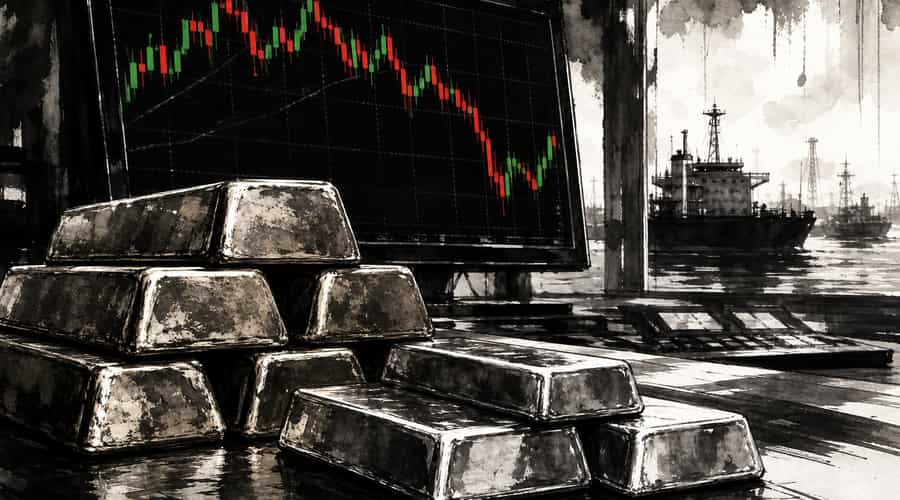
Gold has shed significant ground over the past month, and the reason is not what most investors expected: the metal is being undercut not by confidence, but by a specific kind of diplomatic ambiguity that the traditional safe-haven playbook was never designed to handle.
The Gold/Silver Sector Index has quietly staged one of its sharpest pullbacks in months, and the timing tells you everything. Three months into the Iran conflict, with U.S.-Iran negotiations now actively reshaping the diplomatic landscape, money that would normally flood into precious metals is hesitating. That hesitation is the story.
For most of the past decade, whenever geopolitical tensions flared, gold was the first place nervous capital ran. The logic was simple: when the world feels dangerous, paper assets feel fragile and gold feels permanent. But that logic starts to fracture when the source of uncertainty is a negotiation rather than a clear escalation. Active U.S.-Iran talks have introduced a very specific kind of ambiguity that markets struggle to price cleanly. If a deal materializes, the geopolitical risk premium baked into gold could evaporate almost overnight. If talks collapse, the situation worsens, but in ways that are hard to position for in advance. Neither outcome offers traders a clean trade, so institutional money is stepping back and waiting.
Political turbulence inside the U.S. is adding a second layer of pressure that is reshaping how investors allocate defensively. In previous cycles, domestic instability reliably pushed money toward gold. What is happening now is different: sentiment has fragmented. Some traders are rotating into short-duration Treasuries. Others are sitting in cash equivalents. A smaller but notable cohort has revisited the dollar, which has shown surprising resilience given the scale of the uncertainty surrounding it. The result is a dispersal of safe-haven flows across multiple instruments rather than the concentrated rush into gold that previous crises reliably produced.
Silver is not being spared. The metal, which tends to amplify gold's moves in both directions, has tracked the pullback with its own sharp correction. Silver's dual identity as both a monetary asset and an industrial input makes it especially exposed when signals are mixed: if global growth softens because of geopolitical friction, industrial demand weakens; if gold loses its crisis premium, silver loses its speculative tailwind. Both pressures are landing at once.
ETF Outflows Signal More Than Short-Term Profit-Taking
What gives the current move more weight than a routine correction is where the selling is coming from. ETF outflows in the precious metals space have been notable through April 2026, as reported by Bloomberg's commodities desk. That is not just futures traders trimming positions. Long-term holders are reassessing their allocations, which is a more meaningful signal about shifting conviction than short-term price action alone.
Gold still has structural support that should not be dismissed. Central banks across Asia and the Middle East have continued accumulating reserves. No credible uncorrelated alternative has emerged for institutional portfolios. The dollar's long-term trajectory remains genuinely uncertain. These fundamentals have not disappeared. But the current pullback is a clear reminder that even gold's safe-haven premium is not unconditional. When the dominant geopolitical threat is defined by negotiation timelines rather than military escalation, markets price risk on a different curve.
The practical takeaway for investors is this: lower gold prices do not automatically mean better value if the conditions that historically justified a premium are in genuine flux. The next four to six weeks of U.S.-Iran talks are the key variable to watch. A breakdown in negotiations would likely reverse the current pullback sharply and quickly. A preliminary framework deal, even a loose one, could extend the pressure on gold before any stabilization sets in. The metal is no longer on autopilot, and anyone treating it as though it is will be caught off guard by whichever direction this resolves.
Also read: Gold at $4,700 is now a geopolitical thermometer and the Iran conflict is setting the temperature • Judy Shelton's gold bond proposal is gaining political momentum and July 4 is the target date • Retail investors are buying half-kilo gold bars from local shops and the movement is going viral