Google's latest Gemini update is not a new standalone image generator. It is a distribution move: free personalized image creation inside the app millions already use, with Google Photos doing the work that prompts used to do.
The story is no longer whether Google can make a good AI image. Wired noted in February that Nano Banana 2 had become the new default image model in Gemini, with faster generation, stronger editing and better text handling than the earlier version. The sharper question now is what happens when that tool stops feeling like a tool at all and starts behaving like part of your Google account.
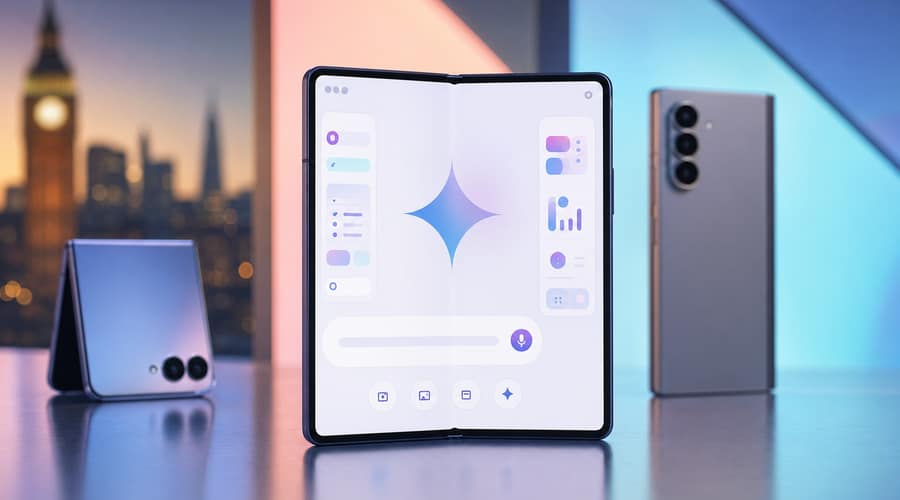
Google said in a June 29 Keyword post that all eligible users in the U.S. can now use personalized image generation in Gemini for free. The feature connects Personal Intelligence with Nano Banana and Google Photos, so Gemini can use the context in apps you have connected, including Gmail, Photos, YouTube and Search, when you ask it to make an image.
That is a very different fight from the one most image startups prepared for. If you run a small image-generation business, you can improve style, speed and pricing. You cannot easily copy a user's labeled Google Photos library, years of Search activity and the default assistant sitting on their phone. That is the part Google owns.
Google's own example is plain enough. Instead of writing a long prompt for a house that matches your taste, you can ask Gemini to 'design my dream house.' If you want an illustration of yourself and your favorite things, Gemini can pull the right reference from Google Photos rather than asking you to upload it manually. You still have to opt in, and Google says those connected apps can be adjusted in settings. But once you do, the prompt gets shorter because the account supplies the missing context.
The Edge Is The Account
For a reader, this is convenient. For the market, it's a warning. Midjourney can still win when you care about a particular look, a creative community, or the feeling that the image came from a tool built for artists first. That edge is real. People don't use Midjourney only because it produces pixels. They use it because it has a recognizable aesthetic and a culture around making images.
Google is not trying to beat that culture at its own game. It is going after the larger, duller, more valuable use case: the everyday image you didn't want to spend 15 minutes prompting. A birthday card with the right family member in it. A social post that uses the right vacation photo as context. A quick illustration for a school project or a presentation. Those images don't need to win an art contest. They need to be good enough, fast enough and already available where you are.
The Verge reported in April that the earlier version of this personalization feature was rolling out first to eligible Google AI Plus, Pro and Ultra subscribers in the U.S. The June expansion changes the posture. Free access for eligible U.S. users turns the feature from a paid perk into a habit-forming wedge, and habits are the part startups should fear most.
Stability AI faces a different problem. Its best-known asset is the Stable Diffusion brand and a history with open image models, not a consumer account layer. The company has also spent the past two years dealing with leadership changes, financing pressure and copyright litigation. The Times reported in December that Stability AI posted 2024 revenue of $55 million and a pre-tax loss of $48.5 million, a better result than the prior period but hardly the position you want when Google is handing more image creation to consumers for free.
Frankly, the smaller API-first image companies are in the hardest place. If your pitch is lower cost, easier access or generic image quality, Google just made your pitch thinner. You need a workflow Google doesn't serve, a customer Google doesn't understand, or an output Google can't make without damaging trust in its own products.
There is also a privacy line here that deserves more than a shrug. Google says connecting apps is opt-in and that Gemini does not directly train its models on a private Google Photos library. Good. You should still understand the trade. The same context that makes a prompt easier also makes the product more personal, and personal products are harder to leave.
Nano Banana's next phase is not really about leaderboard rankings or a rumored price per image. Those claims did not hold up in search. The verified story is simpler and more important: Google is moving AI image creation from a separate destination into the account you already use. That is where the market changes.
Also read: PJM's emergency data center curtailments signal a new power calculus for AI infrastructure • Former DeepMind researchers who beat professional poker players raise a $500 million Series A to trade stocks and crypto • Etched bets $800 million that transformer silicon will outlast the GPU era