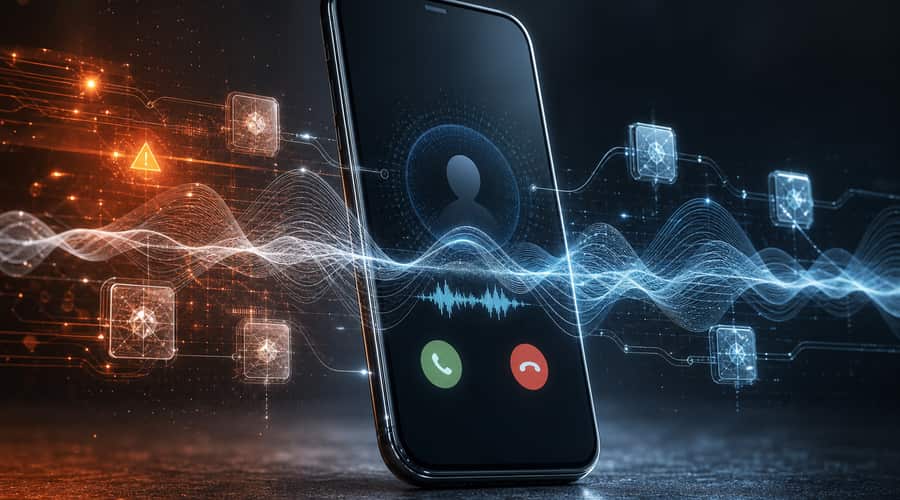
Google's new fake call detection turns the humble phone call into an identity check. That matters because AI voice scams are making caller ID feel like yesterday's security tool.
Google is rolling out fake call detection in Phone by Google this month, starting with Pixel devices, and the timing is not accidental. Scammers no longer need a strange number to frighten someone into acting fast. They can spoof a familiar contact, copy a voice with AI, and make the call feel personal before the victim has time to think.
The new feature, announced as part of the June Android Drop, is designed for that exact problem. When a call appears to come from one of your contacts, Android checks whether it is actually coming from that person's device. If the verification fails, Phone by Google shows a warning so the recipient can end the call before the conversation gets dangerous.
That sounds simple, but the shift is bigger than another spam label. Traditional caller ID was built for a world where the number itself carried trust. That world is fading quickly. A spoofed number can now be paired with a convincing synthetic voice, which means the familiar name on the screen may be the weakest part of the system.
Most people already treat unknown callers with suspicion. That has pushed fraudsters toward impersonation, where the point is not to sound random but to sound close. A fake call from a bank, employer, parent, child, or business partner has far more power than an anonymous robocall because it bypasses the first layer of doubt.
The fraud numbers explain why Google is moving here. The Federal Trade Commission reported that Americans lost more than $12.5 billion to fraud in 2024, with imposter scams accounting for $2.95 billion of those losses. That does not mean every loss came through voice calls, but it shows the size of the impersonation economy that AI tools are now helping to sharpen.
In its June Android Drop announcement, Google said fake call detection uses an end-to-end encrypted digital handshake between devices. When a real contact places a call, that device silently sends a confirmation signal to the recipient's device. If a scammer is only spoofing the number, the expected signal is missing, and Android can check with the contact's real device before warning the recipient.
The important part is that Google is not trying to judge whether the caller sounds suspicious. It is trying to verify whether the call path matches the identity being presented. That is a more durable idea in an AI fraud environment because synthetic voices will keep improving, while device-based trust can be made harder to fake.
The privacy question is real
Any system that checks who is calling will raise privacy concerns, and it should. Google says the handshake is end-to-end encrypted, which matters because the point is to verify devices without exposing call content. Still, users will reasonably ask what metadata is created, how often devices ping each other, and whether this kind of verification becomes another quiet layer of platform control.
The default setting also matters. Google says fake call detection will be enabled by default, although users can turn it off in the Phone by Google settings. That is the right practical choice if the goal is protection at scale, but default security always changes the balance between user choice and platform intervention. Most people will never touch the setting, which means Google's design decisions become the everyday trust model for millions of calls.
There are adoption limits too. The feature works when both people are using Phone by Google, which leaves gaps across iPhones, carrier dialers, business phone systems, and Android devices using other default calling apps. It will roll out globally to Android 12 and newer devices, but starting with Pixel means the full effect will arrive gradually, not overnight.
That limitation is not a small detail. Fraudsters look for the weakest path. If verified calls become common among Pixel users but rare elsewhere, scammers may shift their pressure toward people and organizations outside Google's calling ecosystem. Security features can raise the cost of fraud, but they rarely erase the incentive.
The larger opportunity is infrastructure. Banks could use verified calling to make outbound fraud alerts more trustworthy. Employers could protect staff from fake executive calls. Family-safety apps could build around the same idea, especially for older users or children who may be more vulnerable to urgent impersonation attempts. The phone call would no longer depend entirely on what appears on the screen. It would carry a device-level proof.
That future will require cooperation beyond Google. Carriers, handset makers, financial institutions, and other app platforms would need common standards if verified voice identity is going to work across the whole market. Otherwise, it becomes another useful but partial defense, strong inside one ecosystem and uneven everywhere else.
For now, Google's move is a clear sign of where consumer security is heading. AI has made trust easier to imitate, so devices will be asked to prove more on our behalf. The next question is whether fake call detection becomes a helpful Android feature, or the beginning of a broader identity layer for everyday communication.
Also read: Amazon faces a privacy test over Ring’s facial recognition feature • Microsoft gives AI agents a safer way to work on Windows • OpenAI is chasing finance and legal work as Anthropic gains speed