The orbital transfer startup founded by SpaceX veteran Tom Mueller has closed a $500 million Series D at a $4.26 billion valuation, with a pointed commitment to hiring engineers rather than replacing them with automation.
Tom Mueller spent years at SpaceX designing the Merlin engine that made Falcon 9 reusable and the Draco thrusters that steer Dragon. When he started Impulse Space in 2021, he built the company around a simple but underserved premise: getting a satellite to low Earth orbit is one problem, but getting it exactly where it needs to go after launch is another. Now the Redondo Beach company is turning that idea into a serious orbital logistics business, and its latest round shows that investors still have an appetite for expensive, difficult space infrastructure.
The Series D, announced on June 2, was co-led by 137 Ventures and Banner VC, with participation from Founders Fund, Lux Capital, and Linse Capital. According to TechCrunch, the round values Impulse Space at $4.26 billion and will help the company hire as many as 200 new employees. That is a notable signal in a technology market where much of the capital conversation has shifted toward software, artificial intelligence, and doing more with fewer people.
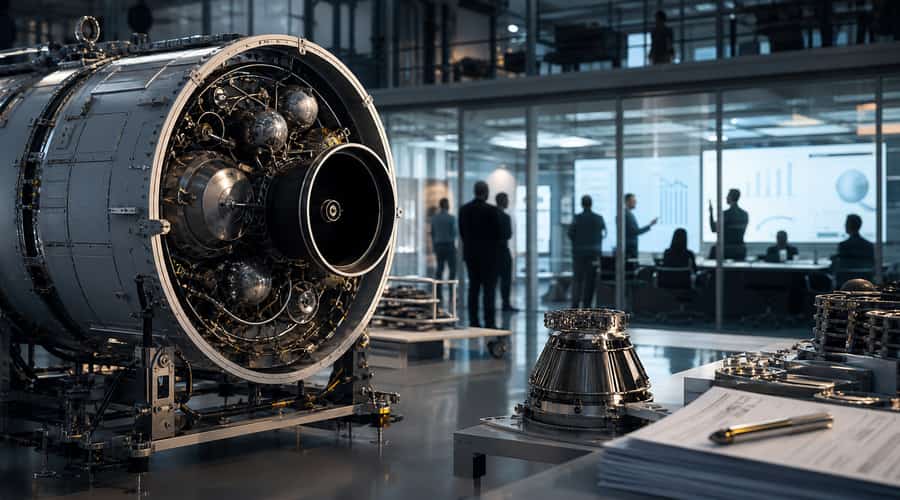
Impulse builds orbital transfer vehicles, often called space tugs. The name is plain, but the job is becoming more important. A rideshare launch can place many satellites into a shared parking orbit, but customers still need those satellites delivered to precise altitudes, inclinations, and mission locations. Impulse is trying to own that next leg of the journey.
The company operates two main vehicles. Mira is the smaller spacecraft, weighing roughly 300 kilograms when fully loaded with propellant, and has already flown multiple missions on SpaceX Transporter rideshare flights. Helios is the larger bet, built around a 15,000-pound-force staged combustion engine using liquid oxygen and methane. Its purpose is more ambitious: move payloads from low Earth orbit toward geostationary orbit, a far more valuable destination for communications satellites.
Mira has completed three missions, including work tied to the Remora autonomous rendezvous demonstration that Impulse and Starfish Space disclosed in December 2025. Helios is expected to begin demonstration work in 2026, with commercial GEO rideshare missions planned for 2027. The new capital is meant to support that ramp, including more vehicle development, testing, operations, and the engineering staff needed to make the cadence real.
Why the hiring choice matters
The most interesting part of this fundraise is not just the size. It is how Impulse is talking about spending it. Across aerospace and defense, AI-assisted engineering tools are starting to compress parts of the design cycle, from simulation to code generation to analysis. A company raising half a billion dollars and saying it wants people first is making a deliberate statement about where judgment still matters.
That argument makes sense at Impulse's current stage. Mira and Helios are not mature platforms rolling off a predictable production line. They are early vehicles still building flight heritage, with hardware, software, propulsion, guidance, and operations all feeding back into each mission. In that environment, experienced spacecraft engineers are not just extra capacity. They are the system memory of the company.
There is still a risk. If Impulse reaches regular commercial operations, the economics will change. A rival that reaches similar technical capability with more automation and a leaner workforce could put pressure on margins. Human-capital density can be an advantage during invention and early flight testing, but it has to convert into repeatability before investors will keep rewarding it.
The SpaceX dependency is useful, until it is not
Impulse's relationship with SpaceX is also worth watching. Mira has used SpaceX Transporter missions to reach orbit, which gives Impulse affordable access and regular opportunities to prove the platform. For now, that relationship is more symbiotic than competitive. SpaceX sells launch capacity, and Impulse adds value after deployment.
As Helios matures, the launch question becomes more complicated. GEO delivery is a higher-value service, and customers will care about schedule, orbit, reliability, and launch flexibility. Rocket Lab, future medium-lift vehicles, and other dedicated launch options could matter more as Impulse moves beyond demonstration flights and into contracted logistics. Depending on one launch provider is convenient early on, but it is rarely the best long-term posture for a transportation business.
The larger point is that in-space mobility is moving from a niche capability to a practical requirement. Starlink, OneWeb, Amazon Kuiper, national security constellations, and commercial Earth observation fleets are filling orbital bands with more hardware. The ability to position satellites precisely, move them when needed, and eventually help remove them from orbit will only become more valuable as traffic increases.
Impulse has capital, technical credibility, and a market that is getting easier to explain. The next test is execution. If Mira keeps building flight history and Helios proves it can move meaningful payloads toward GEO, the company could become one of the infrastructure names that defines the next phase of the space economy.
Also read: CyberSek Is India's Security Awareness Platform Built by People Who Actually Break Into Systems • leaf Makes Markdown Actually Readable Inside the Terminal • SoftBank is in early talks to anchor an $800 million round for Agile Robots as the humanoid race enters its capital-intensive phase