Japan's new unmanned medicine lab is not just a humanoid robot story. It is an early look at how AI-driven automation could change the economics and pace of scientific discovery.
The Institute of Science Tokyo has opened a laboratory where robots are doing medical research tasks that used to sit squarely in human hands, from handling reagents to running programmed cell-culture work. That matters because the real story is not whether a robot looks impressive cutting a ribbon. It is whether physical AI can make wet labs faster, more repeatable and less dependent on scarce technical labor.
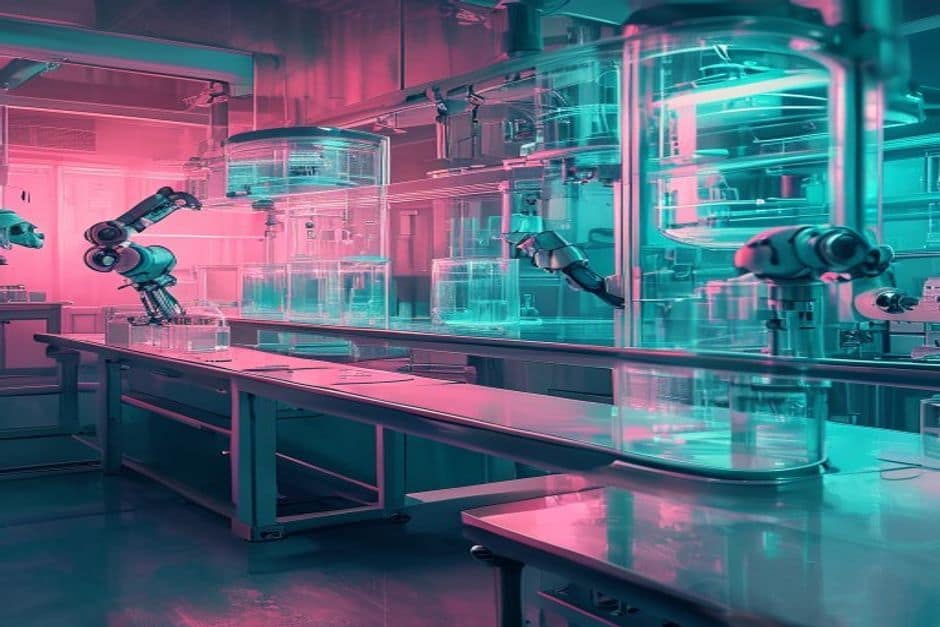
The Robotics Innovation Center, based at the university's Yushima campus in Tokyo, is now operating with 10 robots, including the dual-arm Maholo LabDroid. According to Bernama-Kyodo reporting published on May 10, the lab has no human staff working inside the experimental area, while the university plans to expand toward roughly 2,000 research robots by 2040.
That is a big target, but the near-term work is more practical than futuristic. The robots can transfer fixed amounts of reagents, open and operate temperature-controlled equipment, move items in and out of those systems, and carry out cell cultivation that has already been programmed. These are not minor chores. In biology and drug discovery, small variations in timing, temperature, contamination control and liquid handling can change results. Automation has value because it can make boring precision repeatable.
Science Tokyo's own Robotics Innovation Center describes the facility as shared-use infrastructure for life-science experimentation, with support for protocols in areas such as next-generation sequencing, proteomics, organoids and cell culture. It also says the center began full operation of its robotic experimentation facility on April 1, 2026, followed by an opening ceremony and symposium on April 15.
That timeline is important. This is not only a one-off demonstration for the cameras. The university is trying to build a facility that researchers inside and outside the institution can use, with pilot programs planned for fiscal 2026 and usage models ranging from fixed-menu robotic services to customized programming and time-based access for more capable users.
For entrepreneurs, that is the part worth watching. The first wave of lab automation was often about expensive equipment in well-funded pharmaceutical and academic labs. The next wave is more likely to look like infrastructure: robotics, AI scheduling, cloud interfaces, standardized protocols, data capture and validation tools bundled into a service. If that model works, startups may not need to own every instrument or hire every specialist before they can test a biological idea.
There is also a Japan-specific reason this story has energy. The country is facing labor pressure across sectors, and scientific research is not exempt. Robots are already being tested in other Japanese workplaces, from airport ground operations to clinical research settings. Maholo has reportedly been used at Kobe Eye Hospital in western Japan, where it supports induced pluripotent stem cell related clinical research, including cell culture tasks.
Automation Does Not Remove The Scientist
The strongest version of this technology is not a lab with people erased from science. It is a lab where people spend less time repeating delicate manual procedures and more time deciding what should be tested next. Keiichi Nakayama, the head of the center, has framed AI and robotics as tools for making Japanese science more competitive, with a long-term ambition to automate much of the pipeline from hypothesis generation to experimental verification.
That ambition should be taken seriously, but not romantically. Wet labs are messy because biology is messy. A robotic arm can pipette steadily, but the system still needs validated protocols, clean data, fault detection, calibration, maintenance and human judgment when the biology does something unexpected. The harder problem is not moving liquid from one container to another. It is knowing whether the result is trustworthy.
This is where the commercial opportunity becomes more demanding. A startup selling autonomous lab stacks cannot just offer a robot and an AI dashboard. It has to prove reliability, reproducibility and regulatory readiness. Pharmaceutical partners will want audit trails. Academic users will want flexibility. Hospitals will want safety and documentation. Investors will want to know whether the system can move beyond carefully selected workflows into broader research operations.
The best companies in this market may end up looking less like robot makers and more like full-stack research infrastructure providers. Hardware will matter, but so will protocol libraries, experiment design software, data management, remote operation, service contracts and integration with existing lab instruments. The winner is unlikely to be the machine that looks most human. It will be the system that produces dependable scientific output at lower cost.
That is why Science Tokyo's 2,000-robot goal is useful even if it takes years to reach. It sets a direction for physical AI that is grounded in a real bottleneck: research capacity. Drug discovery needs more experiments, better data and fewer avoidable errors. Universities need ways to stretch limited staff. Startups need access to lab capability without building everything from scratch.
The next thing to watch is whether the center can turn robotic experimentation into a repeatable service that outside researchers actually use. If it can, Japan's unmanned lab will be more than a striking image of machines at work. It will be an early signal that scientific discovery is becoming something founders can build infrastructure around.
Also read: eBay just forced Ryan Cohen to prove GameStop can pay. • A cup of water exposed the real economics of local AI hardware • Artificial Analysis shows coding agents are more than model scores