Kazakhstan has not simply switched on a free crypto tax regime overnight. President Kassym-Jomart Tokayev's July 7 decree starts the legal work, with a three-year personal income tax exemption and flared-gas mining rules now moving through the government machine.
Tokayev signed the decree on July 7, and the important detail is timing. The official text published on Kazakhstan's Adilet legal database doesn't say every individual trader is tax-free today. It orders the government to submit draft legislation by April 1, 2027, exempting individuals from personal income tax on income from digital asset transactions made through Kazakh digital asset service providers for the period from January 1, 2026, through December 31, 2028.
That distinction matters. If you're reading this as a trader, the policy direction is clear, but the machinery still has to be written into law. Kazakhstan wants crypto brought back onto domestic, regulated platforms. It is offering a tax incentive to do that, but only when the transaction runs through local providers.
The same decree also tells officials to prepare a legal mechanism, by March 1, 2027, for using associated petroleum gas and natural gas at oil fields to generate electricity in isolated mode for digital mining. Interfax-Kazakhstan reported the same point after the Ministry of Artificial Intelligence and Digital Development announced the measure. This is not a vague energy slogan. It is a specific instruction to turn gas at the field into power for mining, if national gas company QazaqGaz declines to exercise the state's priority right.
The Tax Break Is A Lure
Kazakhstan's target is obvious: get digital assets out of offshore wallets and foreign platforms, then make the regulated local market more useful. Kursiv reported that the decree was prepared by the digital ministry, the National Bank of Kazakhstan and the Astana International Financial Centre. Those are the three names you need here. This is not a side project from one crypto-friendly ministry.
The government also set a nearer deadline. By September 1, 2026, officials have to develop an additional tax incentive for individuals who move previously acquired or mined digital assets from foreign platforms and services into Kazakhstan's regulated infrastructure. By December 31, 2026, the decree also calls for a voluntary disclosure mechanism for earlier crypto holdings, again on condition that the assets are moved through Kazakh providers.
That's the bargain. You get a cleaner tax path, but the state gets visibility. Anyone pretending this is just Kazakhstan being generous is missing the point. The exemption is the bait for domestication.
Mining Is The Harder Part
Kazakhstan knows what uncontrolled mining can do to a power system. After China's 2021 crackdown pushed miners across the border, the country became one of the largest Bitcoin mining destinations in the world, then ran into grid pressure, curbs and complaints from operators over energy prices. The easy-power era ended fast.
Hashrate Index's Q3 2026 heatmap shows how far that position has slipped. The United States led with 36.7% of global Bitcoin hashrate, Russia had 17.2% and China had 12.2%. Kazakhstan had fallen out of the top 10, down to about 15 EH/s and 11th place, after losing roughly 17% of its hashrate from the previous quarter. That's a very different picture from the old claim that Kazakhstan still sits comfortably in the global top three.
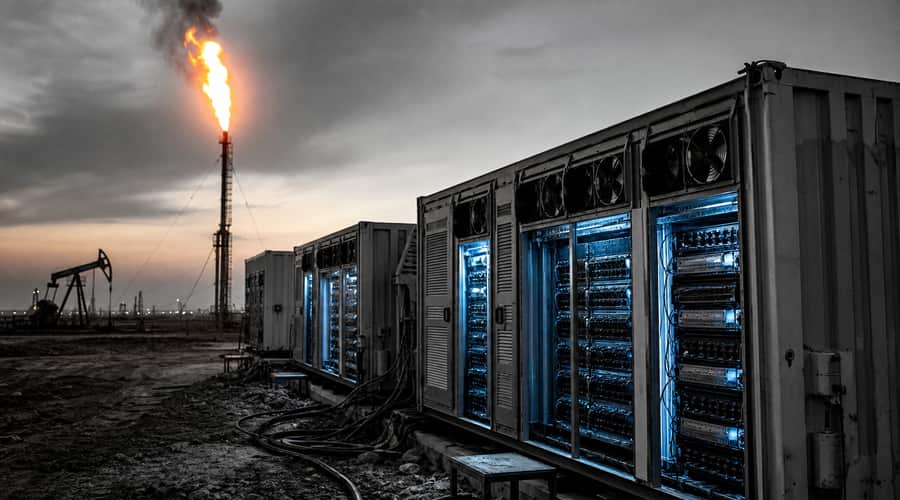
So the flared-gas provision is the real industrial bet. It gives miners a path away from the public grid and toward stranded energy at oil fields, where gas is often burned because moving it is uneconomic. In the United States, Crusoe Energy built a business around that model in places like the Permian Basin and the Bakken, putting generators and computing containers near wells. Kazakhstan is now trying to legalize a version of that logic at the state level.
There is still plenty we don't know. The decree sets deadlines for draft laws and regulatory work, not a finished operating manual. Officials still have to spell out how field-gas power projects will be approved, how miners will qualify, what QazaqGaz's priority right means in practice, and how the tax exemption will be administered for individuals who trade through domestic providers.
But the direction is no mystery. Kazakhstan is trying to pull crypto trading into its own regulated market and rebuild mining around energy that doesn't compete so directly with households and factories. That's a practical move, not a romantic one. If the rules are written tightly, miners get a cheaper source of power, traders get a tax reason to come home, and the government gets what it wanted from the beginning: more crypto activity it can actually see.
Also read: Galaxy Digital Puts Wall Street Risk Controls on Top of DeFi Yield for Idle Stablecoins • FTX Will Pay Creditors Up To 120 Percent Of Their Claims Next Month • Visa and Mastercard Just Joined a New Standard for AI Agent Payments