Companies pay tens of millions for logo placement at an event like that, and the logos get taped over. Meanwhile a small family brand from downtown LA ends up center stage.
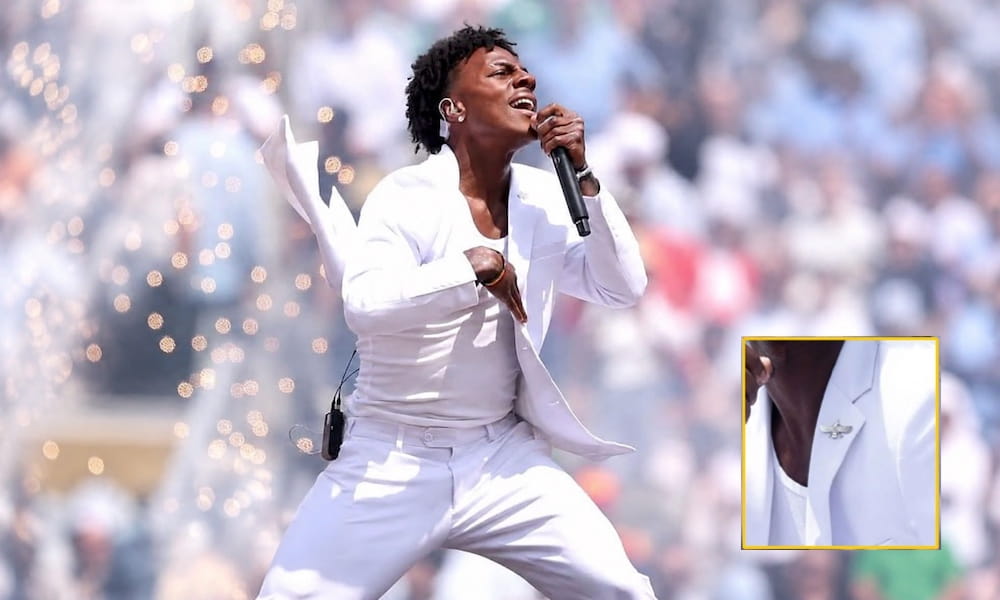
When iShowSpeed walked out at the World Cup Final in a white suit with a small golden pin on the lapel, hundreds of millions of viewers saw it live. Within hours, BARABAS, a family-run menswear brand from downtown Los Angeles, confirmed the suit was theirs: the white World Cup final suit was their Endless brushed cotton design, and the pin was the Faravahar, the brand's registered trademark. The same weekend, conductor Gustavo Dudamel led the halftime show in a blue BARABAS Palma Pinstripe.
None of it was paid, sponsored, or planned. We sat down with Amin Farhang, Head of Operations at BARABAS (barabasmen.com), to talk about the brand's origin, the moment lightning struck it for the second time, and what a stage that size changes for a company that built itself boutique by boutique.
Let's start with the BARABAS origin story. When and why was the brand founded, and what did you set out to build in menswear that you felt was missing?
We started BARABAS in downtown Los Angeles in 2007 because menswear at the time felt like it forced men into a choice: be safe and boring, or be flashy and cheap. There was almost nothing in the middle - clothing with real construction quality, bold design, and a point of view, at a price a working man could actually reach. We wanted to make pieces that a man puts on and immediately stands differently.
From day one we designed and built everything ourselves out of LA and sold through thousands of boutiques across the world before anyone knew our name. The name got out on its own - and it got out in the wildest way possible.
In January 2016, Rolling Stone published Sean Penn's interview with El Chapo Guzman, and in the photo of them shaking hands, El Chapo is wearing our Fantasy shirt. In the video he's wearing our Crazy Paisley. We had nothing to do with it - he could have worn any luxury brand on earth, and he chose a shirt from our shop. Within days our website crashed multiple times from the demand, the phones wouldn't stop ringing, and orders were coming in from all over the world. That moment put BARABAS on the map, taught us how to survive a viral surge, and honestly built the foundation for the company we are today.
How did BARABAS end up on iShowSpeed for the white World Cup Final suit, and what was that moment like when you saw it live?
Completely unpaid, unsponsored, and unplanned. The show's producers and stylists simply purchased the clothing. There was no affiliation, no outreach from us, no instructions on what to wear or how to wear it - a purely organic interaction. We didn't even know who was going to be wearing our clothes.
So when iShowSpeed walked out at the World Cup Final in our white suit with our Faravahar pin on the lapel, in front of hundreds of millions of people - that was surreal. Ten years after El Chapo, lightning struck the same brand twice, and both times it found us on its own.
And here's the part I'm proudest of as a maker: watch what he did in that suit. Backflips, sprinting, a full-energy performance - in a tailored suit. That's not an accident. Our suits are built to be light, breathable, cool, and comfortable enough to actually move in. Most brands' suits would not have survived that show. Ours looked sharp through every second of it.
The Faravahar lapel pin is such a specific detail. What does that symbol mean to you, and why was it important to include it?
The Faravahar is the registered trademark of BARABAS MEN. It represents the ancient Persian philosophy of good thoughts, good words, and good deeds - and for us it's not decoration, it's a daily reminder of how we run this business. It's the standard we hold ourselves to: deliver top quality, give people a real experience, and respect our customers in everything we do. Every man wearing that pin is carrying a three-thousand-year-old code of conduct on his chest.
Can you walk us through the Dudamel connection and how it ties into the brand's story?
It appears the same production and styling team dressed both performances - the closing performance with iShowSpeed and the halftime show. During the halftime show, conductor Gustavo Dudamel led a combined group of musicians from the New York Philharmonic and the Simon Bolivar Symphony Orchestra of Venezuela, alongside members of The Muppets - Dr. Teeth and the Electric Mayhem - and violinist Bijan Mortazavi.
Dudamel was conducting in our blue Palma Pinstripe suit - and he wasn't alone. We recognized our pieces on musicians across that stage, including our Quentin Tech Stretch and several styles from our estate blue and sapphire suiting lines. The stage wardrobe featured playful alterations - stripe stitching, names and numbers - giving elegant tailoring a soccer-jersey fantasy twist for the occasion, and seeing our suits woven into the biggest halftime show in World Cup history was something we never could have scripted.
We also know from our own sales records that the production's styling team purchased multiple additional BARABAS styles for the event, and some of those pieces were worn by multiple performers in the side shows between breaks. Out of respect for the stylists' privacy we won't name them, but the receipts are ours.
And there's a reason stylists dressing performers reach for our suits: they move. Light, breathable, cool, stretch-built - a musician can play a full halftime show in one, a performer can flip in one, and it still looks like formal tailoring on camera. That's the whole design philosophy: suits you can actually live and perform in.
FIFA covered the Levi's logo at the venue despite millions paid for naming rights, yet a small LA brand took the stage in front of hundreds of millions. What does that contrast mean to you?
You can't buy that. Literally - companies pay tens of millions for logo placement at an event like that, and the logos get taped over. Meanwhile a small family brand from downtown LA ends up center stage, on camera, in front of hundreds of millions of viewers - and we didn't pay a dollar or ask anyone for anything. Stylists chose our clothes on merit.
That's the difference between advertising and authenticity. A sponsorship is a transaction. What happened to us was an endorsement of the product itself - the people whose entire job is to make performers look their best went out and bought BARABAS. We didn't expect it, we couldn't have planned it, and now we're seeing a serious move in brand awareness and sales because of it. To me the lesson is simple: build something truly great, and eventually the world's biggest stage finds you.
What does a moment on that scale change for a brand like BARABAS, and how are you carrying that momentum forward?
We've been here before, so we know exactly what a moment like this does - and what it can break. After the El Chapo interview in 2016, demand exploded overnight. Our website crashed repeatedly, we sold out completely, and we spent months fighting to keep product in stock while copycats flooded the market with knockoffs. That experience was painful, but it forced us to build real infrastructure, and it's a big part of how we scaled into the company we are today.
This time we're moving faster. We're working closely with our supply chain to keep up with demand and make sure nothing breaks. And the copycats showed up on schedule - within days, sites were using our own product photos to sell counterfeit iShowSpeed World Cup suits.
What's next for BARABAS that readers should watch for?
The demand from this moment is real, and we're building for it. Readers should watch for expanded offerings in our suiting line, new drops built around the styles the world just saw on that stage, and strategic collaborations we're actively developing with major retail partners. Ten years ago a viral moment forced us to grow up as a company. This time we're ready for it - the infrastructure, the inventory, and the partnerships are all being put in place so that when a customer wants BARABAS, BARABAS is there.
Two viral moments, ten years apart, and neither one bought or asked for. In an industry where visibility is usually a line item, BARABAS keeps getting found the hard way: by people whose job is to know what looks good, spending their own budgets on it. The white suit is back in the news, the Faravahar pin has a story worth telling, and the brand behind both is betting that this time, it's built for the surge.