NASA's newest space processor is not just faster. It is built to give spacecraft more independence when Earth is too far away to help.
NASA is testing a next-generation radiation-hardened processor that could change how deep-space missions work, and the agency is not talking about a small upgrade. The High Performance Spaceflight Computing project is designed to deliver up to 100 times the computational capacity of current spaceflight computers, while early testing at NASA's Jet Propulsion Laboratory suggests the chip is already operating at 500 times the performance of today's radiation-hardened chips, according to NASA's own announcement.
That matters because the current generation of space electronics is built for survival, not speed. Missions often rely on older chips because they can endure radiation, temperature swings, and the brutal conditions of launch and deep space. The trade-off is obvious. They are reliable, but they are slow, and that limits how much a spacecraft can do on its own.
NASA's pitch is different. Instead of sending raw data back to Earth and waiting for instructions, future spacecraft could analyze information onboard, react to hazards in real time, and make better decisions when communication delays make human input impractical. That is the real promise behind the project, and it is why NASA says the chip could support autonomous spacecraft, faster scientific discovery, and future missions to the Moon and Mars.
NASA says the processor is made to survive deep space while delivering a much larger computing leap than current hardware. The agency has been testing the chip since February, putting it through radiation, thermal, and shock trials that mimic the conditions electronics face far from Earth. Jim Butler, the project manager at JPL, said the team is running high-fidelity landing scenarios from real NASA missions, which is a useful reminder that the challenge is not just staying alive in space, but surviving the moment a spacecraft tries to land on another world.
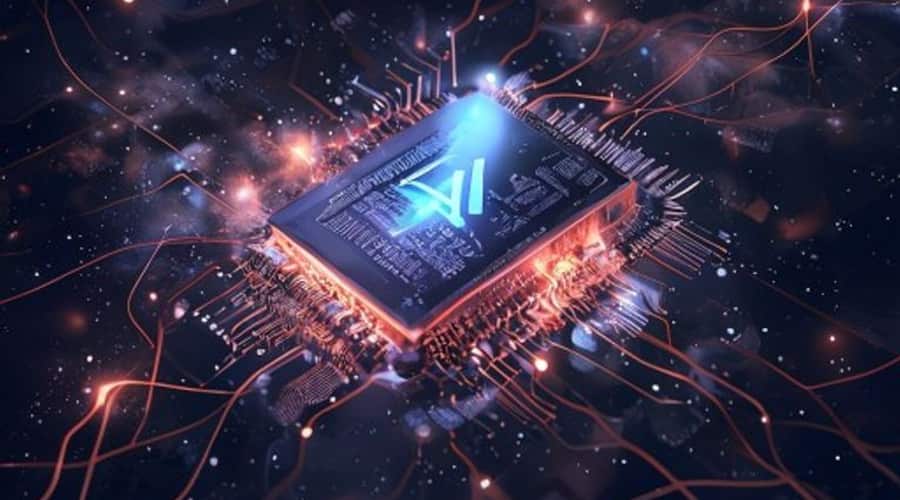
The chip itself is a system-on-a-chip, small enough to fit in the palm of a hand, but packed with the kinds of components that let a machine compute, communicate, and process data without relying on separate systems. NASA says the design is fault-tolerant, flexible, and extremely high-performing, language that may sound technical but points to a simple goal: make space hardware capable of doing more without needing a ground team to hold its hand.
That is especially relevant for missions that will operate farther from Earth than the agency's current fleet. On the Moon, on Mars, and in deep-space probes, delay is not an inconvenience, it is a constraint. If a craft spots a hazard, detects a problem during landing, or sees something scientifically valuable, it needs enough onboard intelligence to act before the moment passes.
What the chip could unlock
NASA says the technology could help deep-space missions analyze, store, and transmit much larger volumes of data back to Earth, which would speed up the pace of discovery. That is important because the limiting factor in many missions is not the sensor, it is the computer behind it. If the processor can handle more data in orbit or during a descent, scientists get more information sooner, and spacecraft can make better use of the time they spend in the field.
There is also a broader industrial angle here. The chip is being developed through a commercial partnership with Microchip Technology, which built the processor with NASA's Jet Propulsion Laboratory. NASA says samples have already been provided to early access partners in defense and commercial aerospace, and the company plans to adapt the technology for Earth-based industries too, including aviation and automotive manufacturing.
For NASA, the timing is not accidental. The agency has spent years arguing that future exploration will depend less on brute-force hardware and more on systems that can think locally. That logic applies equally to crewed habitats, planetary rovers, Earth orbiters, and missions that will have to function for years without repair. The new processor is meant to sit at the center of that shift.
NASA says the chip will eventually be incorporated into hardware for Earth orbiters, planetary rovers, crewed habitats, and deep-space missions once it is certified for flight. The point is not that spacecraft will become human-like. It is that they may become far better at dealing with the realities of space without waiting for help from home.
That is a meaningful change. Space has always punished delay, and the more ambitious the mission, the more expensive that delay becomes. NASA's new processor suggests the next leap in exploration may come not from bigger rockets, but from smarter hardware.
Also read: ERock tests investor demand for gas-powered AI infrastructure. • Fervo Energy goes public as AI turns geothermal into infrastructure • A Reddit developer turns NVENC into a local AI bridge