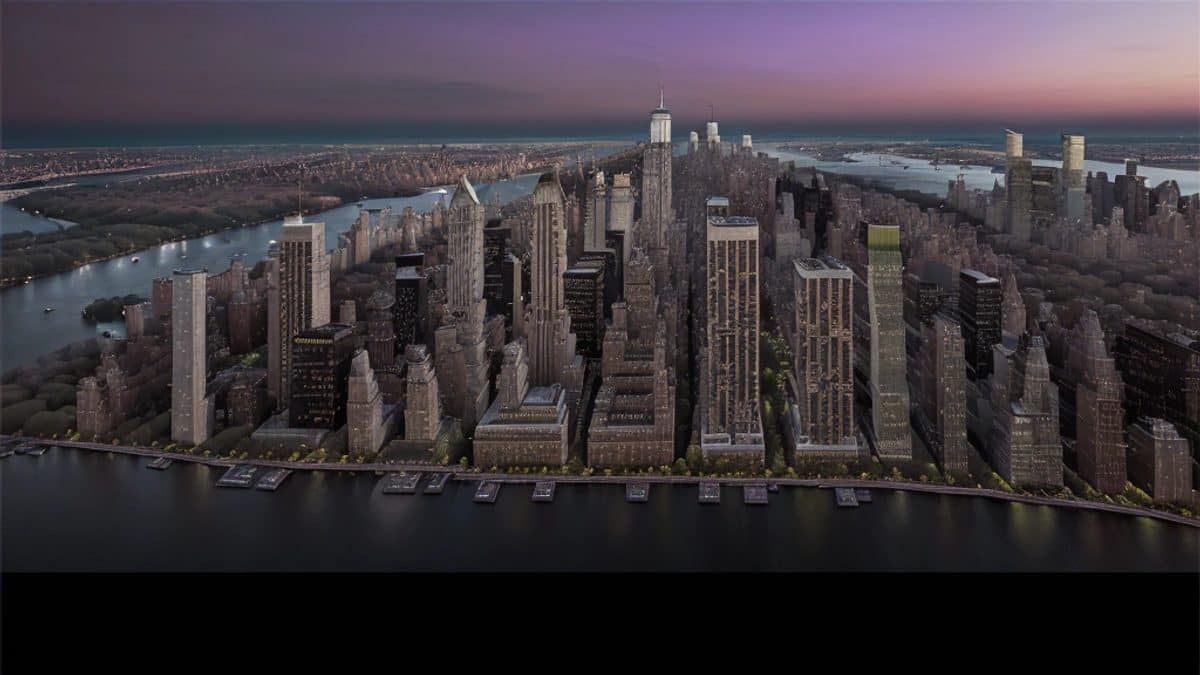
As Albany debates how to close a multibillion-dollar budget gap, Governor Kathy Hochul is steering away from income tax hikes and toward a new annual levy on non-resident second-home owners in New York City.
Kathy Hochul made her move on April 14, announcing she wants to tax the pied-à-terres and investment condos of people who park property in New York City while claiming their primary residency , and their tax obligations , somewhere else. It's a carefully drawn line. The governor has spent months resisting calls from progressive lawmakers to raise income taxes on millionaires and billionaires, and this proposal is her answer: find the money without giving high earners another reason to formalize what many of them are already doing quietly, which is leaving.
The budget math is real. New York City is staring at a shortfall that threatens core services, and Mayor Eric Adams is under pressure to find solutions before cuts bite. Albany's progressive caucus has pushed hard for higher taxes on the wealthy, arguing the rich can afford it and the city can't afford not to. Hochul disagrees , not on moral grounds, but on economic ones. Her administration's consistent position is that aggressive income tax hikes accelerate outmigration of high earners, ultimately shrinking the tax base rather than expanding it.
The second-home levy is designed to sidestep that trap. Rather than taxing income, it targets ownership , specifically, people who benefit from New York City's infrastructure, emergency services, cultural institutions, and real estate appreciation, but whose tax dollars flow to Florida, Texas, or Connecticut instead. The logic is that these residents are already making a choice to avoid New York taxes; the new levy would attach a cost to that choice without penalizing anyone who actually lives and pays taxes here full-time.
The announcement landed immediately in the luxury property market. Brokers and developers who cater to domestic and international high-net-worth buyers are already running the numbers. New York's high-end condominium market , particularly the ultra-luxury segment that attracts buyers who may own four or five properties globally , is sensitive to carrying cost changes. An annual tax stacked on top of existing property taxes, common charges, and mortgage costs changes the calculus on whether a Manhattan pied-à-terre pencils out as a lifestyle asset or becomes an expensive liability.
Specific rates haven't been published yet; the Division of the Budget is still finalizing figures as part of broader negotiations. That ambiguity is itself a market factor. Buyers considering a purchase in the $5 million to $30 million range are likely to pause until the structure is clear, and sellers of non-primary units may move to list ahead of any legislation passing. Short-term, expect softness in that specific segment while the policy takes shape.
There's a counterargument worth taking seriously, though. If the tax is scoped narrowly and set at rates that feel proportionate rather than punitive, it could actually stabilize the policy environment , giving wealthy part-time New Yorkers clarity that income taxes aren't coming for them, while generating revenue that reduces pressure for more sweeping fiscal changes. Certainty has value in real estate markets, even when it comes with a new line item.
What comes next in Albany
Legislative leaders still have to agree on the details, and that's where proposals like this typically get complicated. The progressive bloc wants income tax hikes; Hochul wants to hold that line. The second-home tax could end up as a genuine compromise, or it could become a bargaining chip that gets traded away for something else entirely. Budget negotiations in New York rarely go in a straight line.
What to watch: whether the final tax structure exempts certain ownership categories , trusts, LLCs, family property arrangements , that wealthy buyers routinely use, which would dramatically affect both the revenue yield and the political optics. Also worth monitoring is whether other high-cost cities start paying attention. If New York implements this and generates meaningful revenue without triggering the flight it feared from income tax hikes, it becomes a policy model. That's a slow-moving story, but a consequential one for urban fiscal policy well beyond the five boroughs.
Also read: American consumer confidence collapses to its lowest point since the 1940s as the Iran-Israel war drives inflation expectations to alarming new heights • American consumer confidence collapses to its lowest point since the 1940s as the Iran-Israel war drives inflation expectations to alarming new heights • Scott Bessent says the US economy can still grow past 3.5% this year even as war with Iran reshapes global markets