OKX is pushing tokenized US stocks before its regulated NYSE-linked plan is ready, and that gap is the whole story.
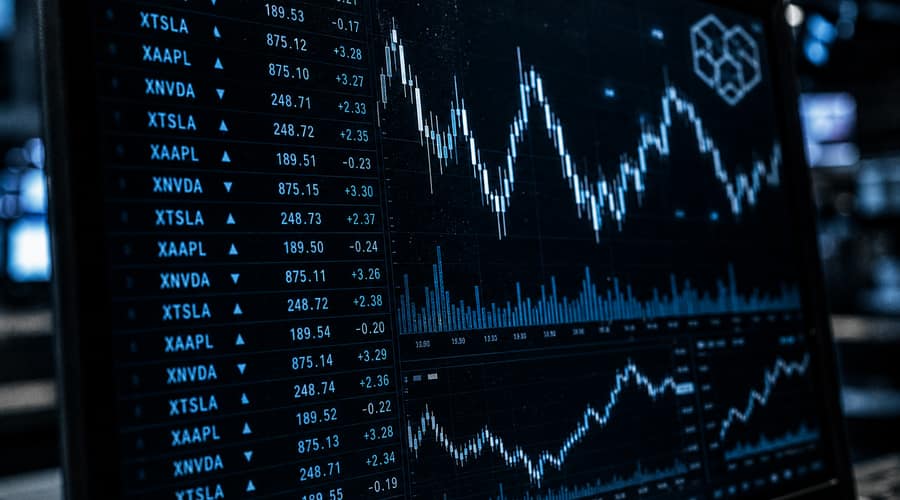
OKX says it has switched on trading for more than 40 tokenized US stocks and ETFs, including Apple, Nvidia and Tesla wrappers marked with an X prefix. The idea is easy to understand. You can trade Wall Street names outside Wall Street hours, settle in USDT, and ignore the New York Stock Exchange closing bell.
Here's the part you can't skip. You are not buying Apple stock. Based on OKX's own product language, these tokens give you price exposure to the underlying equities, not ordinary shareholder ownership. Dividends are handled at the issuer level instead of landing in your account as cash. That's not a small detail buried in the plumbing. It is the product.
If you own a share through a regulated broker, you sit inside a legal structure - custody rules, transfer rules, investor protections, the lot. If you hold a tokenized wrapper on a crypto exchange, you are taking a different kind of risk. You are trusting the issuer, the exchange, the liquidity setup and the rules written around that token. Don't confuse the two.
That is why the timing is so interesting. The Wall Street Journal reported in March that Intercontinental Exchange, the owner of the NYSE, invested in OKX at a $25 billion valuation and planned to make NYSE tokenized equities available through OKX's platform, subject to regulatory approval. In June, the Journal reported that ICE and OKX had formed a 50-50 joint venture called OKXICE, co-chaired by former New York governor Andrew Cuomo and ICE senior vice president Trabue Bland.
That venture is the official road. It wants licenses, a broker-dealer structure, and the blessing of the SEC and CFTC before it starts offering fully tokenized securities.
OKX's own tokenized stock launch is the other road. It is faster, looser and more exposed.
The wrapper is the point
The difference between those two roads is not lawyerly fussing. It is the line between a regulated market product and a synthetic trading instrument. One tries to bring equities onto blockchain rails while staying tied to the securities system. The other gives crypto traders an instrument that follows a stock price and trades like a crypto product.
Frankly, that is the pitch. If you are in Asia, Turkey or another market where OKX makes the product available, the appeal is obvious. You don't have to wait for US market hours. You don't have to use a US broker. You can move from Bitcoin or USDT into a Tesla-linked token in the same trading environment where you already keep your crypto.
But convenience is not ownership. It never has been.
The risk sits in the gap between the ticker and the legal claim behind it. XAAPL may look close enough to AAPL on a screen, but the rights underneath are different. A trader who only wants short-term exposure may not care. A reader thinking of this as a replacement for a brokerage account should care a great deal.
OKX is not walking into an empty market
OKX also isn't the first exchange to see this opportunity. Kraken began offering tokenized US equities to non-US customers in 2025, with Apple, Tesla and Nvidia among the names highlighted in its rollout. By late 2025, MarketWatch reported that Kraken's xStocks product had recorded more than $10 billion in transaction volume. Nasdaq has since moved closer to Kraken too, with reports in 2026 pointing to a partnership around tokenized stock infrastructure.
So OKX is not really selling novelty. It is selling reach. The exchange says it serves more than 120 million users, and ICE's March investment was built around that distribution. If even a small slice of that base starts trading stock-linked tokens around the clock, OKX can become a serious venue before its regulated joint venture has finished collecting approvals.
That is clever. It is also exactly what regulators will notice.
US regulators have already shown interest in bringing tokenized equities into a more formal structure. Barron's reported that ICE's investment was tied to NYSE plans for tokenized equities and US-regulated crypto futures using OKX spot crypto prices. The Journal later reported that OKXICE's first task is to seek licenses as a futures commission merchant and broker-dealer. Those are not decorative steps. They are the difference between a market product built for regulatory scrutiny and a crypto wrapper launched where the exchange can launch it.
For traders, the useful question is not whether tokenized stocks are coming. They are already here. The useful question is what you are actually holding when the ticker looks familiar. If the answer is price exposure without shareholder rights, then treat it as that. The ticker may borrow Wall Street's name, but the risk belongs to crypto.
Also read: Japan just cut its crypto tax from 55 percent to a flat 20 percent • RoboStrategy's Robotics Fund Becomes Solana's Busiest Tokenized Stock • SBI Holdings alone writes a 76 million dollar check to Wall Street's crypto exchange bet