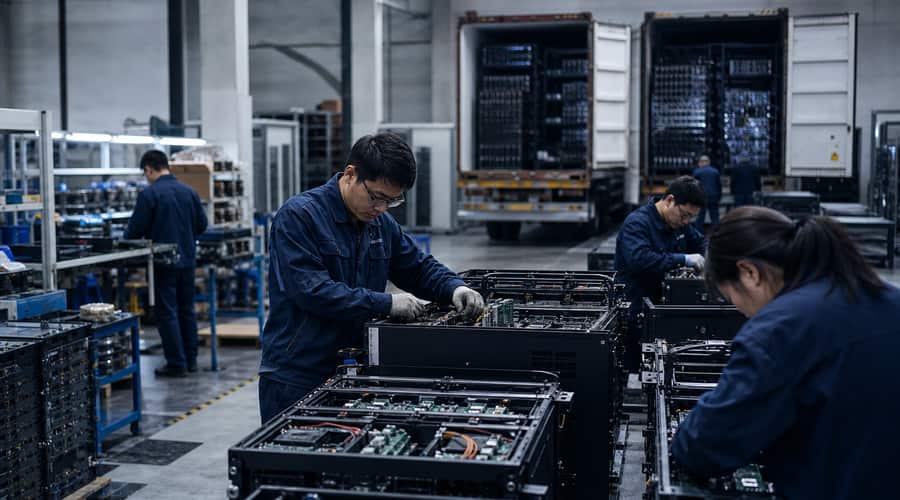
Launched on April 21 as part of ChatGPT Images 2.0, GPT Image 2 delivers near-perfect text rendering, 4K resolution, and reasoning-powered generation that makes it the first image model professionals can reliably use for real work.
The model does not just look better. It works better. GPT Image 2 uses the same reasoning pipeline as ChatGPT's text capabilities, planning compositions, verifying text accuracy, and even searching the web for references before generating pixels. The result is images that execute complex prompts precisely: correct spatial relationships, legible small text, consistent lighting, and no more garbled phone numbers or misspelled labels. Befreed.ai's hands-on testing showed it outperforming Midjourney V8 and Google's Nano Banana 2 on text-heavy tasks like infographics and UI mockups.
Photorealism has reached a new level. Community benchmarks on Reddit and LMArena highlight stable faces, hands, textures, and reflections that feel convincingly photographic rather than artificial. Multilingual support covers Latin, CJK, Hindi, and Bengali scripts at ~99% character accuracy. Generation speeds up 2x from predecessors, with up to 4096x4096 resolution and custom aspect ratios. Multi-turn editing preserves context across refinements. TechCrunch called it a surprisingly good leap in text generation within images.
Builders have spent the last two years stitching together Midjourney for aesthetics, Stability AI for control, and custom upscalers for resolution. GPT Image 2 collapses that workflow into one API call. Pricing starts low enough for production scale, with rate limits that support enterprise volumes. WaveSpeedAI notes it is ready for integration today. For advertising agencies generating campaign visuals, e-commerce teams mocking up product shots, and game studios prototyping assets, the economics just shifted decisively toward OpenAI.
The gap to open-source alternatives has widened. Stable Diffusion 3.5 and SeedDream 5.0 lag on text fidelity and instruction-following. Midjourney holds artistic edge but lacks API simplicity. Google's models are fast but inconsistent on complex prompts. OpenAI's reasoning step , chain-of-thought planning before pixels , delivers outputs that match intent without endless prompt engineering.
Production implications
Text rendering alone unlocks new categories. Branded content with logos, packaging labels, and UI screenshots now produce usable first drafts. No more post-editing to fix typos. For media workflows, this means AI-generated editorial images that pass as stock photography. E-commerce benefits from hyper-realistic product visuals that convert better than generic shots.
The real change is reliability. Earlier models forced teams to generate dozens of variants and pick the least broken one. GPT Image 2 hits the mark on the first or second try. That halves iteration cycles and makes AI a default tool rather than a risky experiment. Knightli's analysis confirms sharper details and fewer artifacts across styles from photoreal to manga.
Competitive landscape reshaped. Startups relying on commoditised open-weight models face pressure to adopt or specialise. Those building image-heavy apps , AR try-ons, virtual staging, dynamic ads , gain immediate leverage. OpenAI did not just release a model. It released a production engine. Teams that test it this week will pull ahead of those waiting for benchmarks.
Also read: OpenAI's super PAC allegedly funded a fake news site staffed by AI reporters • OpenClaw makes DeepSeek V4 Flash its default model as the Huawei chip question hangs over the industry • Pocket LLM v1.5.0 brings multimodal AI to Android with no cloud required