
AI agent platform OpenClaw has adopted DeepSeek's V4 Flash as its default model and expanded its catalogue to include the flagship V4 Pro, a move that signals growing enterprise confidence in Chinese AI infrastructure even as the global tech community scrutinizes DeepSeek's deepening ties with Huawei.
The decision by OpenClaw to make DeepSeek V4 Flash the default model for its AI agent is not a minor configuration update. Default model choices shape how millions of users experience an AI platform, which tasks it handles well, where it struggles, and how it compares in daily use to the alternatives. Swapping that default to a Chinese model optimized to run on Huawei chips is a statement about where the capability frontier now sits, and it arrives at a moment when that statement carries geopolitical weight that pure benchmark performance cannot fully explain away.
OpenClaw's update, published on Sunday, expanded its model catalogue to include both V4 Flash and the flagship V4 Pro from DeepSeek's latest generation. The platform also integrated Google Meet functionality and, notably, optimized how DeepSeek V4 models maintain consistency across multi-step tasks. That last detail matters more than it might appear. Multi-step task consistency is precisely where AI agents tend to break down in production use, accumulating small errors across a long reasoning chain until the final output is unreliable. If OpenClaw has genuinely improved how V4 models hold coherence through agentic workflows, that is a meaningful capability improvement for professional users rather than a cosmetic upgrade.
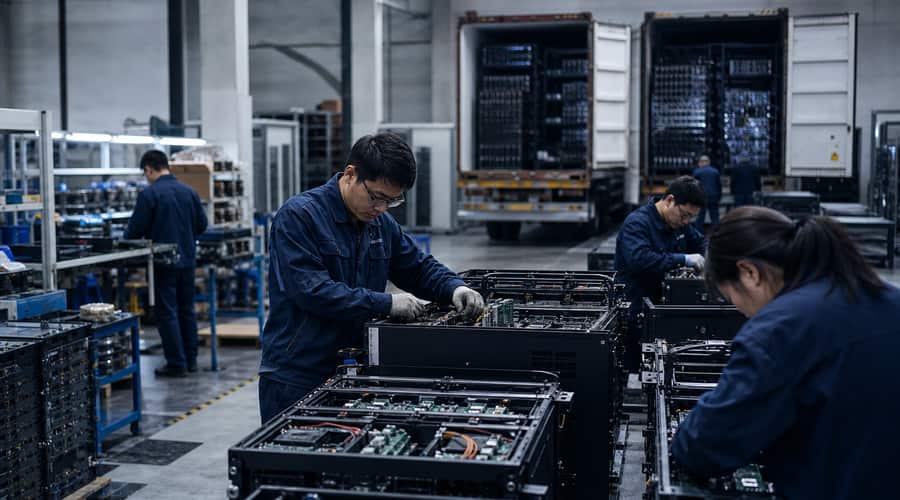
DeepSeek's V4 generation has been explicitly optimized to run on Huawei's Ascend chips, a development that carries significance beyond the AI performance conversation. Huawei sits at the center of the ongoing US-China technology decoupling, operating under export restrictions that limit its access to advanced semiconductors from Western suppliers. The fact that DeepSeek has built and optimized frontier models to run on Huawei's domestic chip architecture demonstrates that those restrictions have not prevented China from developing a viable AI hardware and software stack. For Western policymakers who believed export controls would create a durable capability gap, the V4 release is uncomfortable evidence to the contrary.
For enterprise customers evaluating OpenClaw or any platform that defaults to DeepSeek models, the Huawei tie-up introduces a compliance and risk assessment dimension that benchmark scores do not address. Organizations operating in regulated industries or handling sensitive data will need to assess whether running workloads through a model optimized for Huawei infrastructure creates exposure under their existing data governance frameworks or procurement policies. That assessment will produce different answers in different jurisdictions, and the lack of consensus guidance from regulators in the US and EU means organizations are largely navigating it without a clear roadmap.
What This Means for the Model Landscape
OpenClaw's adoption of DeepSeek V4 as a default is part of a broader pattern of AI agent platforms diversifying away from sole reliance on OpenAI and Anthropic. That diversification was inevitable once genuine alternatives emerged at the capability level that enterprise customers require, and DeepSeek's V4 generation has passed that threshold convincingly enough to change platform-level procurement decisions. The benchmark performance that accompanied the V4 launch generated significant attention across the developer community, and OpenClaw's move suggests that attention is translating into production adoption rather than remaining at the evaluation stage.
The competitive pressure on OpenAI and Anthropic from this kind of platform-level switching is real, though the picture is more nuanced than a simple displacement narrative. Both companies retain significant advantages in terms of safety research, regulatory relationships, data handling transparency, and the depth of enterprise integrations built on their APIs over several years. DeepSeek's cost and performance profile creates a compelling alternative for use cases where those considerations are secondary. Where they are primary, the switching calculus is more complex.
What the next few months will reveal is whether OpenClaw's bet on DeepSeek V4 as a default produces measurable improvements in user retention and task completion quality, or whether the Huawei scrutiny creates commercial friction that offsets the capability gains. Other agent platforms watching this move will be drawing their own conclusions from that outcome. The model layer of the AI stack is becoming genuinely competitive in a way it has not been since the earliest days of the current generation, and the platforms that navigate model selection most intelligently will build durable advantages that are increasingly independent of any single AI lab's roadmap.
Also read: Pocket LLM v1.5.0 brings multimodal AI to Android with no cloud required • AI-assisted math breakthrough shows discovery is no longer only for specialists • Apple's next CEO inherits a company that missed the AI moment and has very little time to recover it