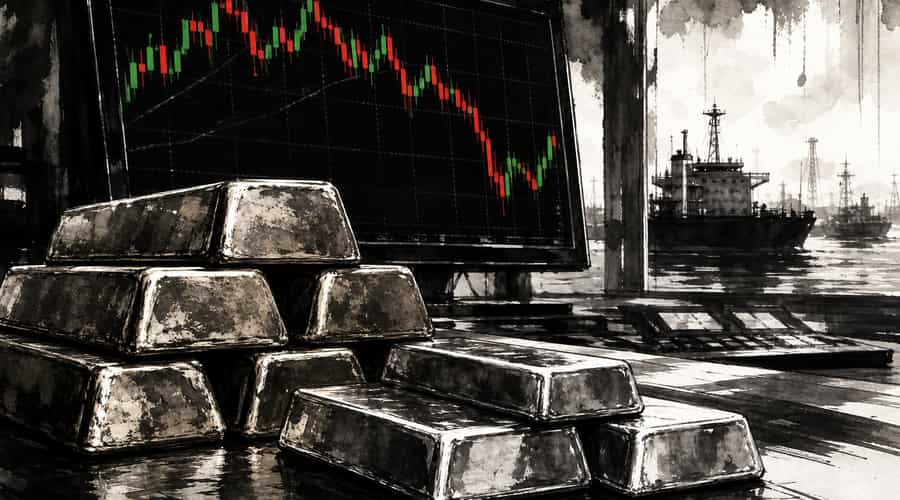
Spot silver has climbed well above $30 per troy ounce, and when retail premiums are stacked on top, ordinary investors are paying prices that would have seemed implausible just two years ago.
Walk into a coin dealer today and ask for a one-ounce American Silver Eagle, and you might do a double take at the price tag. Common one-ounce coins from the U.S. Mint and the Royal Canadian Mint are now retailing for $5 to $10 or more above spot at major dealers, meaning all-in prices that have left buyers accustomed to the $25 to $28 range feeling genuinely priced out. The sticker shock has gone viral, with social media flooded by collectors and small investors reacting with a mixture of disbelief and dark humor. The question everyone is asking is the same: how did we get here, and does it keep going?
The short answer is that silver's price is being pulled in the same direction by forces that rarely align this neatly. Industrial demand has accelerated well beyond what mines can comfortably supply. Solar panel manufacturing alone consumes enormous volumes of silver paste used in photovoltaic cells, and the global push toward renewable energy has only widened that appetite. Electric vehicle production and consumer electronics add further pressure, exploiting silver's unmatched conductivity in ways that cannot easily be substituted. Meanwhile, the three largest producing nations , Mexico, Peru, and China , have all faced output constraints, leaving supply unable to keep pace with the combined industrial draw.
Institutional investors have long tracked silver as a monetary metal, but the current surge has pulled in a much broader retail audience. Currency uncertainty and geopolitical instability have revived appetite for hard assets among ordinary savers who might once have bought a few Silver Eagles as a modest inflation hedge and thought little more about it. That wave of demand has landed on a market with limited physical inventory. The U.S. Mint has periodically struggled to meet authorized purchaser allocations, and when supply tightens at the mint level, premiums widen at every step downstream. The consumer at the end of the chain absorbs the full stack.
The result is a meaningful shift in who can comfortably participate in the physical silver market. Entry-level buyers who viewed coins as an accessible store of value now face a substantially higher cost of admission, and that psychological barrier matters. Dealers have reported elevated traffic even at current prices, which suggests demand has not collapsed, but the composition of buyers is changing , skewing toward those with more capital and longer time horizons rather than the casual accumulator building a small stack over time.
The Gold-to-Silver Ratio and What Analysts Are Watching
Among precious metals analysts, the gold-to-silver ratio remains the benchmark for assessing silver's relative value. Historically, the ratio has oscillated widely, but periods when it compresses tend to coincide with silver outperforming gold in percentage terms. Many analysts argue silver has been structurally undervalued relative to gold for years, and any sustained tightening of that ratio would imply further price appreciation ahead , not just for coins but across the silver complex including ETFs, futures, and mining equities.
Industrial users are already factoring higher input costs into their planning. Downstream effects on solar installations and electronics manufacturing may be modest for now, given silver represents a fraction of total product cost, but a prolonged price elevation changes procurement strategies and accelerates research into alternative materials. That dynamic is worth watching closely because any credible industrial substitution story could eventually cap the price ceiling.
For now, the physical market is telling its own story clearly enough. Silver coins that once felt like an everyman's entry into precious metals ownership have repriced into territory that demands real deliberation before purchase. Whether that makes today's prices a buying opportunity or a warning to wait depends on your read of the supply-demand imbalance , but either way, the days of cheap silver on the shelf appear to be behind us for the foreseeable future.
Also read: The Royal Canadian Mint's 5 oz Silver Maple is quietly becoming the go-to bullion format for serious stackers • The Royal Canadian Mint's 5 oz Silver Maple is quietly becoming the go-to bullion format for serious stackers • India's Rs 20,000 Crore Gold Rush Defies Record High Prices