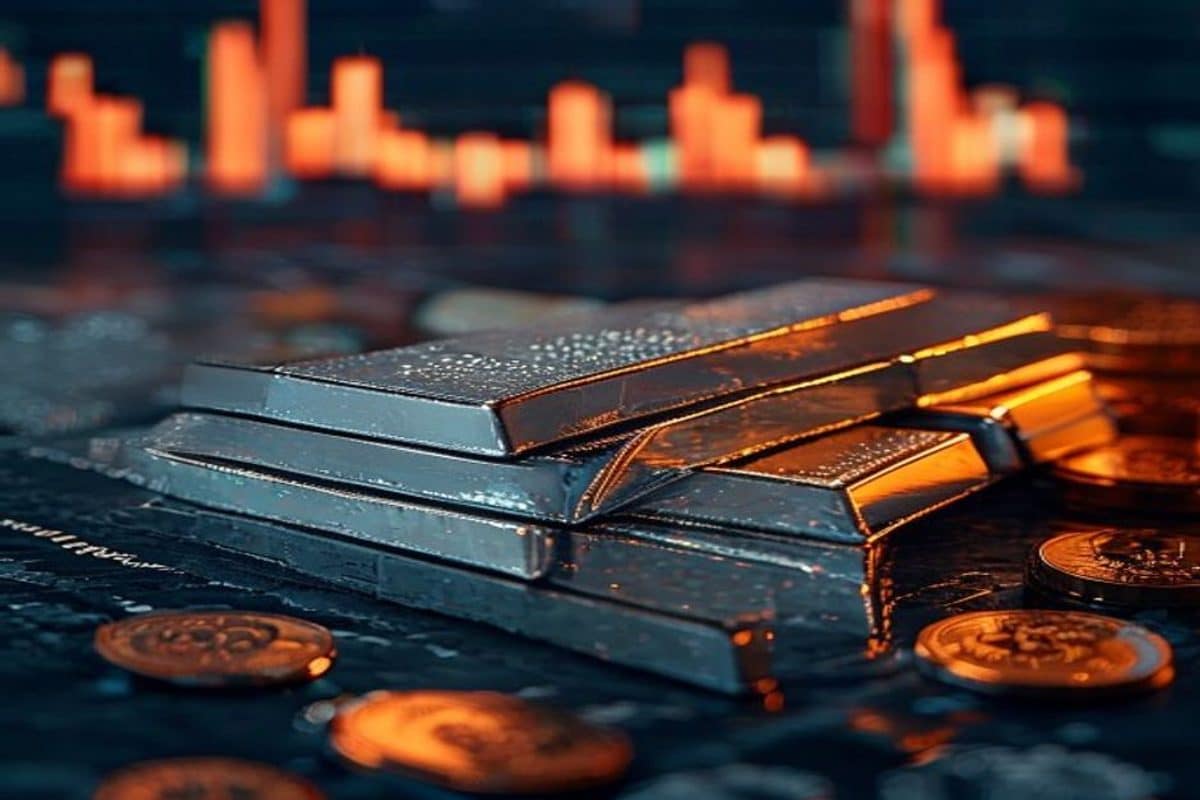
Silver spot prices have broken above $32 per ounce while a grassroots accumulation movement gains traction across Reddit and X, driven by structural supply deficits and a generation of investors quietly losing faith in paper assets.
Something is happening in the silver market that deserves more serious attention than the usual commodity chatter. The phrase "Silver is always so nice to buy" has become something of a rallying call across r/WallStreetSilver and commodities-focused corners of X, and while viral slogans are easy to dismiss, the fundamentals underneath this one are harder to wave away. Spot silver has cleared $32 per ounce for the first time since the speculative frenzy of 2024, and this time the buyers are not just momentum traders chasing a print. They are accumulating with intention.
The macro backdrop is doing a lot of the heavy lifting here. Central banks globally purchased over 1,000 metric tons of gold for the third consecutive year, a pace that has validated the broader hard-asset thesis for retail investors who follow these flows closely. Silver, as the more volatile and industrially exposed cousin of gold, tends to lag and then catch up fast once sentiment shifts. The Gold-to-Silver ratio sitting above 80:1 is the number independent macro analysts keep circulating online, and it is a legitimate signal. Historically, when that ratio compresses, silver moves with force. Retail communities are positioning ahead of that potential compression.
What separates this moment from the original Silver Squeeze of 2021 is staying power. That earlier episode burned hot and collapsed quickly because it was driven almost entirely by short-term speculative energy. The current movement reads more like a slow accumulation strategy, one built around monthly purchases of physical bars and coins rather than options plays or leveraged ETFs. Q1 2026 data from dealers and mints shows a marked uptick in retail physical demand, enough to create visible strain on inventory and fulfillment timelines at some of the larger online bullion retailers.
Silver's investment case is unusual because it sits at the intersection of monetary history and modern manufacturing. Industrial demand is projected to outpace supply for the fourth consecutive year in 2026, with photovoltaic solar panels and AI data center electronics among the primary drivers. Silver is not easily substituted in these applications, and the expansion of both sectors is accelerating rather than slowing. That structural supply deficit is the quiet force that makes the retail accumulation trend genuinely consequential beyond social media sentiment.
When retail investors hoover up physical supply at scale, it tightens the pool available to industrial buyers. Solar manufacturers and electronics producers are not immune to that pressure. If the deficit deepens and physical premiums rise, it feeds back into production costs in sectors that governments and corporations are treating as strategic infrastructure. That is a meaningful chain of consequences that starts, somewhat improbably, with someone in a Reddit thread posting a coin haul.
The cultural dimension is worth acknowledging too. A notable portion of the investors driving this trend are younger, in their late twenties and thirties, and their appetite for silver is inseparable from a broader skepticism about fiat currency and institutional finance. This is not conspiracy-adjacent thinking so much as a generational recalibration, one shaped by watching two significant financial crises, persistent inflation, and a decade of zero interest rate policy. Physical silver, for this cohort, is not nostalgia. It is a considered response to uncertainty.
The question now is whether institutional capital notices. Retail demand creates price floors and supply friction, but it rarely drives sustained multi-year bull markets on its own. What could change the scale of this move is if family offices or commodity-focused funds begin treating the Gold-to-Silver ratio and the industrial supply deficit as a genuine allocation opportunity. Early signals from commodity trading desks suggest that conversation is starting. If it translates into meaningful positioning, the retail community currently celebrating $32 silver may find themselves sitting on considerably larger gains than they anticipated when they clicked "add to cart."
Also read: A sudden suspension of Silver Maple Leaf sales at JM Bullion exposes widening cracks in the physical silver supply chain as investors scramble to secure inventory. • Silver premiums are blowing past 35 percent above spot and the debate over whether that makes sense has never been louder • Silver premiums are blowing past 35 percent above spot and the debate over whether that makes sense has never been louder