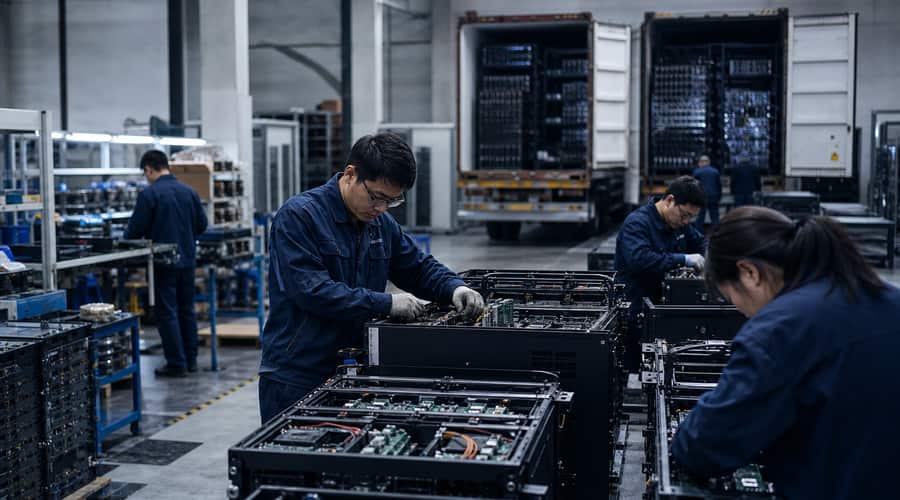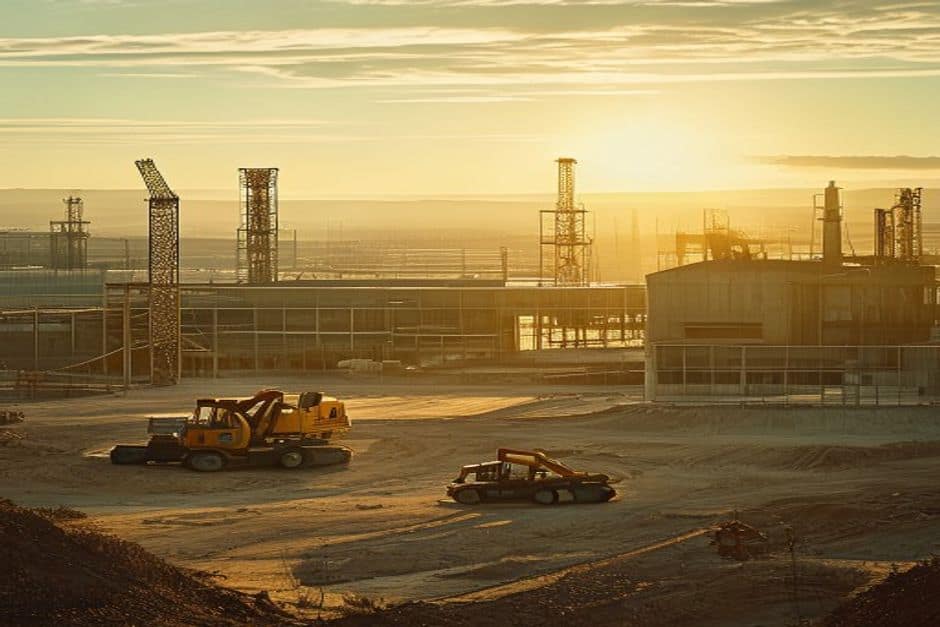
SpaceX is reportedly seeking approval for a $55 billion first phase of its Terafab project in Texas, a manufacturing expansion that would move the company deeper into industrial-scale production and force investors to think about SpaceX less like a rocket startup and more like a capital-intensive factory builder.
The reported scale is the headline, but the strategic meaning is bigger. Bloomberg said the plan would finance the first phase of Terafab at $55 billion, with the broader project potentially reaching far beyond that over time. That is not the language of a company adding a new product line. It is the language of a company trying to build the physical substrate for its own future, at a scale more often associated with state-backed industrial policy or a giant automaker than with a private aerospace firm. If SpaceX once looked like a launch company with some manufacturing attached, Terafab suggests the company now wants to be judged on its ability to own more of the supply chain that makes launches, satellites, and eventually compute possible.
What Terafab will produce matters because it tells you where SpaceX thinks its bottlenecks live. Bloomberg's reporting, along with prior coverage of Musk's March announcement, indicates the facility is meant to manufacture advanced chips and related semiconductor components for robotics, artificial intelligence, and space data centers, with one version of the plan describing a fully integrated fab that can handle design, lithography, fabrication, memory, packaging, and testing under one roof. The location is Texas, tied to land in the Grimes County area near the Gibbons Creek Reservoir and surrounding areas, according to local planning references circulating with the deal. That means the project is not just a concept floating above the balance sheet. It is being attached to a specific real estate and permitting process in a state that has become central to Musk's manufacturing ambitions.
The funding structure is the part that gets closest to startup economics. A $55 billion first phase would require a financing model that looks nothing like a normal venture round. It would likely combine equity, project finance, debt, public-market capital if SpaceX uses its eventual listing plans, and whatever incentives Texas and local authorities are willing to extend. Bloomberg has also reported that SpaceX has been considering a public offering that could value the company at more than $1.75 trillion, which gives the cap table a very different shape from the average private unicorn. A project of this size is not funded because management has a nice strategic idea. It is funded because the company believes it can create enough internal demand, technical leverage, and long-term value to justify factory capacity on the scale of a national industrial buildout. That is a very Tesla-style way of thinking. Build the factory, control the inputs, and let manufacturing depth become the moat.
The approvals and incentives are part of what makes this a story about industrial policy, not just entrepreneurship. Reports linked to the Terafab site reference a public hearing in early June and a reinvestment zone structure in Texas that would help determine tax treatment and local support. In practice, that means SpaceX is not merely buying land and putting up a building. It is entering the negotiation machinery that usually comes with mega-projects: zoning, tax abatements, environmental review, infrastructure commitments, and local government coordination. Those details matter because they determine whether a private company can actually convert a visionary capex plan into a functioning production base. The real constraint is often not capital alone. It is whether the host jurisdiction can and will make the rest of the system work.
For San Francisco readers, the story is a reminder that frontier-tech companies win less by software elegance every year and more by controlling manufacturing depth, supply-chain access, and capital intensity. SpaceX already proved that launch businesses can be vertically integrated and operationally ruthless. Terafab extends that logic into semiconductors and advanced computing hardware. If Musk can make the fab work, he reduces dependence on outside suppliers for chips that matter to Tesla, SpaceX, and related ventures. If he cannot, the project still reveals where the market is heading. The most ambitious private companies are beginning to resemble industrial ecosystems rather than product companies. That changes valuation math. Investors are no longer just buying growth. They are underwriting the ability to deploy and finance physical infrastructure at a scale that most startup models were never designed to support.
That is why Terafab matters even if parts of it remain aspirational. The private-market valuation story for SpaceX has traditionally rested on launch cadence, Starlink growth, and the optionality of other moonshot businesses. A huge factory program changes that equation because it introduces manufacturing execution risk, working-capital intensity, and long-duration capex commitments into the core narrative. Those are the ingredients of an industrial giant, not a classic software-style venture asset. If SpaceX is serious about funding a $55 billion first phase, then the company is telling the market that the next frontier is not only in orbit. It is in the factory, where control over production may matter as much as control over launch windows.
Also read: Tencent's AniMatrix reframes generative video as a medium-native production tool not a physics engine • Bleeding Llama shows local AI is no longer a hobby project with hobby-grade security • Marc Lore wants to turn a single prompt into a restaurant brand available across 120 automated kitchens