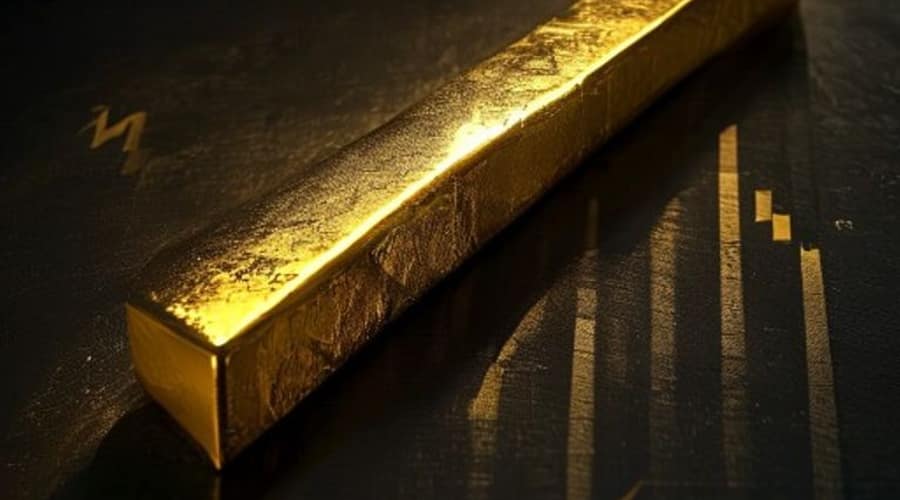
IRA-approved gold coins are trading $200 to $500 above spot price, and many retirement savers are only discovering the cost after they've already bought in.
Gold has been on a remarkable run in 2026, and with it has come a surge of interest in self-directed IRAs holding physical precious metals. But buried inside that enthusiasm is a structural problem that dealers rarely volunteer upfront: the coins approved for IRA custody carry premiums so steep that gold may need to appreciate significantly just to get you back to even. That gap between what you pay and what the metal is actually worth on the open market isn't a rounding error , it's a deliberate feature of how this corner of the market operates.
The IRS rules governing self-directed IRAs require that gold meet a minimum fineness of .9995, which immediately narrows the field. The American Gold Buffalo and the Canadian Gold Maple Leaf clear the bar. The American Gold Eagle, one of the most widely traded coins in the world, is technically 22-karat and sits in a more complicated position , acceptable under specific custodial arrangements but often pushed aside by dealers who prefer to sell the higher-margin alternatives. The result is a relatively small list of qualifying products facing elevated institutional and retail demand, with mint supply that hasn't expanded to match.
Fabrication costs for proof-quality and investment-grade 24-karat coins are genuinely higher than for a standard gold bar. Mint controls on the Buffalo and Maple Leaf are tighter than on generic rounds, and custodians add their own layer of handling and certification requirements before they'll accept a coin into a qualified account. Each of those steps has a price, and by the time a coin reaches a retail buyer through a dealer marketing specifically to retirement savers, those costs have compounded into something that looks less like a fee and more like a toll. A 1-ounce gold bar from a reputable refiner routinely trades within $30 to $50 of spot. An American Gold Buffalo in April 2026 is regularly retailing at $200 to $500 above that same spot price, sometimes more.
The marketing around gold IRAs rarely emphasizes this. Advertisements focus on tax advantages, inflation protection, and portfolio diversification , all legitimate considerations. What they skip over is the breakeven math. If you pay a $350 premium on a coin when spot gold is at a given price, gold must climb by that full $350 per ounce before you're in positive territory. In a market where gold can move $50 or $100 in a week, that sounds manageable, but over the typical holding period of a retirement account, a high entry premium compresses your effective return in ways that quietly undercut the tax benefit you were sold on.
The taxable account question dealers won't raise
A growing number of retail investors on financial forums are doing that math themselves and arriving at an uncomfortable conclusion: holding standard bullion in a taxable brokerage account, and accepting the capital gains treatment on exit, may produce a better net outcome than paying a steep premium for IRA eligibility. It depends heavily on individual tax situations, time horizon, and how much gold appreciates , but the point is that it's a legitimate question, and one worth modeling before committing to the IRA route.
There are also practical alternatives within the IRA structure itself. Gold ETFs backed by physical metal, such as SPDR Gold Shares, qualify for IRA inclusion and trade at minimal spreads above the underlying value of gold. They don't give you the physical possession that some investors specifically want, but for anyone whose primary goal is tax-advantaged gold exposure rather than holding coins in a vault, the cost difference is hard to ignore.
For savers who do want physical metal in a self-directed IRA, the discipline is straightforward even if the execution takes effort: get quotes from at least three custodians, ask each one for their all-in cost including storage and transaction fees, and compare the total premium against current spot before signing anything. Dealers operating in this space are not required to disclose the premium as a percentage, so the number can be obscured inside a price-per-ounce that looks reasonable until you check it against live market data.
The deeper trend to watch is whether rising premiums start to visibly dampen demand for physical gold IRAs and push more retirement money toward paper gold alternatives. If that rotation accelerates through the rest of 2026, it would be a meaningful signal that the industry's pricing structure has finally outrun the patience of the buyers it depends on.
Also read: J.P. Morgan calls gold's rally a secular trend and raises its price target to $2,950 with $3,000 in sight • J.P. Morgan calls gold's rally a secular trend and raises its price target to $2,950 with $3,000 in sight • A viral one-gram gold bar is pulling a new generation of buyers into the precious metals market