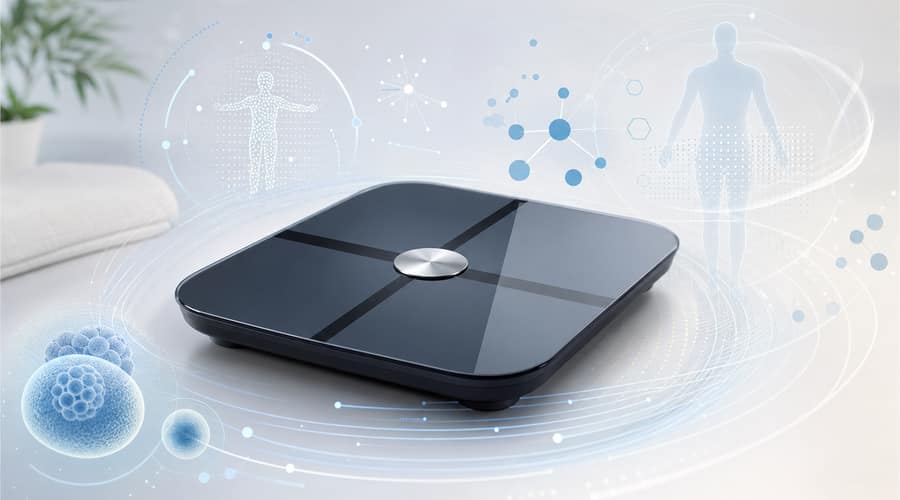
Withings BodyFit is not just another bathroom scale. It is a bet that the GLP-1 boom will create a new market for at-home body composition data.
Withings has launched BodyFit, a $279.95 smart scale aimed directly at people using GLP-1 weight-loss drugs who need to know more than whether the number on the scale is going down. That matters because the next phase of the Ozempic economy is not only about prescriptions. It is about everything that surrounds them: monitoring, coaching, data sharing and the question of whether weight loss is improving health or quietly taking muscle with it.
The device sits in the middle of Withings’ scale lineup. It is cheaper than the company’s Body Scan, which currently sells for $499.95 in the US, but it borrows the same basic idea: a scale with a retractable handle that lets users measure body composition across different parts of the body. According to Engadget, which reported the June 2 launch, BodyFit is priced at $280 and is being positioned for GLP-1 users who want to watch muscle mass while losing weight.
This is a smart piece of timing. Drugs such as Ozempic, Wegovy, Mounjaro and Zepbound have moved from specialist medicine into mainstream consumer life. Epic Research reported last week that GLP-1 prescriptions among US adults rose from about 1,900 to 9,000 prescriptions per 100,000 patients between the second quarter of 2021 and the first quarter of 2026. That is not a niche market anymore. It is a new health category large enough to pull hardware companies, insurers, fitness brands and telehealth providers toward the same customer.
Traditional bathroom scales are built around a blunt signal. You stand on them, get a weight and decide whether that number is good or bad. GLP-1 drugs make that approach look dated. Losing 30 pounds can be a success, but the composition of that loss matters, especially for people who are older, inactive or already at risk of low muscle mass.
Clinical research has made that concern harder to ignore. A 2025 systematic review published on PubMed found that GLP-1 receptor agonists reduced total body weight, fat mass and lean mass, with lean mass representing roughly 25% of total weight loss in the analysis. Other recent reviews have put the range higher in some trials. The practical point is simple: weight loss is not one thing. Fat loss, water shifts and lean tissue loss all show up as the same downward movement on an ordinary scale.
BodyFit tries to make that distinction visible at home. The scale uses eight electrodes, four in the base and four in the handle, to run a six-zone body composition scan. 9to5Mac reported that Withings says the device captures more than 40 data points in 10 seconds, using Bioelectrical Impedance Spectroscopy across 13 frequencies. Withings also claims validation against DEXA scans, with up to 99% correlation for fat mass and 98% for muscle mass.
Those claims deserve the normal caution that comes with consumer health hardware. DEXA remains the clinical reference point, and hydration, posture, timing and user behavior can affect bioimpedance readings. Even Withings’ own support materials tell BodyFit users to measure under similar conditions each day, avoid eating or drinking close to measurement time and keep hands, feet and body position consistent. In other words, this is not magic. It is a trend tool, and trend tools are useful only when people use them correctly.
Withings Wants The Data Layer
The more interesting story is not the glass platform. It is the data loop Withings is trying to build around it. The company’s GLP-1 materials already talk about muscle preservation, visceral fat, hydration and shareable reports for doctors or endocrinologists. Its scales sync with the Withings app, Apple Health, Google Fit and more than 100 health apps. That turns a daily weigh-in into a feed of health data that can move between consumers, clinicians, coaches and care platforms.
This is where the GLP-1 market starts to look less like a pharmacy story and more like a connected care market. Telehealth companies want adherence and outcomes data. Employers and insurers want to understand whether expensive drugs are producing durable results. Consumers want to know if they are losing fat while keeping strength. Doctors want better information between appointments. A connected scale is a modest device, but it can sit at the center of all those incentives.
Withings is not alone in seeing the opportunity. Fitness apps, nutrition platforms, continuous glucose monitor companies and virtual obesity clinics are all moving toward the same idea: GLP-1 treatment works better when it is paired with behavior change and measurement. The company’s advantage is that it already has a familiar household object that people can use without learning a new clinical workflow.
There is also a business reason to go after the middle of the market. At $279.95, BodyFit is not cheap, but it is far easier to justify than a $500 scale for someone already paying for medication, nutrition support or a telehealth plan. It gives Withings a product that feels serious without being positioned only for early adopters or quantified-self hobbyists.
The risk is that consumers may expect too much from the device. A scale can show a trend, but it cannot prescribe protein intake, build a resistance-training habit or judge whether a GLP-1 dose is right for a patient. If Withings presents BodyFit as a medical companion rather than a clinical replacement, the product has a credible role. If the market treats at-home body composition as definitive diagnosis, it will invite disappointment.
For now, BodyFit shows where consumer health is heading. The GLP-1 boom has created a new demand for measurement that is more personal than an annual checkup and more useful than a weekly weight number. The companies that win here will not simply sell gadgets. They will help define what successful weight loss looks like after the prescription is filled.
Also read: Developers are testing life after GitHub Copilot changes its billing • ZeroDrift raises $10 million as AI compliance moves closer to models • SK Hynix pledges to double wafer capacity within five years as AI memory shortage deepens toward 2030