Omen AI, founded by Zach Laberge at age 20, has closed a $31 million Series A to deploy a miniature spectrometer that catches bacterial contamination in liquid-cooled AI racks before it forces million-dollar shutdowns.
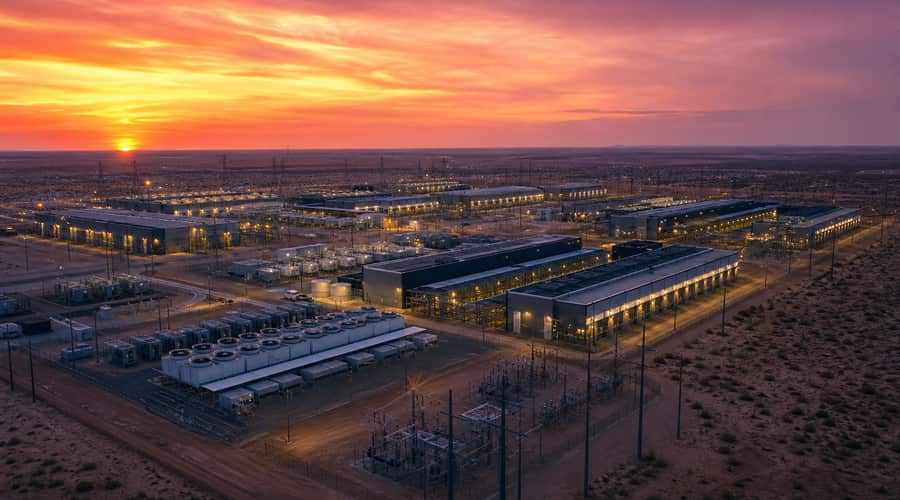
The AI infrastructure build-out has a dirty secret. Liquid cooling, now standard in the dense GPU racks powering large language models and AI compute clouds, depends on a precise mix of water and biocide to keep bacteria from colonizing the system. Push the water ratio higher to squeeze out more heat dissipation, and you create ideal conditions for contamination. When it spreads unchecked, operators face a choice: flush the entire rack and absorb a five-to-six-hour shutdown that can cost millions per incident, or keep running and risk worse. Neither option is good. Omen AI, a two-year-old startup, just raised $31 million to make that choice unnecessary.
The round, a Series A led by Nava Ventures, brings Omen's total funding to $40 million since the company was founded in 2024. CRV, Vanderbilt University, and Mann+Hummel joined the round alongside Starhill Holdings and Hard Launch Capital. Personal checks came from executives at Bridgestone, GM, and Johnson Controls, a lineup that tells you something about where Omen originally focused before pivoting its sensor technology toward data centers. TensorWave, an AMD-based AI compute cloud that is already an Omen customer, also participated.
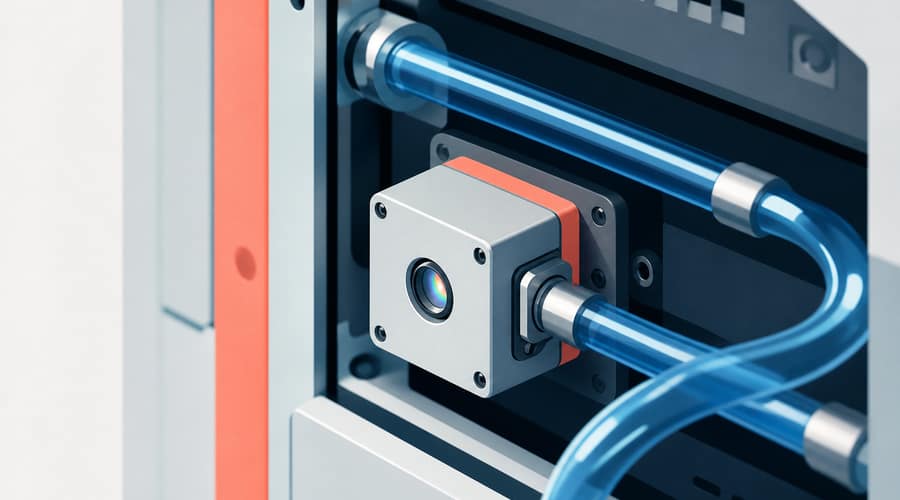
The product is a miniature spectrometer that monitors coolant fluid health in real time, detecting bacterial growth before it reaches the concentration that forces a shutdown. As reported by TechCrunch, the sensor lets operators rebalance water-to-biocide ratios proactively, catching contamination at the stage where it's a chemistry problem rather than a crisis. Omen says it's already working with roughly a dozen data center customers.
Zach Laberge started his first company at 14, raising $3 million to install sensors on construction equipment. He dropped out of high school to build it. Omen is his second act, founded when he was 18, and the $31 million Series A makes him one of the better-capitalized young founders in infrastructure right now at 20. The construction-to-data-center pivot isn't as odd as it sounds: both industries run expensive physical assets in harsh conditions where real-time fluid monitoring is the difference between scheduled maintenance and catastrophic failure.
What's more interesting than the biography is what it says about who's building the next layer of AI infrastructure. The big capital in this cycle has gone to model companies and chip designers. The picks-and-shovels bet, the data center operators and cooling vendors and power companies, has attracted serious money too. But Omen sits one level deeper than any of those: it's a bet that keeping existing racks alive and running is as economically important as building new ones. A five-to-six-hour shutdown on a high-density GPU rack isn't just an operational annoyance. At current compute prices, it's a material financial event.
Frankly, that framing is why the investor list makes sense. Mann+Hummel is a filtration company. Executives from Bridgestone and Johnson Controls understand exactly what happens when fluid systems fail inside expensive industrial equipment. Nava Ventures led the round, but the strategic investors are the signal: this is an industrial sensing problem that happens to be occurring inside a building full of Nvidia hardware.
The broader venture category forming around AI infrastructure operations is still early and still underappreciated. Billions are flowing into building new data center capacity. Far less is going toward the operational layer that keeps existing capacity online. Omen's bet is that bacterial contamination in liquid-cooled racks is a real and growing problem as data center operators push their systems harder, run hotter, and prioritize performance over conservative cooling ratios. If they're right, $40 million gets them into a category with almost no direct competition and a customer base that is, by definition, highly motivated to avoid unplanned downtime. The question is how quickly liquid cooling becomes the standard across the industry, and how fast Omen can sign customers before larger sensing or industrial analytics players notice the same gap.
Omen's dozen current customers are a start. TensorWave's involvement as both a customer and investor suggests the product works well enough to write a check. What comes next is whether Laberge can scale the commercial side as fast as he raised the capital.
Also read: Google makes personalized AI image generation free and the pressure on image startups just got real • Hugging Face's CEO says being labeled too dangerous is the best enterprise marketing an AI lab can get • Waymo walks away from Uber in Phoenix and it tells you everything about where this industry is heading