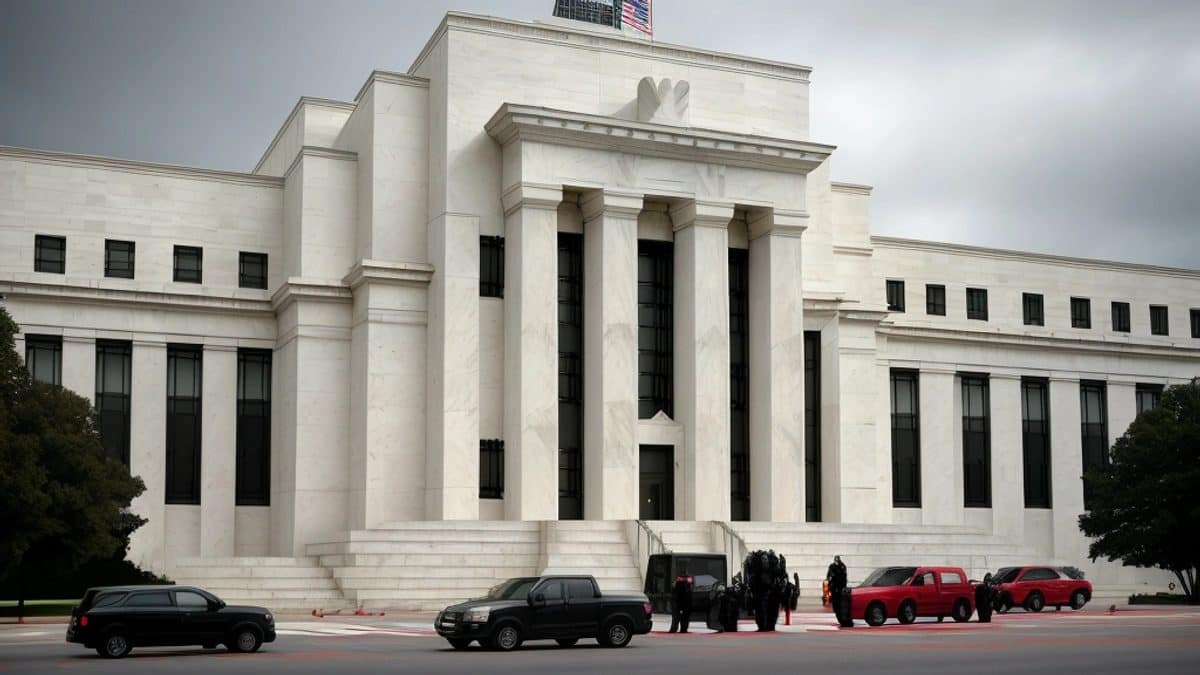
Prosecutors from U.S. Attorney Jeanine Pirro's office showed up unannounced at the Federal Reserve's multibillion-dollar Washington headquarters renovation today, presenting what sources describe as federal search warrants or inspection requests targeting the project's financial records and procurement logs.
The visit, confirmed by multiple sources Wednesday, marks a sharp escalation in the White House's ongoing effort to challenge Fed Chair Jerome Powell and the central bank's institutional autonomy. Prosecutors reportedly demanded access to procurement records, safety compliance logs, and financial disbursements tied to the so-called Eccles 2.0 renovation , a major modernization of the Fed's Washington complex involving contractors with backgrounds in classified defense and security infrastructure.
Pirro, a prominent Trump ally with a law-and-order brand, has been one of the administration's more aggressive U.S. Attorneys since her appointment. Her office's decision to target not Fed policy, but the physical management of the building, is striking precisely because it sidesteps the usual debate over interest rates and monetary independence. It reaches instead into the Fed's internal operations , territory the executive branch has not historically touched.
Bond markets are likely to notice first. The Fed's political insulation has functioned for decades as a kind of invisible infrastructure underpinning dollar credibility. When investors buy U.S. Treasuries or hold dollars as a reserve currency, they are partly pricing in the assumption that American monetary policy will not bend to political convenience. Today's visit, however procedural it may turn out to be, chips away at that assumption in a way that rate-cut pressure and public criticism from the White House simply did not.
There is a difference between a president complaining about interest rates on social media and federal law enforcement walking into a central bank site with warrants. The former is noise. The latter is a structural signal , one that foreign central banks, sovereign wealth funds, and institutional investors will not ignore.
The timing compounds the concern. The dollar has already faced headwinds in 2026 from tariff-driven trade uncertainty and a broader reassessment of U.S. asset risk among international investors. Introducing a new layer of political risk tied to the Fed's operational independence adds pressure to an already strained confidence narrative.
The Deeper Chilling Effect
Beyond the immediate market reaction, the more consequential risk is behavioral. Federal Reserve governors operate in an environment where perceived independence matters as much as actual independence. If the institution's staff, contractors, and board members begin to internalize that executive-branch scrutiny can extend to procurement logs and building safety records, the implicit cost of making politically unpopular decisions rises. That is the mechanism through which this kind of pressure works , not by issuing direct orders, but by making the path of least resistance easier to see.
Powell has so far resisted White House pressure to cut rates ahead of the data warranting it. Whether today's move represents a genuine legal inquiry into the renovation project's finances or a targeted show of force designed to communicate something broader about the administration's reach is a question markets will be asking before the week is out.
Watch for two things in the coming days: how the Fed responds publicly, and whether any of the major government contractors tied to the Eccles 2.0 project receive follow-up subpoenas. If this broadens beyond a single site visit, we are looking at a sustained legal strategy, not a one-day maneuver.
Also read: Wall Street surges as US-Iran diplomacy revives and bank earnings clear the bar • Wall Street surges as US-Iran diplomacy revives and bank earnings clear the bar • New York Governor Hochul bets on a second-home tax to plug the city's budget hole without spooking wealthy residents