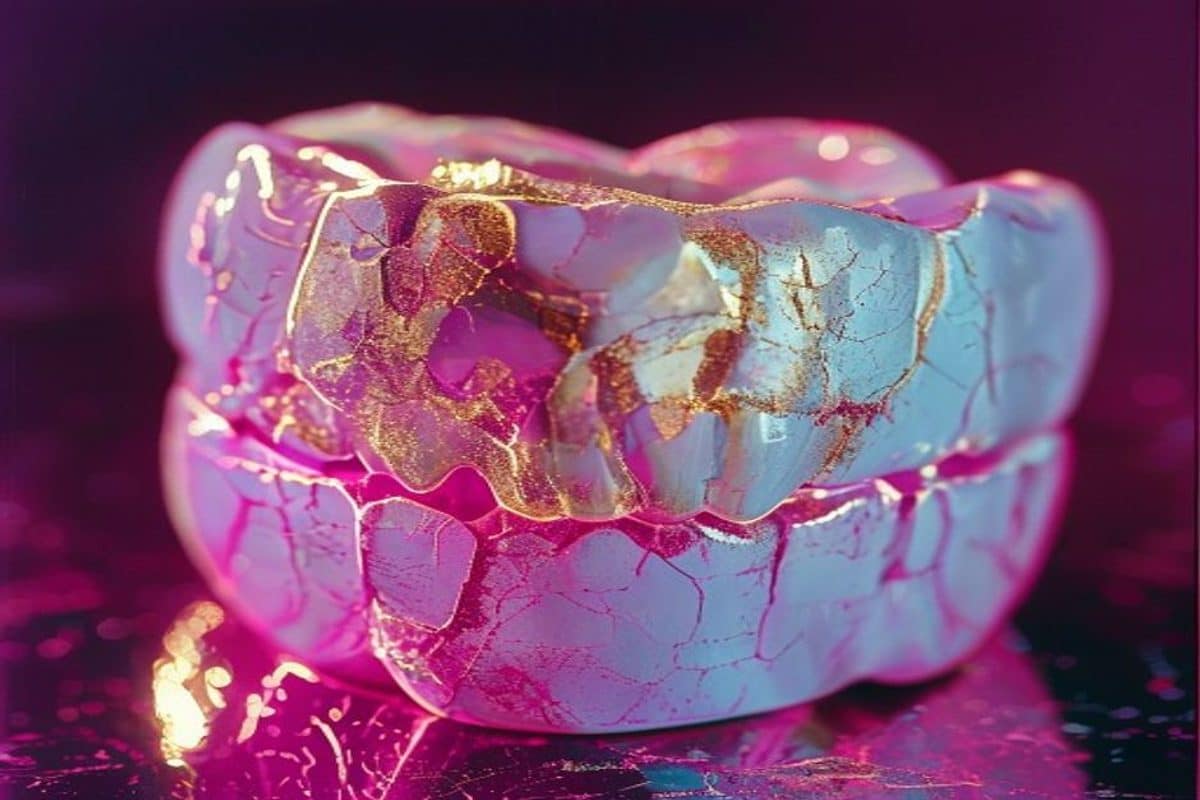
A routine dental repair at an Oregon care facility uncovered 18-karat gold hidden inside a 1984-era prosthetic, igniting a viral frenzy and a speculative wave across commodity markets.
It started with a cracked tooth. When Dr. Aris Thorne of BioDent Systems sat down to repair a denture belonging to a 72-year-old resident at the Oakhaven Heritage Care Facility in Portland last Friday, he expected a standard fix. What he found instead, gleaming beneath the porcelain after a pass with a rotary tool, was gold. Acid testing confirmed it: 18-karat, structurally embedded in the molar's core. The prosthetic had been manufactured in 1984 by DuraDental Labs, a now-defunct Midwestern supplier that, facing a shortage of standard copper-aluminum alloys in the early 1980s, quietly substituted gold scrap sourced from a local jewelry refinery to stabilize production. Nobody apparently thought to document it at the time.
The story spread fast. Within 48 hours, the phrase "Surprise gold: grandpa's teeth" had accumulated more than 4.2 million mentions on X and 120,000 upvotes across Reddit communities. That kind of viral momentum rarely stays contained to social feeds, and this time it didn't. On April 19, NYMEX recorded a 4.1% jump in gold futures trading volume for micro-contracts, driven predominantly by retail investors who spotted an angle the institutional crowd hadn't priced in yet.
The numbers that analysts are now circulating are striking. The average gold content per unit sits somewhere between 0.02 and 0.04 grams, so no single tooth is making anyone rich. But scale that 0.03-gram average across the approximately 45 million dental prostheses produced in the US between 1980 and 1995, and the aggregate estimate reaches roughly 1,350 kilograms, or around 43,400 troy ounces of unrecovered gold. At current spot prices, that figure is not trivial. It represents a diffuse, aging stockpile sitting in dental arches across the country, largely invisible to commodity markets until now.
Several dental supply firms have already moved to capitalize on the moment, announcing buyback programs targeting pre-1990 prosthetics. The logic is straightforward: consolidate volume, refine at scale, and capture the spread. BioDent Systems, whose prosthetist made the original discovery, saw its NASDAQ-listed shares surge 22% in pre-market trading on April 20, with investors apparently bullish on the company's newly reframed "legacy asset recovery" positioning. Whether that premium holds once the novelty fades is another question.
The ethics are messier than the metallurgy
What's emerging alongside the financial speculation is a genuinely complicated legal and ethical debate. When a person dies, who owns the gold in their teeth? Families and estates are beginning to raise the question, particularly in cases where dental work was replaced or discarded without any assessment of material value. The boundary between biological remains and recoverable commodity assets is not well-defined in most jurisdictions, and legal frameworks around medical waste are not designed with precious metal recovery in mind. That ambiguity will need resolving before any formal secondary market can operate cleanly.
There is also the broader circular economy angle to consider. The DuraDental substitution was almost certainly an isolated supply chain workaround, not an industry-wide practice, and the assumption that gold contamination is widespread across all pre-1990 prosthetics may be getting ahead of the evidence. Refiners and buyback programs will need to invest in testing infrastructure before they can reliably separate the genuinely gold-bearing units from the majority that aren't.
What this episode actually signals, beyond the viral moment, is how fragmented and underexplored the medical materials recycling space remains. Commodity recovery from healthcare waste has historically attracted little institutional attention. That may now change. Watch for regulatory proposals around prosthetic material disclosure, and for early-stage startups to begin positioning in the dental scrap niche over the coming months. The real opportunity, if it exists, will belong to whoever builds the infrastructure to verify, collect, and refine at scale before the news cycle moves on.
Also read: A Chinese mayor sentenced to death had 13.5 tons of gold and 23 tons of cash hidden across his apartments • A Chinese mayor sentenced to death had 13.5 tons of gold and 23 tons of cash hidden across his apartments • Bitcoin slides below $75,000 as the Strait of Hormuz records its first complete oil tanker shutdown in history