Bloomberg reported Friday that Apple's first touchscreen MacBook Pro is now expected to arrive on M5 Pro and M5 Max chips, not M6 silicon. If you're waiting for the new OLED Mac, the display may be the breakthrough, but the chip story is already awkward.
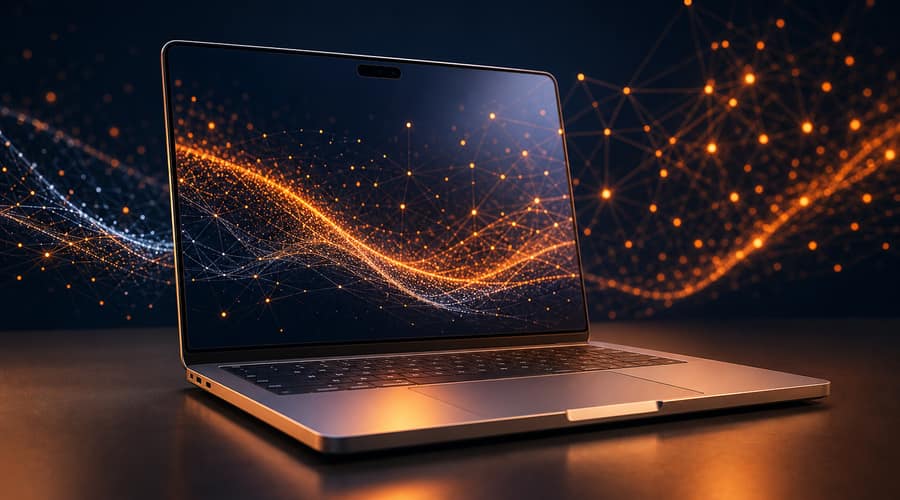
The chip choice is the part you should not skim past. Apple has usually saved its biggest MacBook Pro redesigns for a clean hardware moment: new body, new display work, new silicon story. The 2021 MacBook Pro did exactly that when it paired Apple Silicon's serious pro push with a redesigned chassis. This touchscreen MacBook Pro, according to Bloomberg's Mark Gurman, is expected to bring OLED panels, 14-inch and 16-inch sizes, a Dynamic Island-style camera area and the first real visual overhaul of high-end MacBooks in five years. Underneath, though, it will run the M5 Pro and M5 Max chips already in the current line.
That isn't a small naming detail. Gurman's report, also picked up by The Verge, says Apple is likely to skip M6 Pro and M6 Max chips and move its high-end Mac roadmap toward M7 Pro and M7 Max parts as early as late 2027. The base M6 may still arrive, but the Pro and Max tier appears to be the gap. For a company that has trained buyers to read chip generations like a product calendar, that's a strange message to send.
There are two ways to read it, and the second one is the more useful. Apple may believe OLED, touch support and the new enclosure are enough to carry the launch without a new generation of pro silicon. Frankly, for a lot of buyers, that may be true. The M5 Pro and M5 Max are not slow chips. But the timing also says something less flattering: Apple doesn't want to wait another year while Microsoft keeps selling the idea that the AI laptop belongs to Windows.
Microsoft's Copilot+ PCs have had that lane since 2024. The Surface Pro and Surface Laptop gave Microsoft a simple badge, an NPU requirement and a clean pitch to buyers who don't follow chip roadmaps for sport. Apple Intelligence exists, and the M5 family has on-device AI hardware, but Apple still hasn't made the MacBook feel like the obvious AI-first laptop in the way it made the iPhone feel like the obvious smartphone. A touchscreen MacBook gives Apple a visible answer. M5 silicon makes that answer feel a little late.
The price backdrop makes the decision sharper. On June 25, Apple raised prices across parts of the Mac and iPad lineup after memory and storage costs surged with AI data center demand. TechRadar quoted Apple saying the consumer electronics industry is facing an unprecedented challenge from demand for memory and storage, and that the company had never seen component prices rise this much, this quickly. The Guardian reported that the increases hit MacBook and iPad products, while Axios said some Apple devices rose by as much as 25 percent.
You can see the squeeze in the actual numbers. The 13-inch MacBook Air now starts at $1,299, up from $1,099. Reports on the price move put the 14-inch MacBook Pro at $1,999 after a $300 increase. The iPhone, Apple Watch and AirPods were spared for now, which tells you where Apple thinks the pain can be absorbed first: machines bought by students, developers, designers and businesses with upgrade cycles already built in.
Now place the touchscreen MacBook Pro inside that market. Apple has not confirmed pricing, and it shouldn't be treated as fact until it does. But an OLED touch display, reinforced hinge work and a redesigned chassis are not cost-neutral additions. If the current 14-inch MacBook Pro already starts near $2,000 after the price rise, you don't need an analyst note to see where the new model is likely to land. Buyers will be asked to pay more for the most visibly new MacBook in years while knowing a newer high-end chip generation may follow in 2027.
The hardware argument still has force. OLED would give the MacBook Pro deeper blacks and better contrast than its current mini-LED display. Touch support would finally end Apple's long refusal to put fingers on the Mac screen, a line Steve Jobs defended for years and Tim Cook's Apple mostly kept. The Dynamic Island would also bring the Mac closer to the design language already familiar from the iPhone. These are real changes, not brochure dust.
But you buy a pro MacBook for timing as much as specs. If your work depends on the machine, you don't only ask whether the screen is better. You ask whether the model you buy in early 2027 will still feel current when the M7 Pro and M7 Max arrive later that year. That's the problem Apple has created for itself by letting the redesign and the chip roadmap fall out of step.
The cleanest case for buying the first touchscreen MacBook Pro is simple: you want the new form factor, the OLED screen and touch support more than you want the newest chip family. That's a fair choice. The M5 Pro and M5 Max will be plenty of computer for most people. But if you're buying for maximum performance per dollar, the smarter move may be waiting for the M7 version Bloomberg says is already in advanced testing.
Apple can still sell this machine. It probably will. The harder job is persuading buyers that the first touchscreen MacBook Pro is not a beautiful bridge product launched in the middle of an AI-driven component crunch.
Also read: Intel posts its strongest earnings surprise in years and Wall Street is betting the comeback is real • OpenAI walks into Cannes Lions and tells the advertising industry it is ready to take their money • California built a real-time dashboard to track whether AI is actually killing jobs